

Cardiac Index Calculator
Adjust cardiac output for body size. Follow the calculation.
Your Measurements
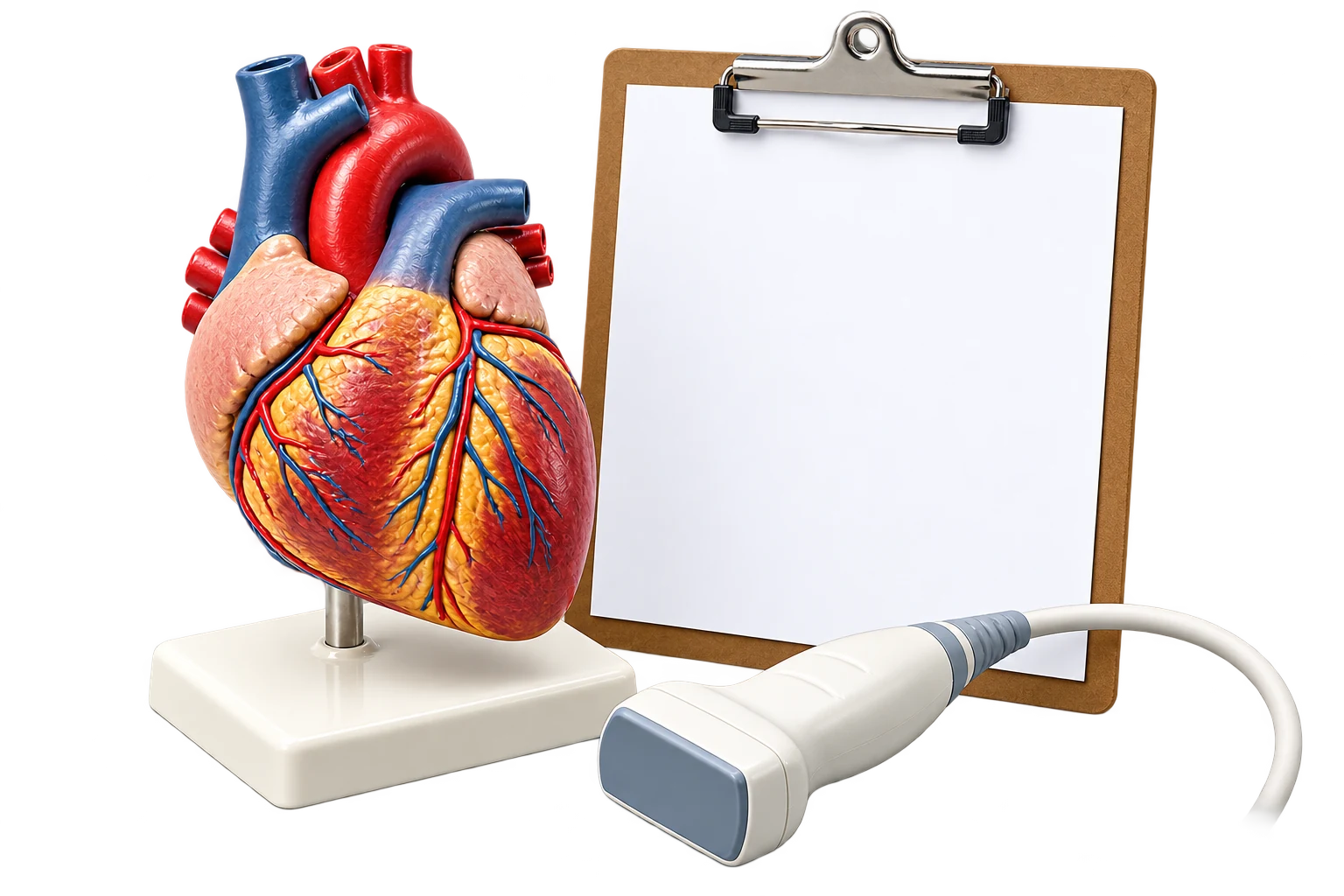
Illustrative equipment — enter your measured or estimated values.
What the Numbers Mean
Cardiac output · Volume per minute
Blood pumped by one ventricle each minute.
Body surface area · Estimated body size
A calculated area based on body dimensions.

Use the Right Inputs
- Enter cardiac output in L/min.
- Use BSA in square metres, not BMI.
- This page uses the BSA you supply.
Your Cardiac Index
Adjusted for body surface area · rounded to 2 decimals.
The Two Building Blocks
 —
Entered cardiac output
 —
Entered body surface area
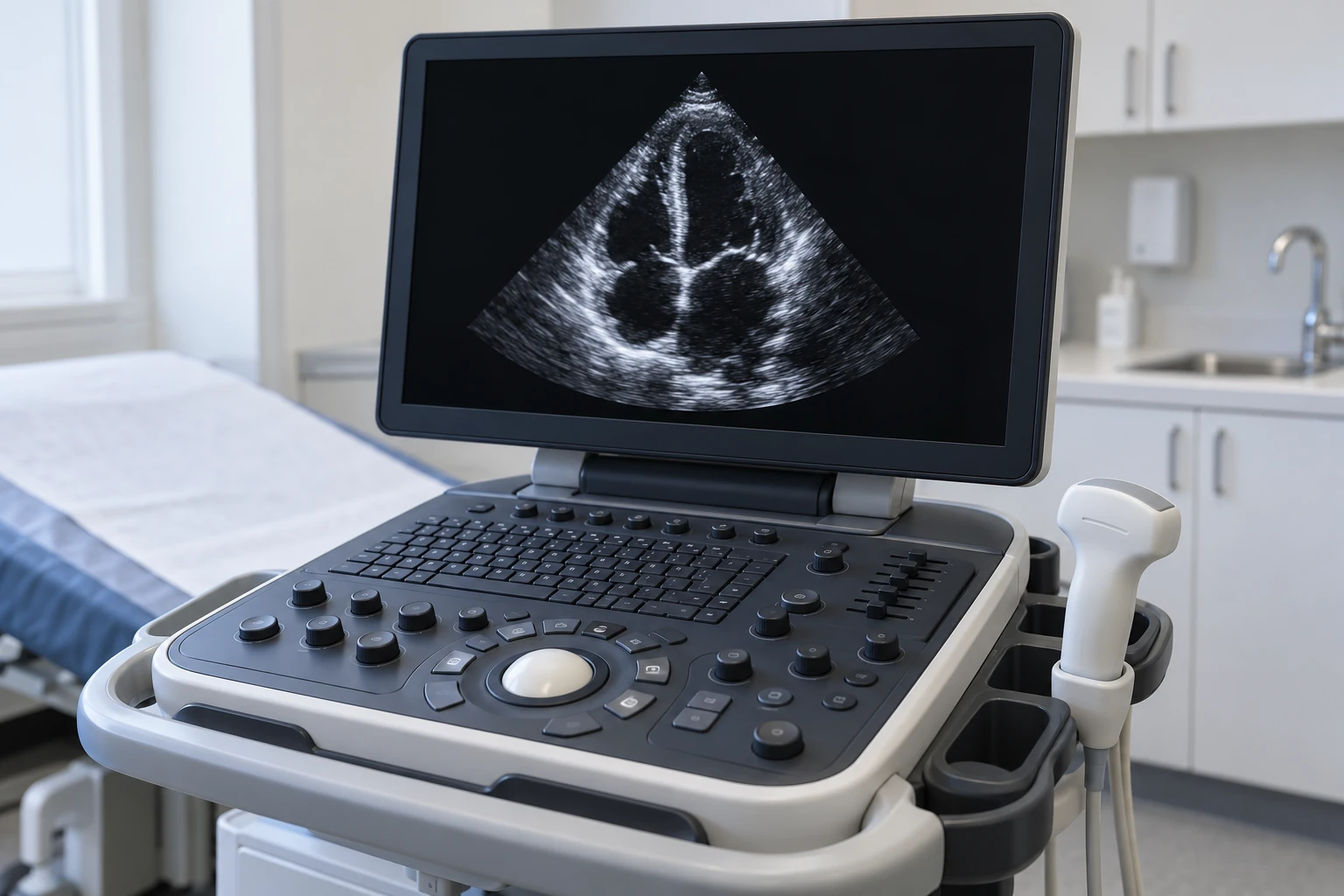
Photos are illustrative; both values are supplied by the user.
How Is This Calculated?
CI = CO / BSA
Adjusted for Body Size
A Closer Look at the Inputs
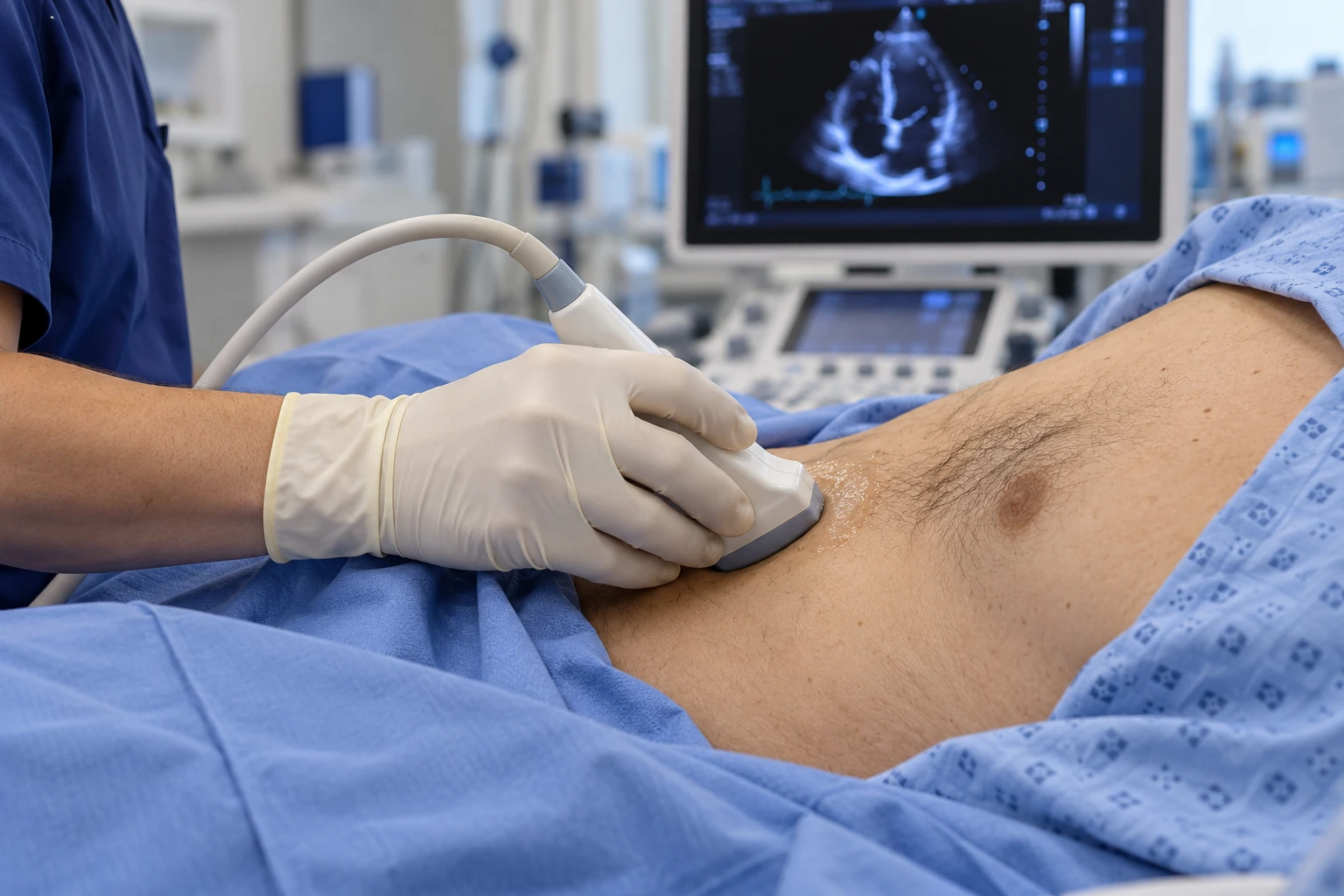
Use cardiac output
Use a clinically measured or estimated value.
Use a calculated BSA
Confirm the method and units used for the estimate.

Match the records
Check timing, activity level and units.
Calculation & Assumptions
Formula: CI = CO / BSA
Units: (L/min) / m² = L/min/m².
BSA: Supplied by the user; not calculated here.
Input limits & precision
Cardiac output must be greater than 0 and at most 1,000 L/min. BSA must be greater than 0 and at most 10 m². Both inputs support up to six decimal places. These are software limits, not clinical reference ranges. The calculation retains an exact reduced fraction. The main result is rounded to two decimals; tiny positive values are shown as < 0.005 L/min/m² instead of zero. Worked formulas use ≈ when rounded, and exports retain the exact fraction.
Frequently asked questions
What is cardiac index?
Cardiac index is cardiac output divided by body surface area. It expresses blood flow per minute relative to body size, in L/min/m².
Where does body surface area come from?
Body surface area is usually estimated from height and weight using a specified formula. Enter the calculated BSA in square metres. This page uses the BSA you supply; it does not calculate BSA from height and weight.
Can cardiac index diagnose a condition?
This arithmetic result cannot diagnose a condition. Interpretation depends on the clinical context and on how cardiac output and body surface area were obtained.
More questions (5)
What does the Cardiac Index calculate?
Cardiac Index Calculator Calculate cardiac index (CI) — cardiac output adjusted for body size. Enter cardiac output and body surface area, and this calculator divides one by the other to give CI in L/min/m², along with where it sits relative to the normal — free online calculator.
Which values should I enter?
Enter Cardiac output, Body surface area using the units and format shown beside each field.
What formula does this calculator use?
The calculator uses the following relationship: Cardiac Index = Cardiac Output ÷ Body Surface Area.
Why might my result differ from another source?
Results can differ because measurement methods, rounding and assumptions vary. This calculator is an estimate and is not a medical diagnosis.
Does the result update automatically?
Yes. Changing an input updates the result using the same calculation engine shown on this page.
Sources & References
BookshelfPhysiology, Cardiac IndexStatPearls · Clinical backgroundMerck
ManualCardiac output and indexProfessional reference · Measurement context
References provide context, not endorsement.