

Mean Arterial Pressure (MAP) Calculator
Read the pressure. See the estimate. Understand the calculation.
Your Blood Pressure
Your Reading at a Glance
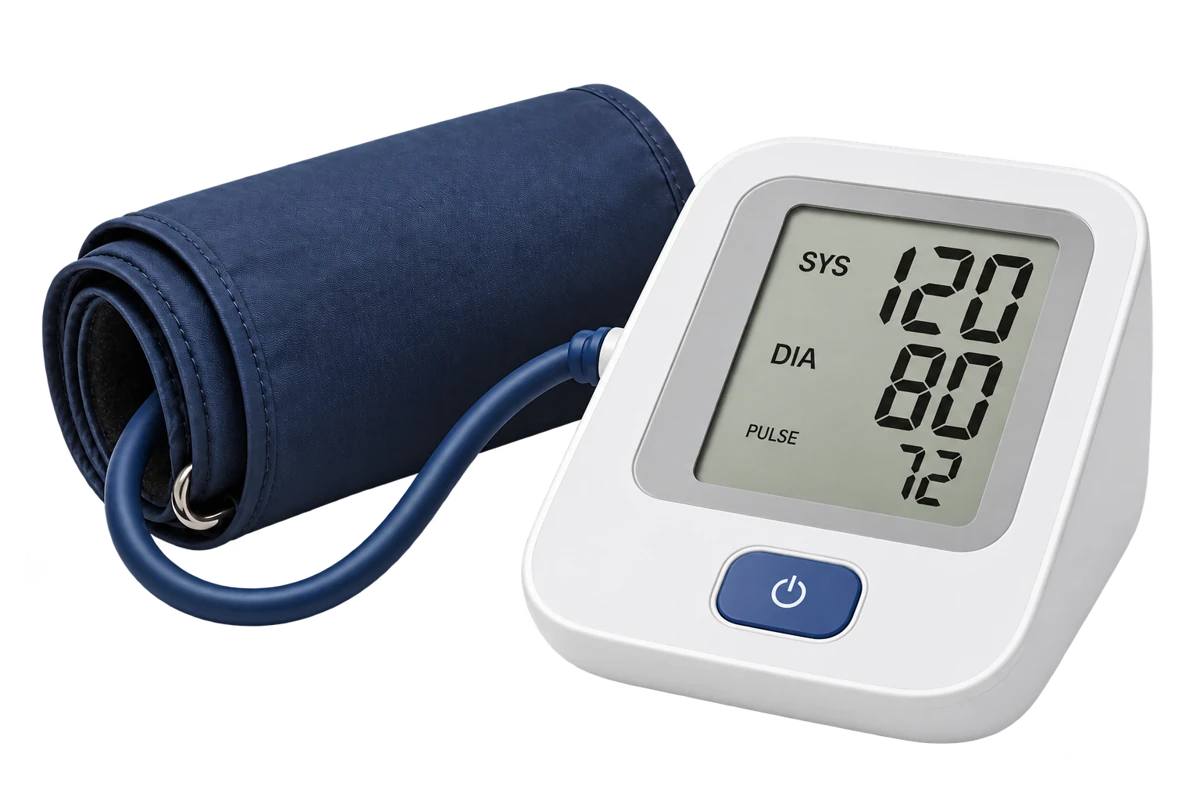
Illustrative device — enter your measured values.
What the Numbers Mean
Systolic pressure
During heart contraction.
Diastolic pressure
Between heartbeats.

Measurement quality matters
Use a validated upper-arm monitor, an appropriate cuff size and readings from the same measurement. Follow your device instructions.
Before You Measure
- Rest quietly for 5 minutes.
- Support your arm at heart level.
- Use the correct cuff size.
Your Mean Arterial Pressure
Standard resting estimate · not a direct measurement
How the Estimate Is Built
Diastolic baseline
80 mmHg
One-third of pulse pressure
13.3 mmHg80 + 13.3 ≈ 93.3 mmHg
Pressure Comparison
Shared scale · schematic, not an arterial waveform.
How Is This Calculated?
A Closer Look at Measurement

Cuff fit
- Use the right cuff size for your arm circumference.
- Follow the cuff’s placement and fit instructions.
Rest & position
- Sit quietly for at least 5 minutes.
- Support your arm at heart level.
- Keep your back supported and feet on the floor.
One measurement
- Use paired values from the same reading.
- Avoid caffeine, exercise and smoking for 30 minutes before measuring.
Calculation & assumptions
MAP ≈ DBP + SBP − DBP3
120/80 mmHg → 80 + (40 / 3) ≈ 93.3 mmHg
The one-third rule is a resting approximation. This tool does not set treatment targets. Components are rounded for display; the calculation uses full precision.
Frequently asked questions
What is mean arterial pressure (MAP)?
MAP is average arterial pressure over a cardiac cycle. This calculator estimates it from blood pressure values using a standard resting approximation.
When should I use this calculator?
Use it to understand the arithmetic of a resting MAP estimate from paired systolic and diastolic readings, or from diastolic pressure and a known pulse pressure. It does not diagnose a condition or set treatment targets.
Is MAP a direct measurement?
No. The one-third rule is an approximation. Direct or monitor-derived MAP can differ, and accuracy can vary with heart rate and clinical conditions.
More questions (7)
What does the Mean Arterial Pressure (MAP) calculate?
It estimates MAP as diastolic pressure plus one-third of pulse pressure and shows the entered or derived systolic, diastolic and pulse pressures.
Which values should I enter?
Use systolic and diastolic values from the same reading in mmHg. In Pulse pressure mode, use diastolic pressure and pulse pressure in mmHg.
What formula does this calculator use?
MAP ≈ DBP + (SBP − DBP)/3 = (SBP + 2×DBP)/3. Pulse pressure = SBP − DBP. Intermediate values are not rounded for calculation.
Why might my result differ from another source?
Differences in measured readings, calculation method, heart rate, clinical conditions and display rounding can change the value. The one-third rule does not exactly reproduce a directly measured pressure waveform.
Does the result update automatically?
Yes. Inputs and calculation method update the estimate, metrics, comparison bars and formulas immediately. No Apply or Calculate button is required.
Does changing the input method change the estimate?
No. With valid inputs, the selected method converts the same physical readings:120/80mmHg corresponds to DBP80mmHg and pulse pressure40mmHg. Hidden fields are disabled and ignored. If current inputs are invalid, the newly required field is cleared so stale values are not used.
What happens with invalid inputs?
Missing, negative or over-limit inputs clear dynamic results and disable exports. Systolic must be positive and at least diastolic. Zero pulse pressure and zero diastolic are allowed mathematically when systolic remains positive; they are not a clinical assessment. Each input accepts up to six decimal places and a software maximum of500mmHg; derived systolic also cannot exceed500. These limits are not clinical reference ranges.
Sources & References
 Measurement guidanceBlood pressure measurement in adults.heart.org
 Research referenceWang et al. · Comparison of invasive blood pressure measurements.PMC · National Library of Medicine
References provide context, not endorsement. Heart-rate limitations of the estimate.