

Shock Index Calculator
Read the pulse. Compare the pressure. Understand the ratio.
Your Measurements
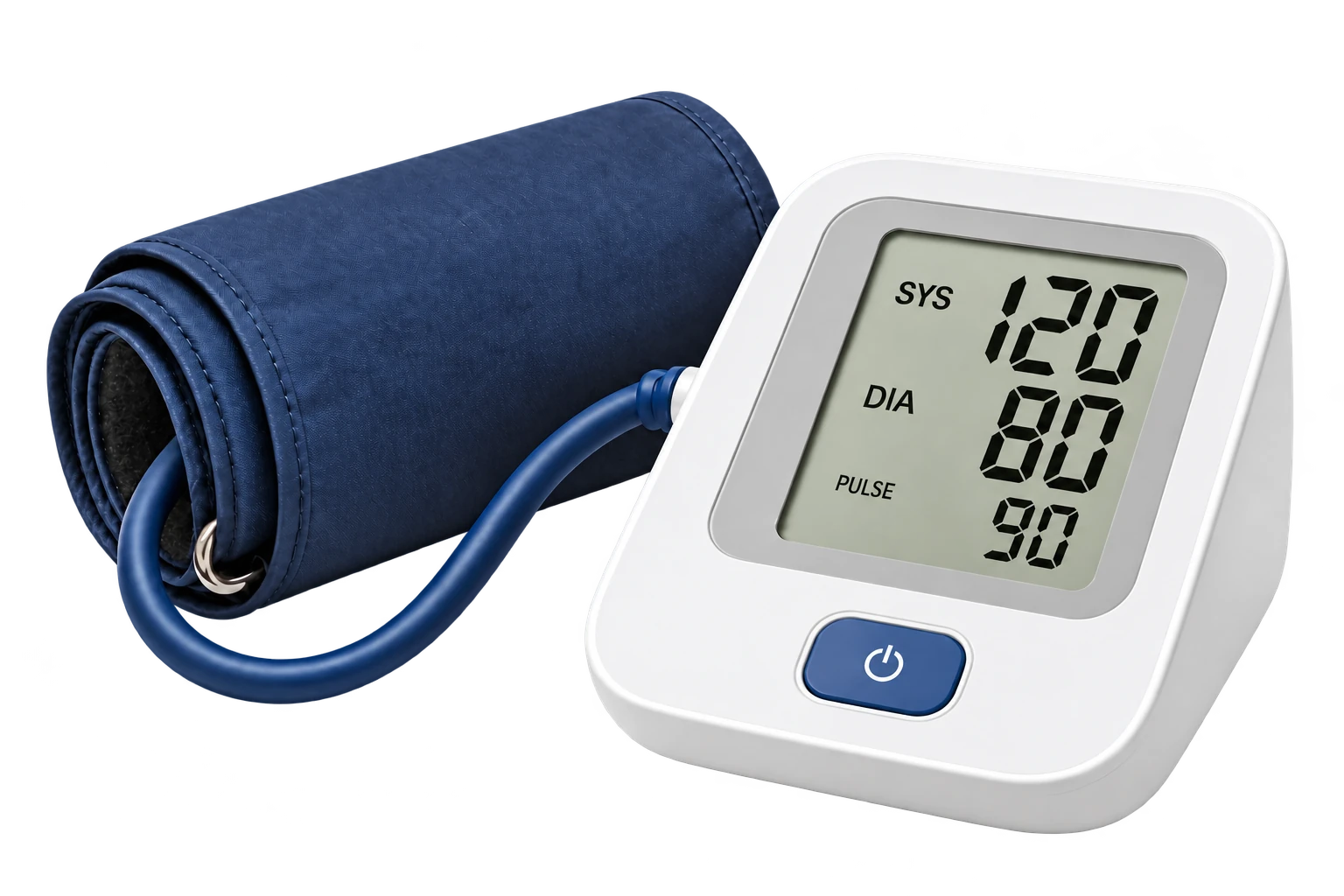
Device display is a fixed illustrative example; it does not update.
What the Numbers Mean
Heart rate · Beats per minute
The number of heartbeats in one minute.
Systolic pressure · Top number
Pressure when the heart contracts.

Keep the Reading Consistent
- Record the time and activity level.
- Use an appropriate upper-arm cuff.
- Interpret both values together.
Your Shock Index
Standard shock index · HR / SBP
The Two Measurements
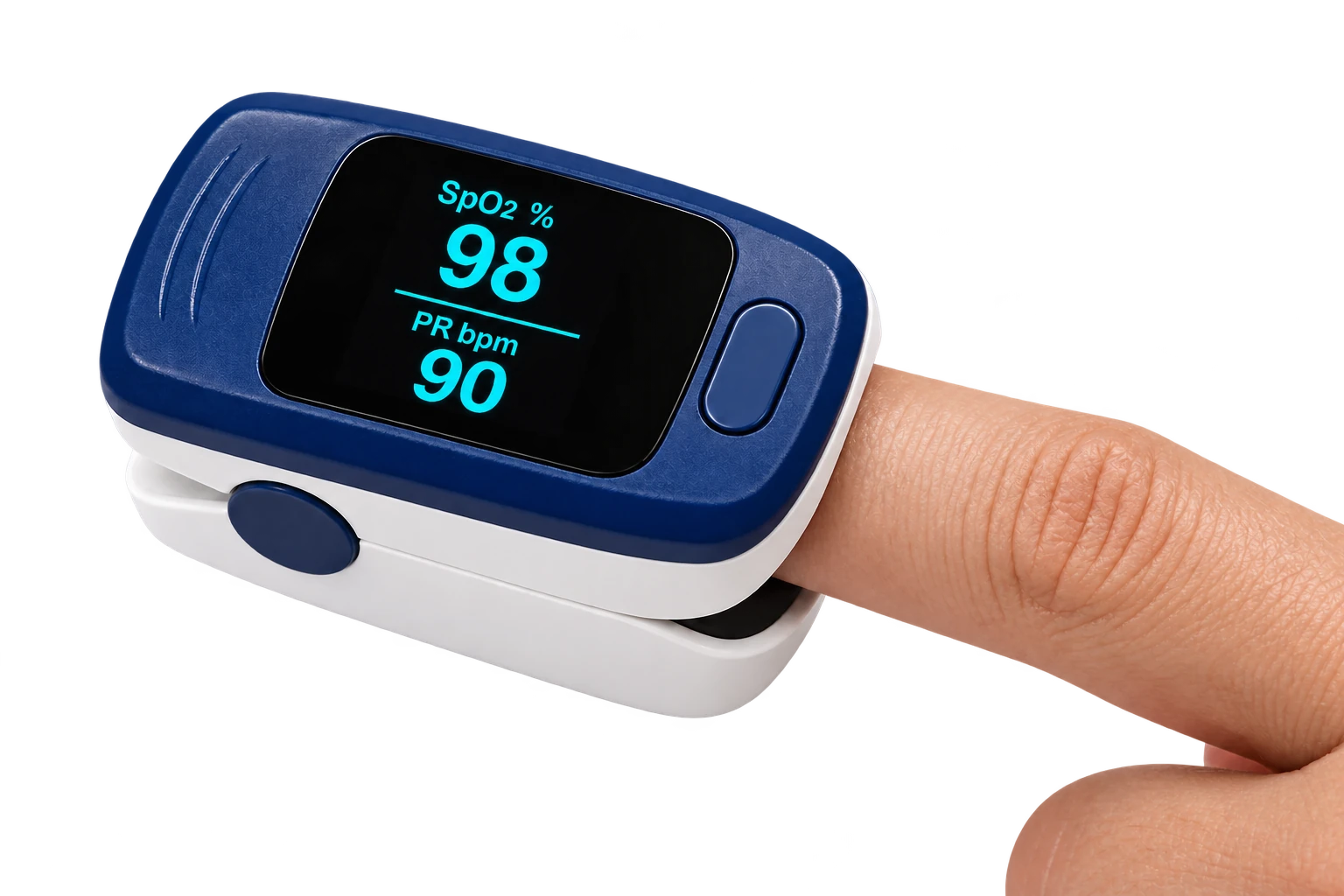 —
Heart rate
—Systolic pressure
Illustrative equipment — use your measured values. Captions update with inputs.
How Is This Calculated?
SI = HR / SBP
This illustrates the arithmetic, not a clinical risk scale.
A Closer Look at Paired Measurements

Rest & position
Keep the measurement conditions consistent.

Measure blood pressure
Use the systolic, or top, number.
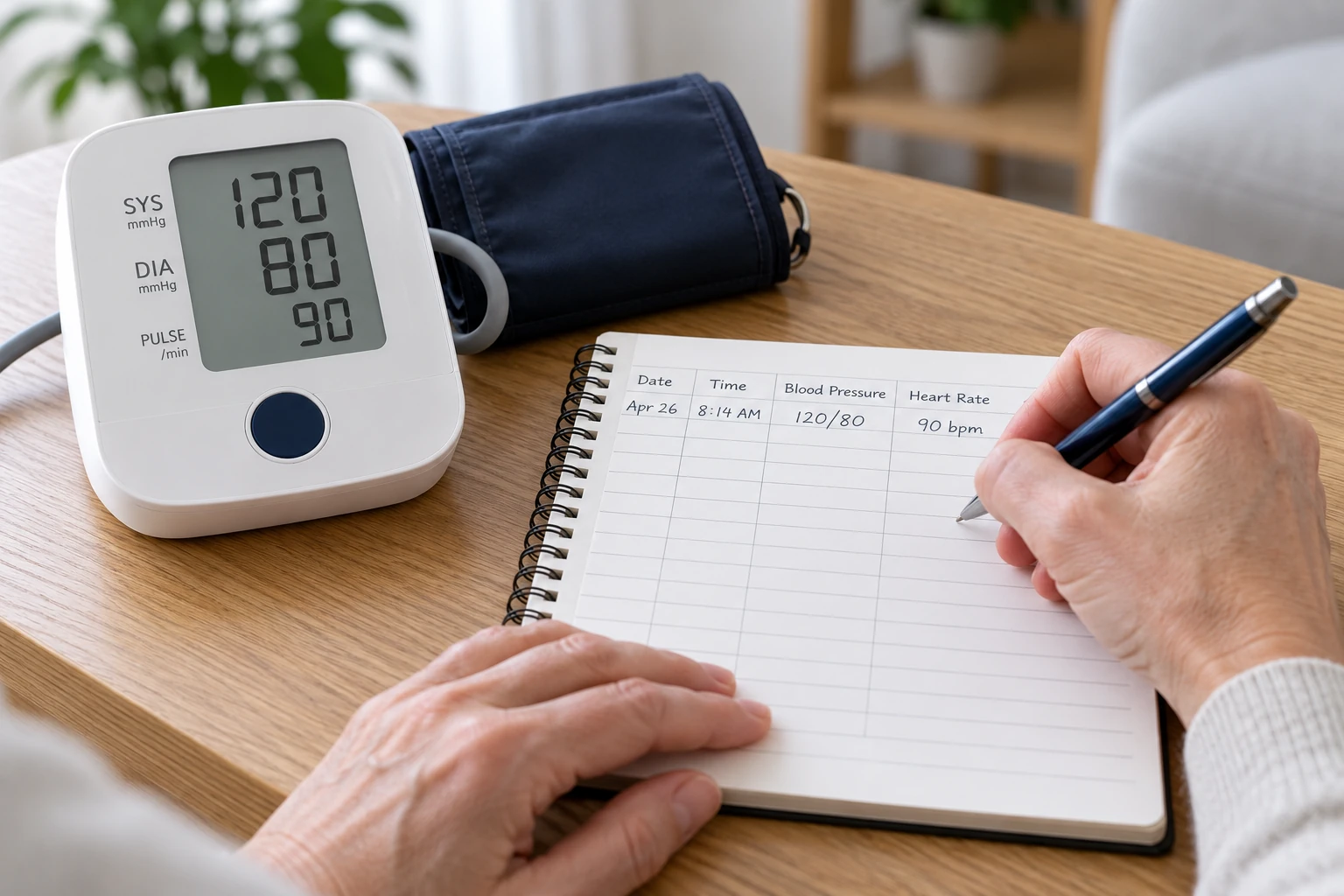
Record heart rate
Use the pulse from the same measurement period.
Calculation & Assumptions
Formula: SI = HR / SBP
Inputs: Heart rate in bpm; systolic pressure in mmHg.
Display: Result rounded to two decimal places. Tiny positive ratios are shown as < 0.005 instead of zero.
Input limits & precision
Both inputs must be greater than 0 and at most 500, with up to six decimal places each. These are software limits, not clinical reference ranges. The calculation uses a ratio of scaled integers. The simplified fraction is exact; the main result is rounded. The decimal expansion is shown to 12 places where needed. No clinical classification or treatment advice is generated.
Frequently asked questions
What is shock index?
Standard shock index (SI) is heart rate in beats per minute divided by systolic blood pressure in mmHg. This tool calculates the ratio without assigning a clinical risk category.
Is this the same as modified shock index?
No. Standard SI uses systolic blood pressure. Modified shock index uses mean arterial pressure instead; it is a different calculation.
Can this result diagnose shock?
No. Shock index alone cannot diagnose or rule out shock. Age, medicines, pregnancy and clinical context can affect interpretation. Reference thresholds vary across settings and should not be treated as universal diagnostic cutoffs.
More questions (5)
What does the Shock Index calculate?
Shock Index Calculator Calculate the Shock Index (SI = HR / SBP) to rapidly assess hemodynamic instability. — free online calculator.
Which values should I enter?
Enter Heart rate, Systolic BP using the units and format shown beside each field.
What formula does this calculator use?
The calculator uses the following relationship: Shock Index = HR (bpm) / SBP (mmHg). Normal: 0.5–0.7; concern > 1.0; critical > 1.4.
Why might my result differ from another source?
Results can differ because measurement methods, rounding and assumptions vary. This calculator is an estimate and is not a medical diagnosis.
Does the result update automatically?
Yes. Changing an input updates the result using the same calculation engine shown on this page.
Sources & References
 Blood pressure measurement guidanceAmerican Heart Association
 Shock index research1996 trauma study · PMID 8922013
References provide context, not endorsement.