

Stroke Volume Calculator
From filling to contraction. Calculate blood pumped per beat.
Your Measurements
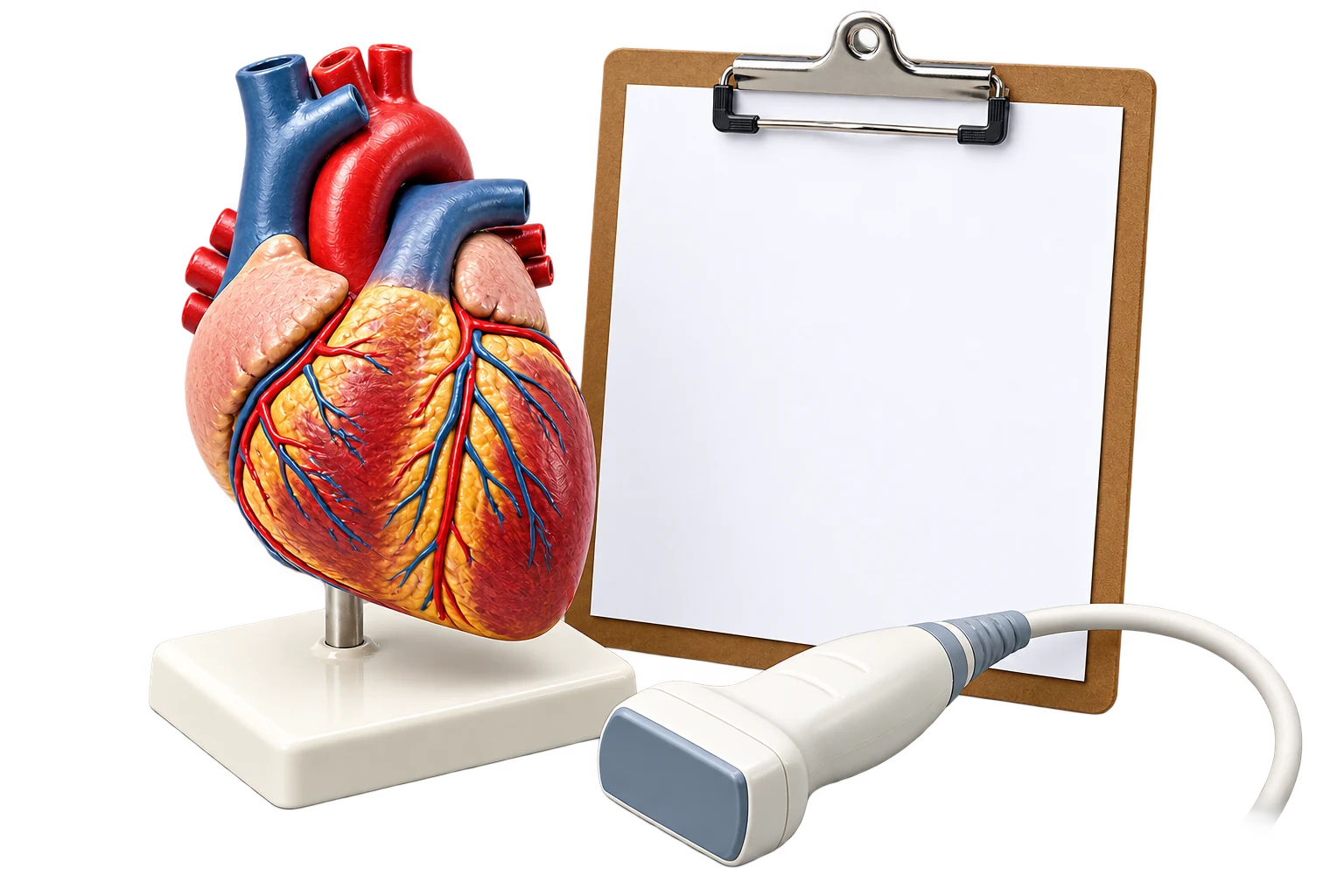
Illustrative equipment — enter your measured or estimated values.
What the Numbers Mean
EDV · Before contraction
Volume in the ventricle after filling.
ESV · After contraction
Volume remaining after contraction.

Use the Right Inputs
- Use matching units in millilitres.
- Use values from the same assessment.
- ESV must not exceed EDV.
Your Stroke Volume
Calculated from the volumes entered.
The Two Measurements
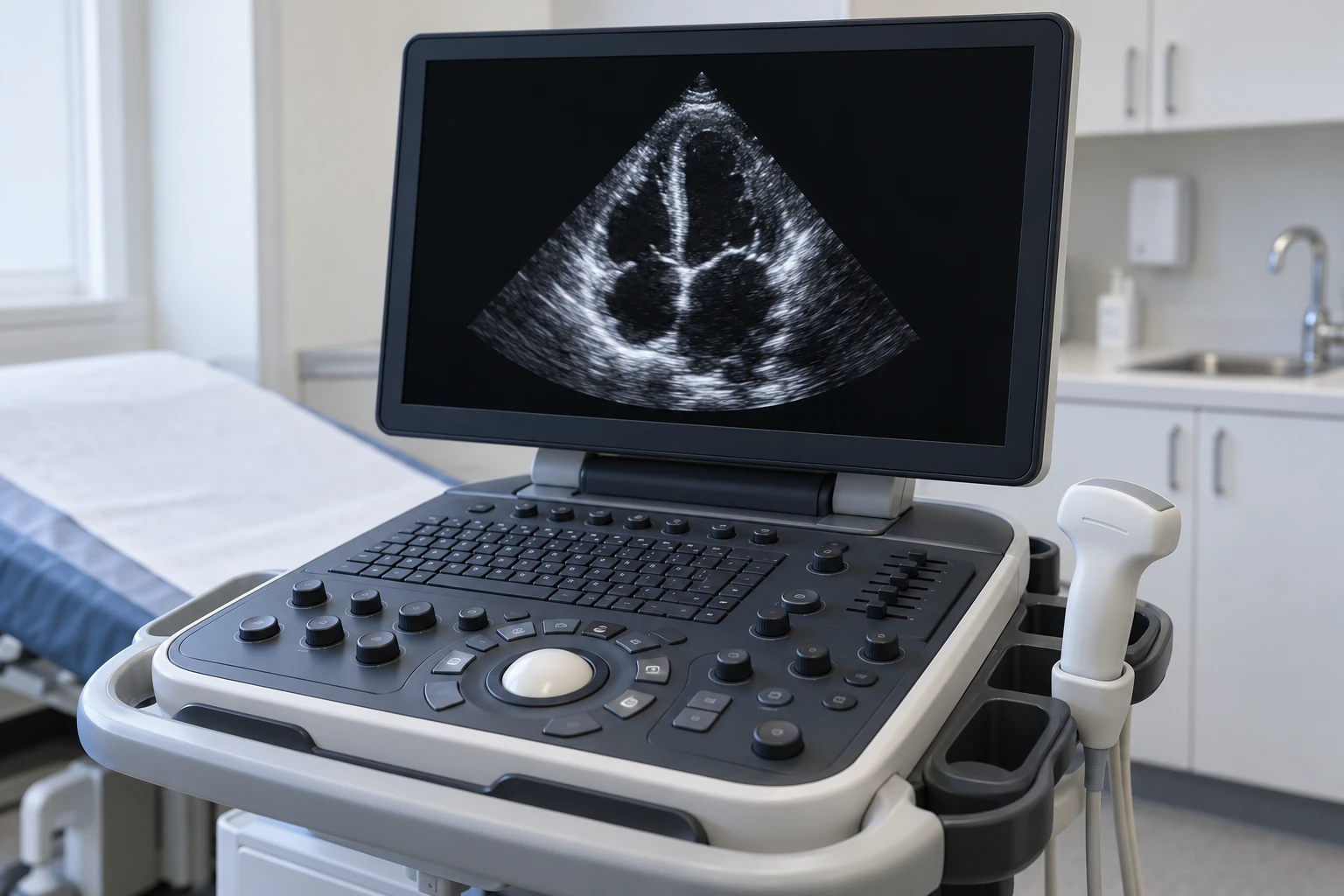 —
Before contraction
 —
After contraction
Illustrative images; volumes are supplied by the user.
How Is This Calculated?
SV = EDV − ESV
Blood Pumped per Beat
Subtract the volume remaining from the volume after filling.
A Closer Look at the Measurements
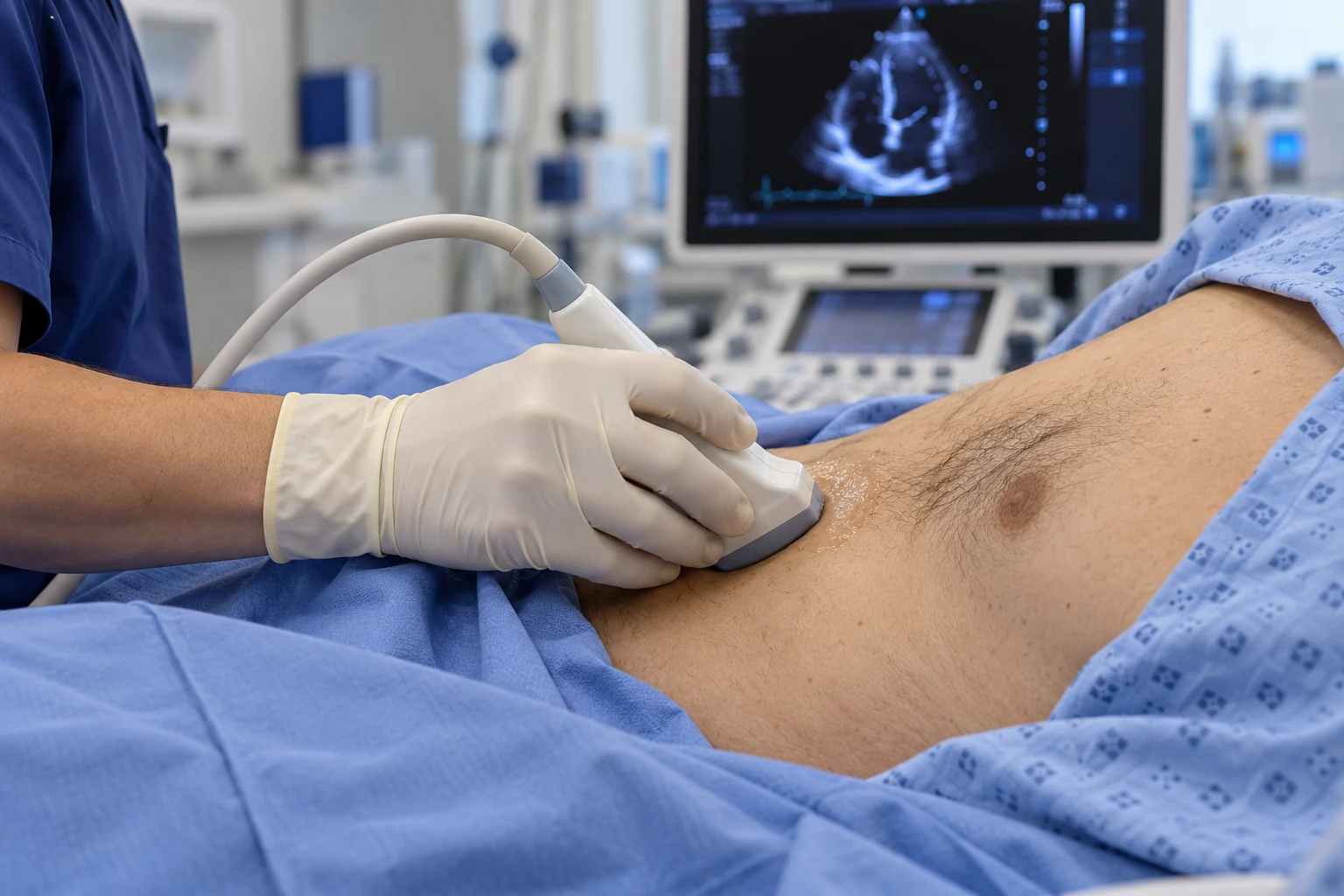
Obtain the volumes
Measure EDV and ESV using an appropriate method.
Match the assessment
Use volumes from the same ventricle and assessment.
Check the units
Confirm the values are in millilitres (mL).
Calculation & Assumptions
Formula: SV = EDV − ESV
Units: mL/beat.
This method uses EDV and ESV in mL.
Input limits & precision
EDV must be greater than 0 and at most 10,000 mL. ESV must be between 0 and EDV. Both inputs support up to six decimal places. These are software limits, not clinical reference ranges. Subtraction uses exact scaled integers, and the result retains up to six decimal places without rounding. Equal input volumes produce a mathematical result of 0 mL/beat, not a clinical interpretation.
Frequently asked questions
What is stroke volume?
Stroke volume is the amount of blood ejected by one ventricle in a single contraction. With this method, subtract the end-systolic volume from the end-diastolic volume.
Where do EDV and ESV come from?
These volumes come from a clinical measurement or estimate, such as an imaging assessment. Use values from the same ventricle, assessment and compatible measurement method. The photos on this page are illustrative.
Is stroke volume the same as cardiac output?
No. Stroke volume is a volume per beat; cardiac output is a volume per minute. This page calculates SV = EDV − ESV only. Alternatively, cardiac output in mL/min divided by heart rate in beats/min gives stroke volume in mL/beat; convert L/min to mL/min first if needed.
More questions (5)
What does the Stroke Volume calculate?
Stroke Volume Calculator — free online calculator.
Which values should I enter?
Enter Edv, Esv using the units and format shown beside each field.
What formula does this calculator use?
The calculator uses the following relationship: SV = Cardiac Output ÷ Heart Rate (or) SV = EDV − ESV.
Why might my result differ from another source?
Results can differ because measurement methods, rounding and assumptions vary. This calculator is an estimate and is not a medical diagnosis.
Does the result update automatically?
Yes. Changing an input updates the result using the same calculation engine shown on this page.
Sources & References
BookshelfPhysiology, Stroke VolumeStatPearls · Clinical backgroundCleveland
ClinicEjection fraction and stroke volumeHealth Library · Measurement context
References provide context, not endorsement.