

DLS Method Calculator
Rain Interruption & Target Studio
Explore how overs and wickets change a rain-adjusted chase.
D/L Standard Edition · educational simulatorUses the published 2002 resource table. Official DLS/Stern targets require the authorised match software.
Revised chase dashboard
Resources available to each side
20.0% fewer overs does not mean 20.0% fewer resources.
Not an official DLS match target. Minimum-over and match-result rules must be checked separately.
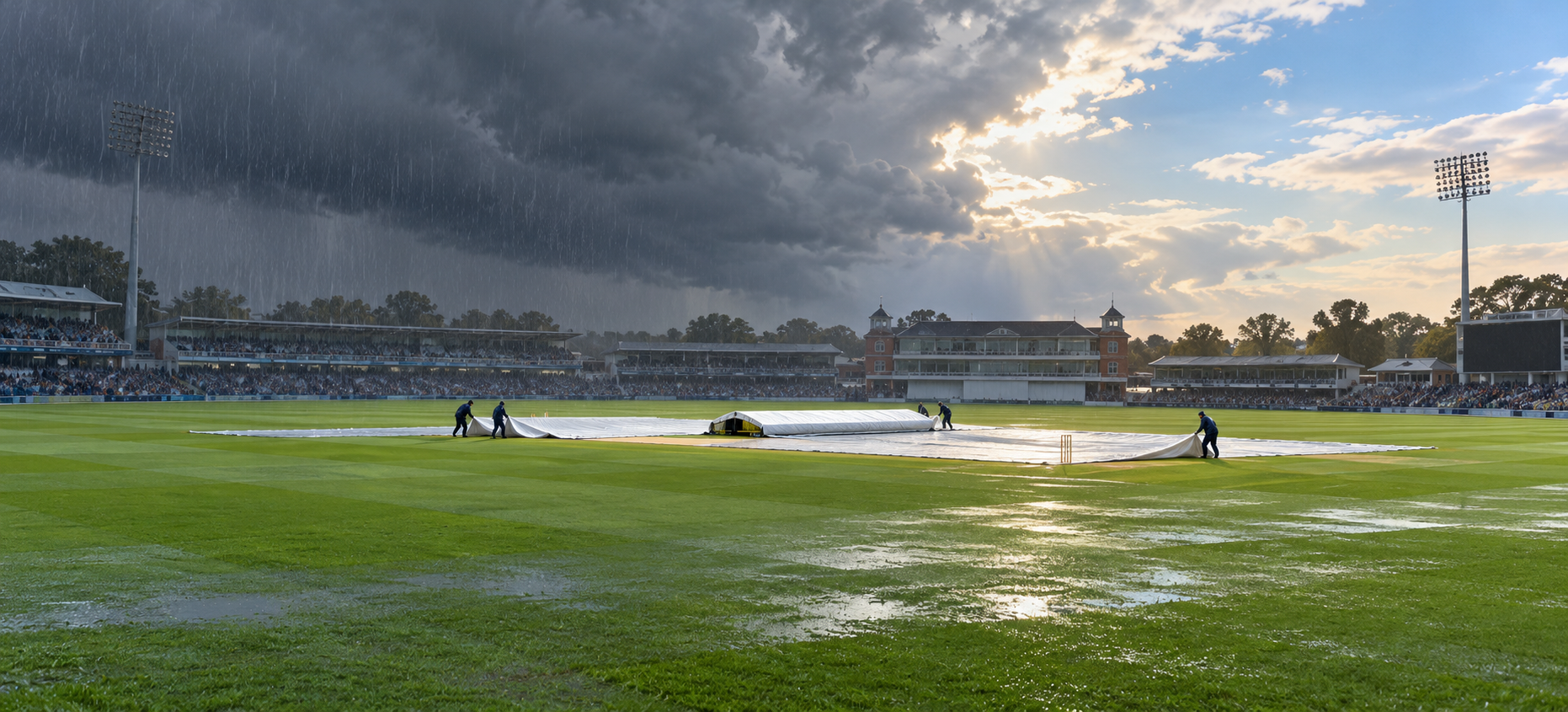
What the rain actually removes


At the interruption
100.0 − 89.3 = 10.7 percentage points lost
50 scheduled overs → 40 available, 10 removed.
Overs and wickets work togetherRead the table at the same wicket count before and after rain.
Subtract lost resourcesUpdate the innings total, not just the runs still required.
Par is one less than targetReach the revised target to win; par is the tie score.
Formula & worked example
R1 = 100.0%; R2 = 89.3%.
floor(300 × 89.3 / 100) + 1 = 268 runs.
Par = 267; winning target = 268.
Standard Edition equations
If R2 ≤ R1: target = floor(S × R2 / R1) + 1.
If R2 > R1: target = floor(S + G50 × (R2 − R1) / 100) + 1.
S is Team 1’s final score. R1 and R2 are the total resources available to each side, not their resources remaining at an arbitrary moment.
Frequently asked questions
Is this the official DLS/Stern calculator?
No. It uses the published D/L Standard Edition table (2002 update). Modern Stern calculations use the authorised software and can give different targets.
Why is 300 → 40 overs not 253?
With Team 1 scoring 300 in 50 uninterrupted overs, the published table gives Team 2 89.3% resources for 40 overs from the start. Standard target = floor(300 × 0.893) + 1 = 268. A fixed 0.8 adjustment is not this method.
Can I enter 12.3 overs?
Automatic table mode accepts whole overs only, for interruptions between overs. In cricket, 12.3 means 12 overs and 3 balls, not a decimal fraction. Use the appropriate ball-by-ball table and known total resource percentages in Resource inputs for other cases.
Do wickets change the calculation?
Yes. Rain removes the difference between the before/after table values at the wicket count at interruption. Wickets already lost are not subtracted a second time from the team’s starting resources.
Can I use this after multiple stoppages?
Automatic modes cover one reduction in the second innings after an uninterrupted first innings. Resource inputs can calculate a Standard target from total R1 and R2 that already include every interruption.
Does this declare a valid match result?
No. Competition minimum-over rules, penalty runs and the scorers’ official target still apply. The dashboard does not certify a result or apply penalty runs.
Sources & references
2002 tablePublished resource percentagesOver-by-over · Duckworth & Lewis.ICC
methodologyStandard Edition proceduresResource loss, targets and worked examples.DLS
explainedEdition differences & FAQsICC-hosted methodology questions.
Independent educational tool. No ICC affiliation, accreditation or endorsement. Sources checked 19 October 2026.
Related cricket calculators

Explore rain-adjusted cricket targets using the published D/L Standard Edition resource table.