Escape Velocity Calculator
Explore escape speed from Earth, the Moon, Mars or a custom body. Compare circular motion, departure energy and the ideal burn from a parking orbit, with live diagrams and worked examples.
Calculation inputs
Build the energy model in the right order
- 1Choose the body or its ratios
Preset μ and mean radius are visible in calculation details. Custom ratios preserve the original Earth-scaled calculation.
- 2Add altitude to the body radius
A 200 km altitude around Earth is a center distance of about 6,571 km.
- 3Choose threshold or excess energy
A positive v∞ changes the required departure speed and the ideal parking-orbit burn.
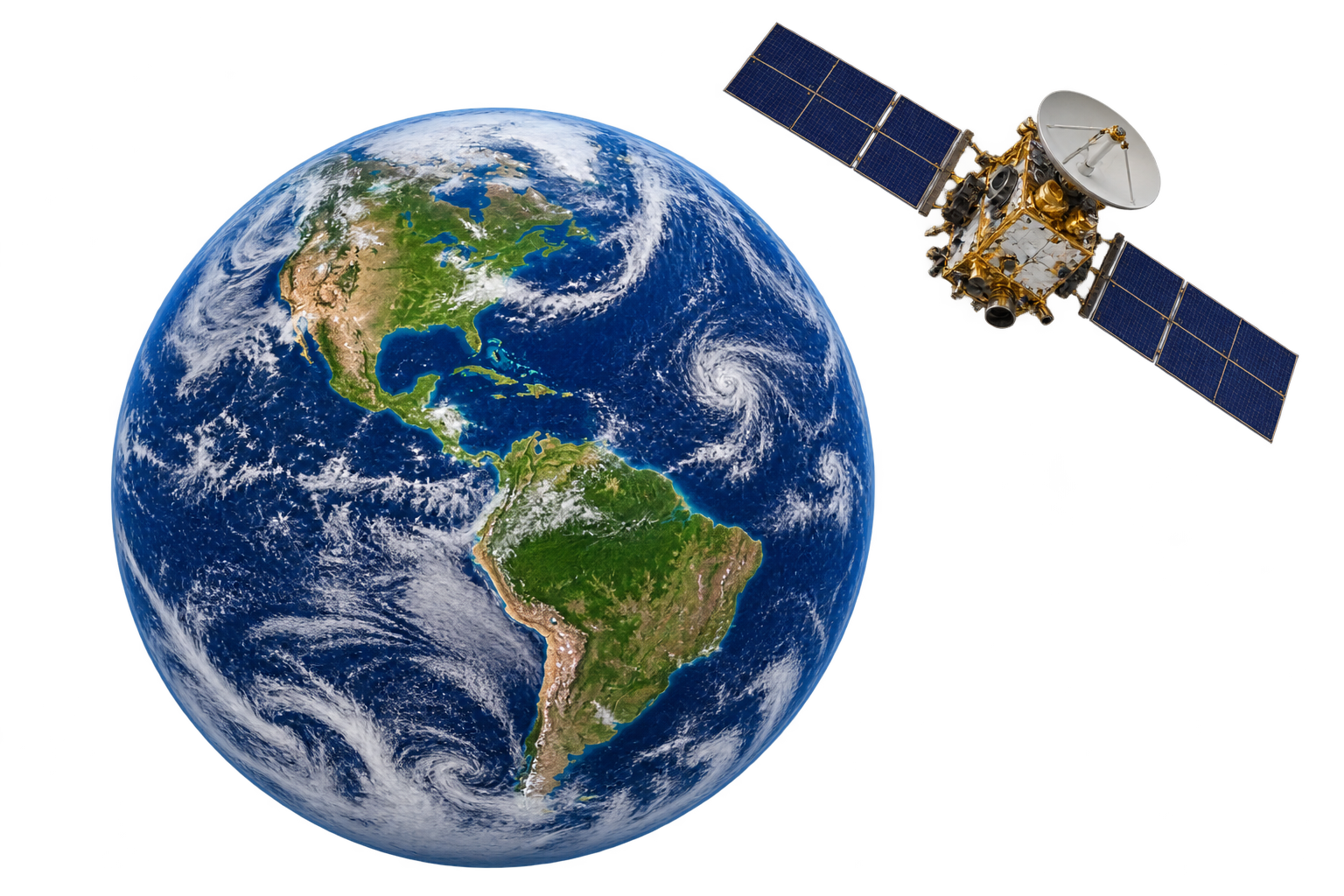
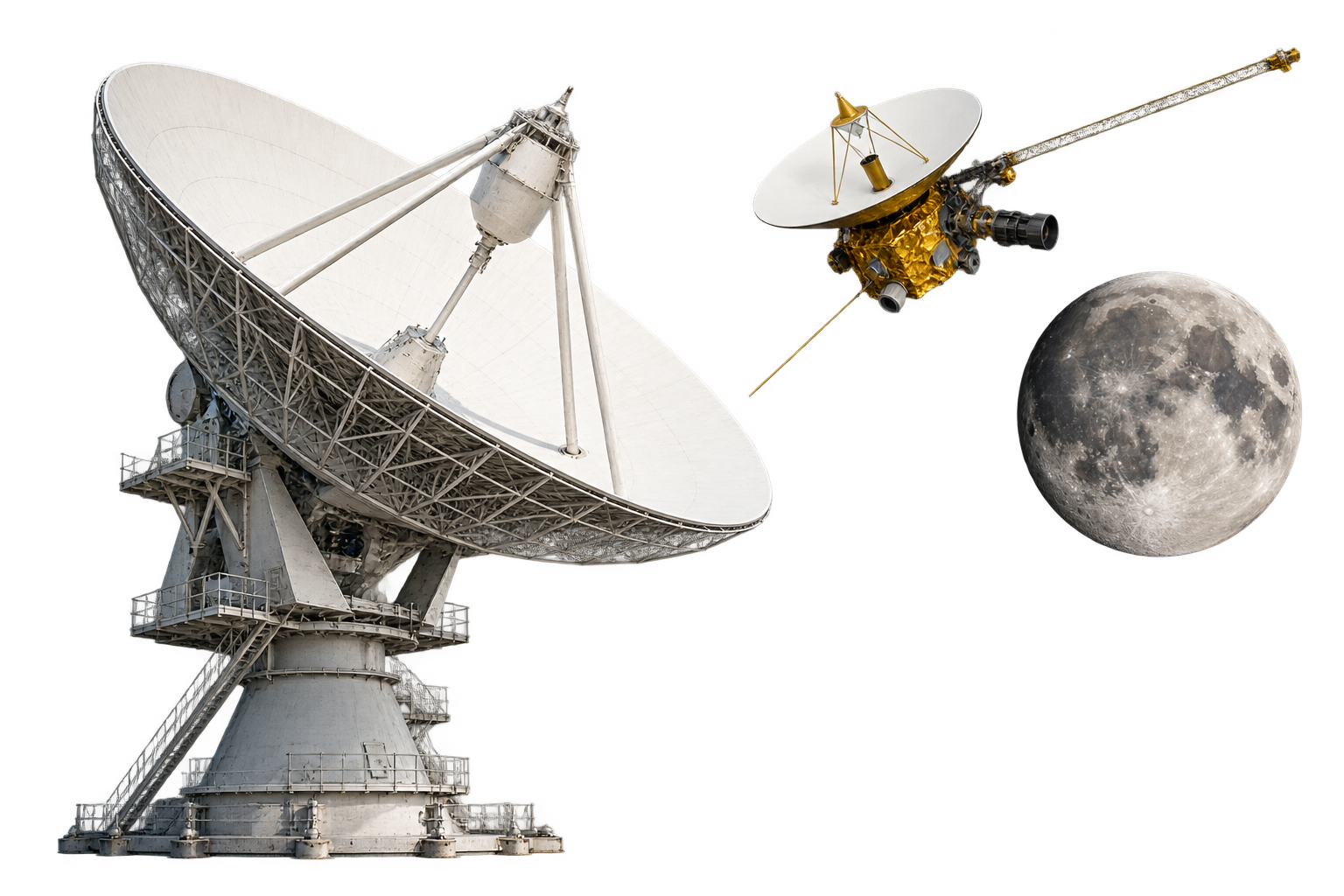
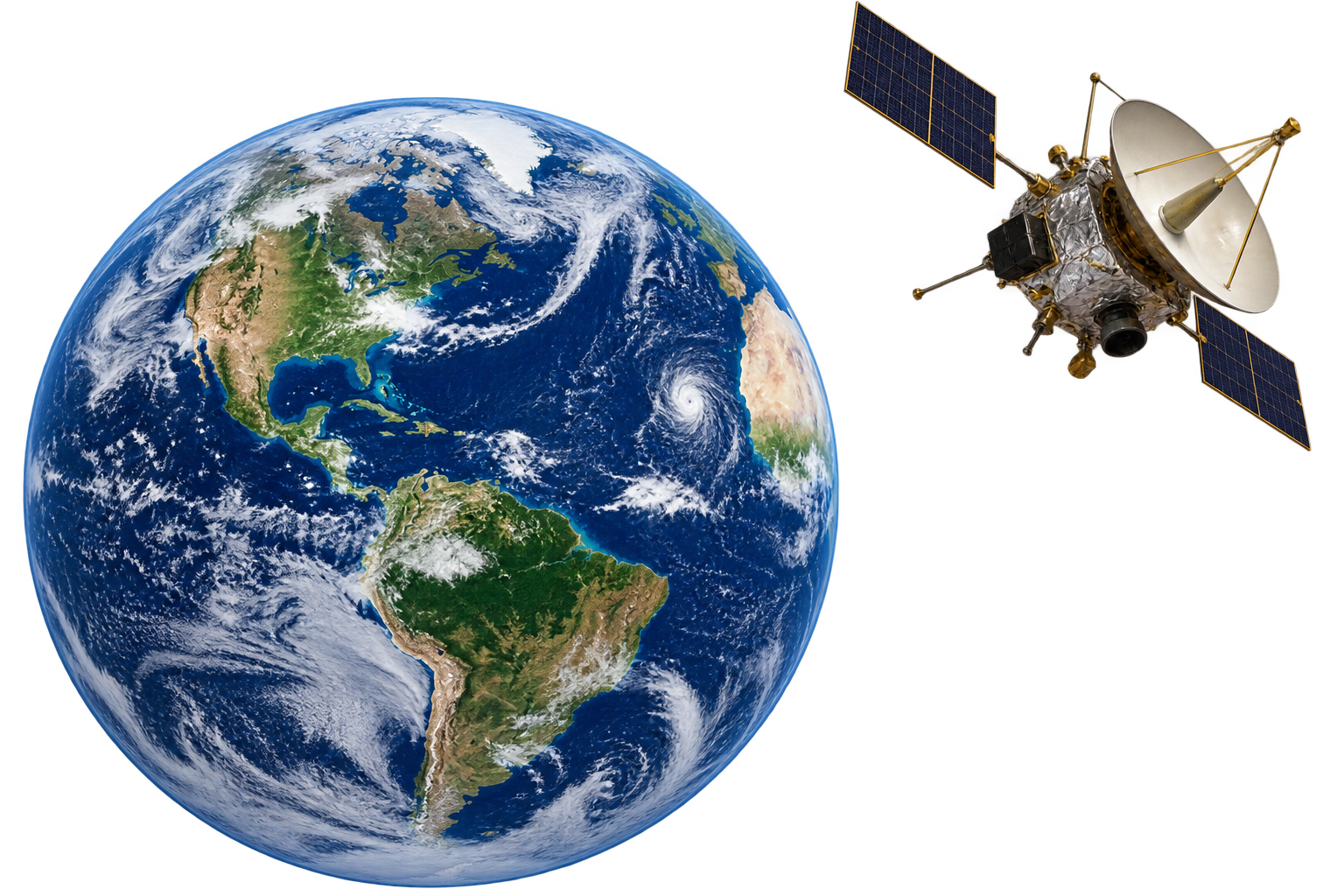
Constants and methods are linked below. Illustrations show the setting; calculated plots carry the actual geometry and data.
How escape speed changes with altitude
How escape speed changes with altitude

Calculation results
Step-by-step solution
Choose the gravity model
Built-in constants are source-linked. Custom ratios scale the Earth gravitational parameter and mean radius.
Measure radius from the center
Calculate the energy threshold
Add excess speed, then compare with circular motion
Δv assumes an instantaneous prograde burn from a circular orbit at this radius. It is not the launch-to-space budget.
Distinguish the threshold, departure speed and burn.
- 1Start from the body’s gravitational parameter
Earth: μ = 398,600.435507 km³/s²
- 2Use the distance from the center
R + h = 6,371.0084 km
- 3Compare energy states
The local threshold is √2 times the circular speed.
Isolated, spherical, non-rotating central body; negligible spacecraft mass. Atmosphere, terrain, other gravitating bodies and finite burns are excluded.
Escape is an energy condition, not a height at which gravity switches off. The threshold has zero speed at infinity; positive v∞ requires additional energy. Display values are rounded after calculation.
Measurements & calculation details
| Quantity | Value |
|---|---|
| Central body | Earth |
| Gravitational parameter μ | 398600.435507 km³/s² |
| Spherical reference radius R | 6371.0084 km |
| Altitude | 0 km |
| Center distance r | 6371.0084 km |
| Local escape speed | 11.186128228778 km/s |
| Required departure speed | 11.186128228778 km/s |
| Ideal aligned impulsive Δv | 3.2763411029868 km/s |
Try a worked example
Choose an example to load its measurements into the calculator. Each result uses the same calculation engine as your own inputs. Back to your calculation
Compare gravity wells at the same altitude
| Reference body | Escape at 0 km | Circular speed at same altitude |
|---|---|---|
| Earth | 11.1861 km/s | 7.9098 km/s |
| Moon | 2.3757 km/s | 1.6799 km/s |
| Mars | 5.027 km/s | 3.5547 km/s |
All rows use the same physical altitude above each body’s adopted mean-radius sphere. This is a two-body comparison, not an accessible launch trajectory.
Understand the calculation
Concept & meaning
Escape speed expresses a local energy threshold. At a distance r from a spherical body’s center, the kinetic energy per unit spacecraft mass must offset the negative gravitational potential μ/r. The threshold therefore depends on both the body’s gravitational parameter and the starting radius. It is a speed in a body-centered inertial model, rather than a command for a real rocket.
Formula & special cases
Always add altitude to the reference radius: r = R + h. The zero-excess threshold is √(2μ/r), while a desired asymptotic speed v∞ changes the required local speed to √(2μ/r + v∞²). For an ideal instantaneous prograde departure from a circular orbit at that same radius, subtract √(μ/r). C₃ equals v∞². Numerically, km²/s² also equals MJ/kg for specific energy.
Scope & limitations
Gravity has no sharp edge where it turns off. A real vehicle can keep adding energy with thrust, so it need not instantaneously reach this ballistic threshold at liftoff. This calculator does not model air resistance, gravity losses, rotation, engine performance, the Sun’s gravity or a destination encounter. The mean-radius surface is an adopted sphere; mountains, oblateness and atmospheric depth are absent. Custom bodies must remain in the supported weak-field range.
Result from your current inputs
Local escape speed: 11.1861 km/s
From radius to departure energy
| Calculation | Formula | Interpretation |
|---|---|---|
| Local circular speed | √(μ/r) | Already orbiting at the selected radius |
| Escape threshold | √(2μ/r) | Zero asymptotic speed |
| Departure with excess | √(2μ/r + v∞²) | Positive energy at infinity |
| Ideal circular departure burn | Departure speed − circular speed | Instantaneous, aligned prograde burn |
| C₃ and excess energy | v∞² and C₃/2 | km²/s² and MJ/kg respectively |
Sources & References
 NASA/JPL · astrodynamic constantsEarth/Moon μ, vacuum light speed, AU and Julian yearRead the referenceNASA/JPL · physical parametersAdopted planetary mean radiiRead the reference
 NASA · Moon fact sheetMean lunar radius: 1,737.4 kmRead the referenceNASA/JPL · satellite parametersMars central-body μ, rather than the combined Mars-system valueRead the referenceNASA NTRS · departure energyVis-viva, C₃ and ideal departure ΔvRead the reference
References document the methods and their limitations; links and logos do not imply institutional endorsement or expert review.