Light Travel Time Calculator
Convert distance into vacuum light time, compare one-way and round-trip propagation, and build a command-and-reply scenario with an explicit turnaround delay and an explorable timeline.
Calculation inputs
Choose a distance, then build the exchange
- 1Name the distance unit
Kilometres, miles, AU, mean lunar distances and Julian light-years convert to one common kilometre value.
- 2Choose one-way or two-way timing
Only the exchange scenario includes a turnaround input. Hidden inactive values are ignored.
- 3Explore the resulting timeline
Move the slider to inspect outbound, waiting and return phases in calculated model time.
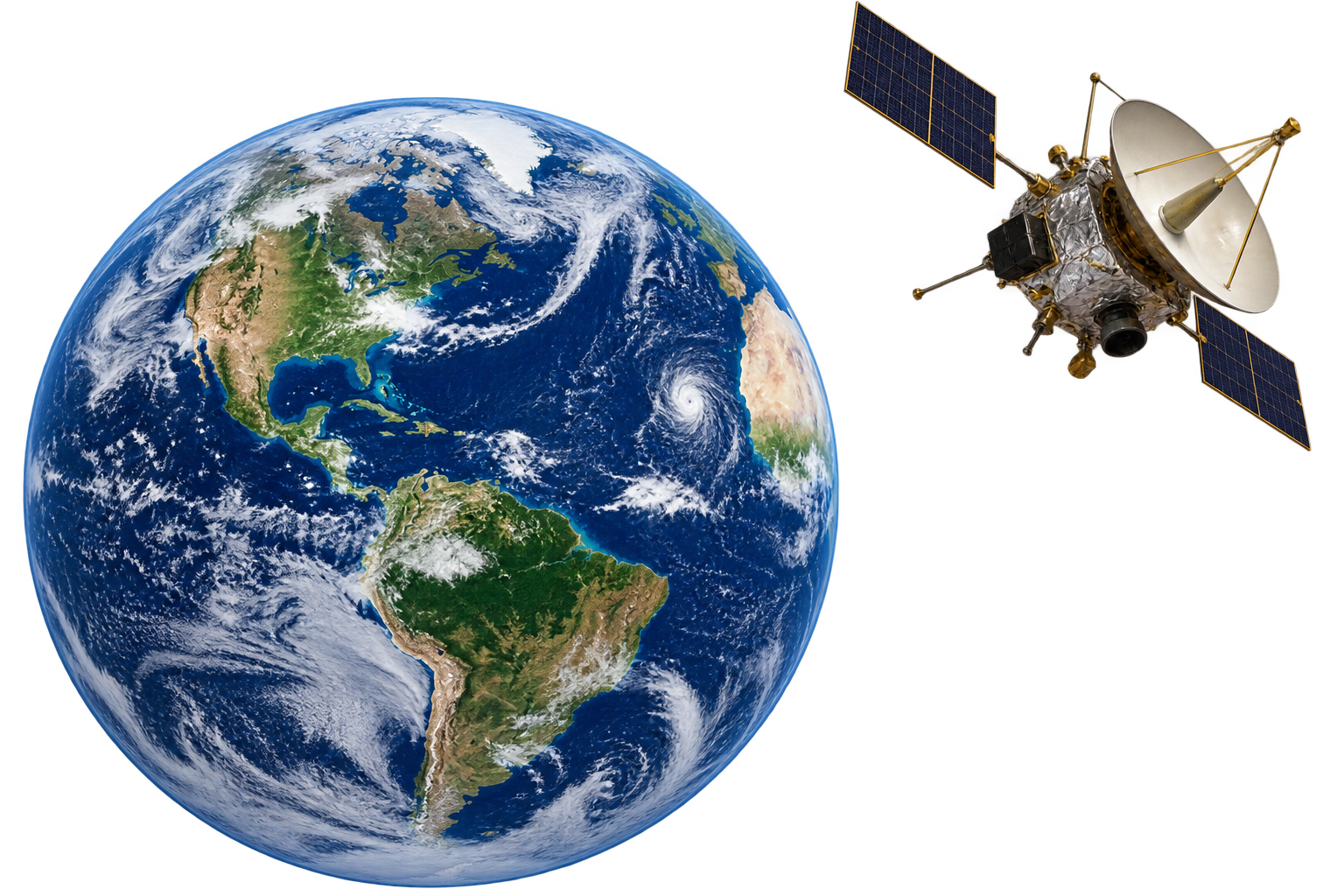
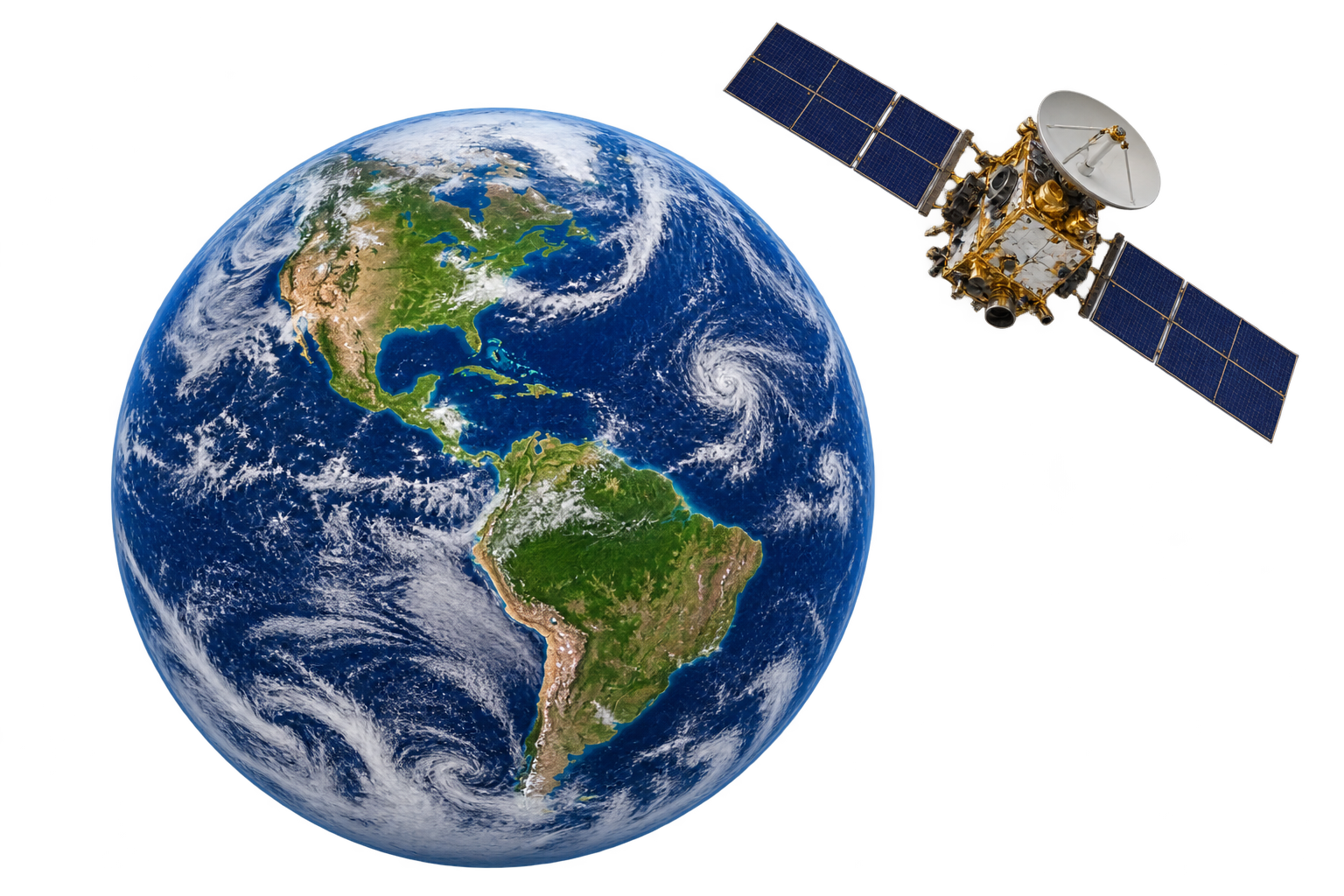
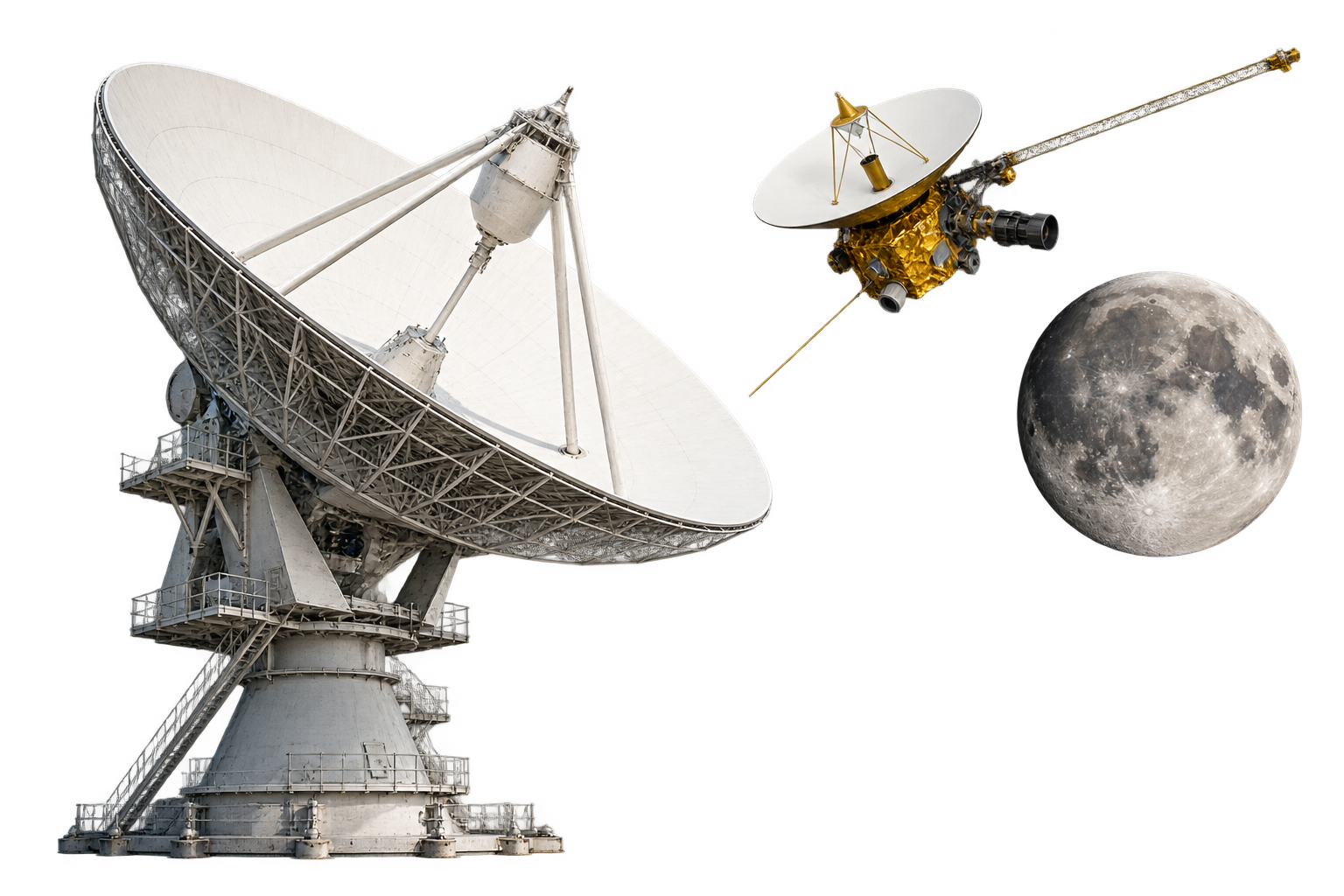
Constants and methods are linked below. Illustrations show the setting; calculated plots carry the actual geometry and data.
Explore the signal’s path through time
Explore the signal’s path through time
0 s · Outbound
The slider explores the calculated time; it is not a real-time signal monitor. A flat segment at the far endpoint represents an entered turnaround delay.

Calculation results
Step-by-step solution
Convert the distance
AU = 149,597,870.7 km; LD = adopted 384,400 km; one Julian light-year = c × 31,557,600 s.
Use the vacuum light speed
Calculate one-way propagation
Build the selected exchange
A reply additionally needs any applicable processing, scheduling and relay delays not explicitly included here.
Separate propagation from the time needed to reply.
- 1Start with a path length
384,400 km is the entered fixed distance, not today’s measured separation.
- 2Let the signal travel at c
One-way propagation takes 1.28222 s.
- 3Build the return only when selected
The selected result contains the outbound path only.
Not a live ephemeris or network latency prediction. Separation is fixed, the path is straight and propagation is in vacuum. Body motion, occultation, relativity, plasma, relay geometry and unentered delays are excluded.
Radio signals and visible light share the vacuum speed c. Mean lunar distance is a convention; the Moon’s instantaneous distance changes. A round trip is not instantaneous and is not spacecraft travel time.
Measurements & calculation details
| Quantity | Value |
|---|---|
| Entered distance | 384400 km |
| Distance in kilometres | 384400 km |
| Vacuum speed of light c | 299792.458 km/s (exact) |
| One-way time | 1.2822203819417 s |
| Two-way propagation | 2.5644407638834 s |
| Included turnaround | 0 s |
| Selected total | 1.2822203819417 s |
Try a worked example
Choose an example to load its measurements into the calculator. Each result uses the same calculation engine as your own inputs. Back to your calculation
A reference ladder of signal delays
| Illustrative path length | One-way vacuum time | Round-trip propagation |
|---|---|---|
| Mean Earth–Moon convention | 1.28222 s | 2.564441 s |
| 1 astronomical unit | 8.317 min | 16.633 min |
| 0.5 AU example | 4.158 min | 8.317 min |
| 2.5 AU example | 20.792 min | 41.584 min |
| 1 Julian light-year | 1 Julian year | 2 Julian years |
The AU examples are selected lengths, not current Earth–Mars distances. The table excludes turnaround. A straight-line light-time model cannot test whether the line of sight is blocked.
Understand the calculation
Concept & meaning
Light time is the interval required for a signal to cover a specified path at the vacuum speed c. It applies to radio as well as visible light. A receiving spacecraft cannot answer a command before the command arrives; the reply then travels back. The optional turnaround field makes one additional delay visible instead of mixing it into the propagation result.
Formula & special cases
The one-way relation is t = d/c. A fixed-distance round trip is 2d/c, and a simple command–reply exchange adds the entered turnaround τ. The speed c is exactly 299,792.458 km/s. One AU is exactly 149,597,870.7 km; one Julian light-year is c multiplied by 31,557,600 seconds. The LD conversion adopts 384,400 km as a convenient mean lunar-distance unit, rather than measuring the Moon today.
Scope & limitations
Actual endpoints move while the signal propagates. Navigation systems solve for transmit and receive states and may include relativistic and media corrections. This calculator holds distance fixed, so it cannot supply an accurate operational light time for a moving spacecraft or a date. It also cannot decide whether a planet or the Sun blocks a link. Turnaround, scheduling, coding and relay paths can make real communication much slower than the displayed geometric delay.
Result from your current inputs
One-way vacuum light time: 1.28222 s
Keep the timing terms separate
| Calculation | Formula | Interpretation |
|---|---|---|
| One-way propagation | d/c | No return path |
| Round-trip propagation | 2d/c | Fixed equal outward and return lengths |
| Command and reply | 2d/c + τ | Includes only the entered turnaround |
| A Julian light-year | c × 31,557,600 s | Distance unit, not a speed |
| Mean lunar distance | 384,400 km | Adopted convention; varies in reality |
Sources & References
 NASA/JPL · astrodynamic constantsEarth/Moon μ, vacuum light speed, AU and Julian yearRead the referenceNASA/JPL · lunar distanceAdopted mean LD = 384,400 kmRead the reference
 NASA · communication delayPropagation delay, autonomy and real mission limitationsRead the reference
References document the methods and their limitations; links and logos do not imply institutional endorsement or expert review.