

Face Shape
Understand your proportions. Explore your style.
Your face shape
Longer than wide, with a narrower jaw.
Face shapes overlap. Small measurement changes can change the estimate.
Your facial proportions


Schematic outline. Not a photograph or a clinical facial model. Guide spacing is illustrative, not to scale.
Frames & finishing touches
For an oval estimate
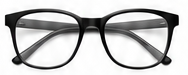
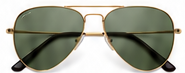
Try square, soft rectangular or aviator frames. Prioritise bridge fit, frame width and comfort.
Hair & grooming
Use shape and volume to create the balance you prefer.
Optional: golden ratio comparison
1.53 vs φ 1.618 · 5.2% below φMathematical comparison only. Not a symmetry or beauty score.
The method, clearly explained
Worked example (your measurements):
23 ÷ 15 = 1.53Shape labels use transparent style heuristics; they are not universal clinical categories.
Seven shapes & classification rules
The first matching rule applies to unrounded measurements. F = forehead, C = cheekbones, J = jaw, L = length; W is the widest of F, C and J.
- Triangle: J ≥ 1.05 × max(F, C).
- Heart: F ≥ 1.04 × C and J ≤ 0.88 × F.
- Diamond: C ≥ 1.10 × F and J ≤ 0.87 × C.
- Rectangle / Oblong: L/W ≥ 1.65.
- Square: L/W < 1.25, J ≥ 0.92 × C, F ≥ 0.92 × C and width spread ≤ 10% of W.
- Round: L/W < 1.25.
- Oval: remaining proportions.
These software heuristics do not measure jaw angularity or diagnose a condition. Similar faces may fall into neighbouring categories. Input bounds (length 8–35 cm, widths 4–30 cm) are plausibility checks, not medical norms.
Frequently asked questions
Why might another tool disagree?
Shape labels overlap. Different tools use different tolerances and landmarks, so the same measurements can receive different labels. Our exact rules are available in the method panel.
Can I measure from a selfie?
Camera distance, lens distortion and head angle can change apparent widths. Prefer direct, straight measurements using consistent landmarks; do not use a doubled ear-to-chin distance as jaw width.
Does this assess facial symmetry?
No. Four overall dimensions cannot compare the left and right sides of your face or assess clinical craniofacial anatomy.
Does the golden ratio define beauty?
No. Comparing one ratio with phi is a mathematical exercise. It does not establish attractiveness, symmetry, health or an ideal face.
Sources & references
References inform the page; no institutional endorsement.

Explore related calculators
Body Adiposity Index

Understand your proportions. Explore your style.