

Goat Gestation Calculator
Plan kidding dates. Prepare for every milestone.
Breeding & Herd Inputs
Kidding Date & Care Summary
ESTIMATED KIDDING DATE—Enter a breeding date to begin.
—Elapsed calendar time
—Until central estimate
—Of estimated duration
Gestation Progress
—
Day 0Day 150
Date-based estimate — confirm pregnancy with your veterinarian. The planning window is not a statistical confidence interval.
Key Milestones & Care Dates
Dry-off
—CD&T discussion
—Kidding pen & kit
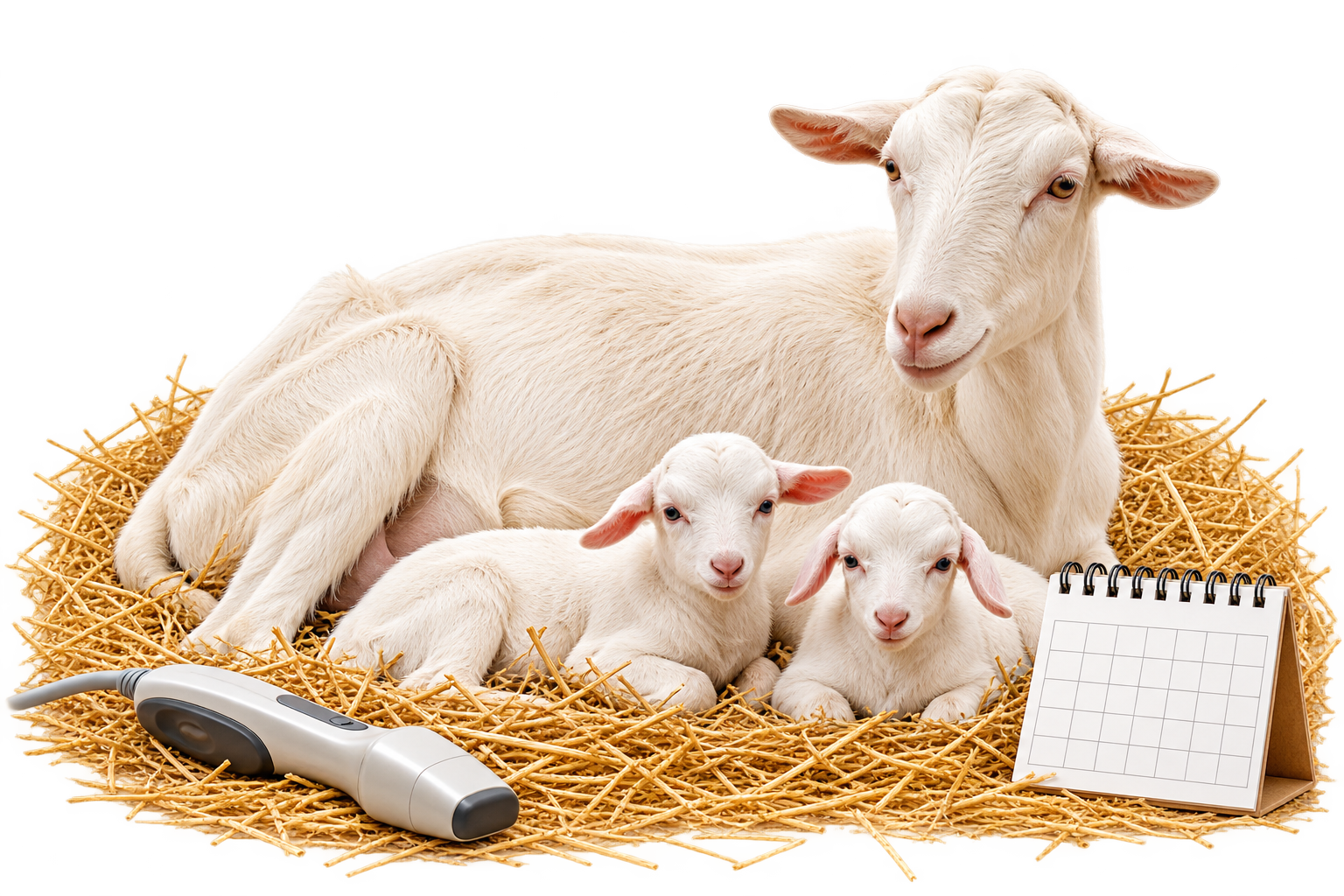
—Illustrations are educational; the ultrasound picture is not a diagnostic scan of your doe.
Gestation & Care Calendar
Recorded breeding
—Ultrasound
—Late-gestation nutrition
—Kidding pen preparation
—
Estimated kidding
—Introduce ration changes gradually; review body condition, litter size and the feeding plan with your veterinarian.
All care dates & reference-date status
| Milestone | Planned date / window | Relative day | As-of status |
|---|
How dates are calculated
Estimated kidding = breeding date + gestation duration
Planning window = estimated date ± selected days
Elapsed days use completed calendar days. The breeding date is day 0; a doe at day 60 has completed 8 weeks and 4 days.
Planning assumptions & limitations
Standard breeds use 150 days. The miniature preset uses 147 days as a starting point consistent with ANDDA’s calculator, not a universal duration for every miniature breed. Custom values should reflect your herd records and veterinary guidance.
The nutrition review marks the start of the final third of the entered duration. Dry-off is a management reminder for currently lactating does only; 45–60 days is commonly used, but do not infer a feeding or drying-off protocol from this date alone.
The default ultrasound window (days 40–70) supports assessment and fetal counting. Earlier diagnosis may be possible; your veterinarian chooses the method and timing. Estimated dates do not establish fetal viability, litter size or pregnancy status.
The default CD&T reminder is 4–6 weeks before the central date. Vaccine product, prior vaccination history, local disease risk and veterinary advice determine the actual schedule. This tool does not prescribe a vaccine dose or recommend inducing labor.
If the doe stops eating, becomes weak or appears distressed, or strong straining does not produce a kid, contact your veterinarian promptly. Do not wait for a calculated date.
Frequently asked questions
How long is a goat pregnant?
A standard planning average is 150 days. Individual gestation varies; use herd records and your veterinarian’s advice rather than treating a preset as a deadline.
How accurate is the kidding window?
The selected ± range is a planning allowance, not a validated prediction interval. An uncertain mating date adds uncertainty; use confirmed service records when possible.
When should I arrange an ultrasound?
The default days 40–70 are a useful fetal-counting window. A veterinarian may detect pregnancy earlier and may recommend another assessment date.
Do I need to vaccinate before kidding?
Discuss the herd plan with your veterinarian. A CD&T booster 4–6 weeks before kidding is commonly used to support colostral antibodies; follow the actual product label and prior-vaccination requirements.
What if the expected date has passed?
The page shows days past the central estimate and does not assume the doe is still pregnant. Check your records, observe the doe and seek veterinary advice when the date, health or labor is concerning.
Sources & Reference Guides
 American Dairy Goat AssociationBody condition, gestation and herd nutrition guidance.
 Merck Veterinary ManualBreeding, ultrasound, late-gestation care and kidding.
 Penn State ExtensionSmall-ruminant production and pre-kidding reminders.
Additional references: ANDDA — miniature-goat planning · Alabama Extension — dairy-goat reproductive management. Independent references, not institutional endorsement.
↗ Biology
Plan kidding dates. Prepare for every milestone.