Volume per breath
Use the measured tidal volume.
Total ventilation. Alveolar contribution. One clear breakdown.
Use the measured tidal volume.

Use the observed respiratory rate.
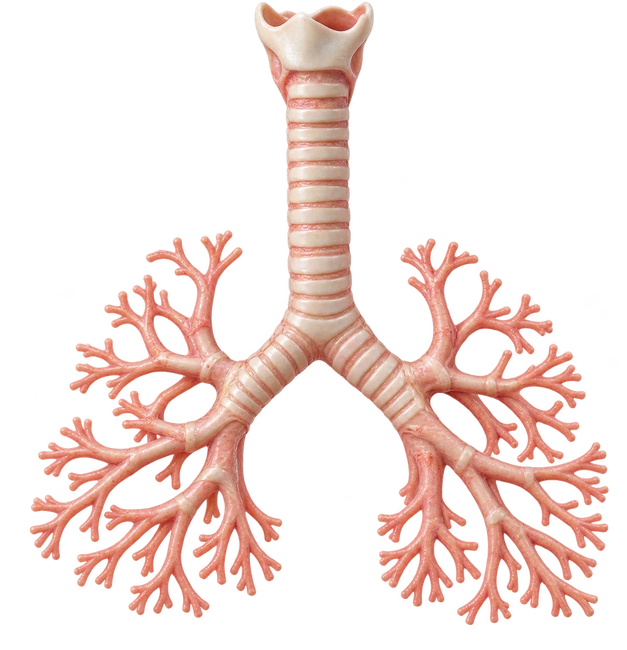
Assumptions must stay visible.
L/min
— mL/min
Enter measurements to calculate.
Adult resting context: approximately 5–8 L/min.Context only; not a diagnostic range or treatment target.
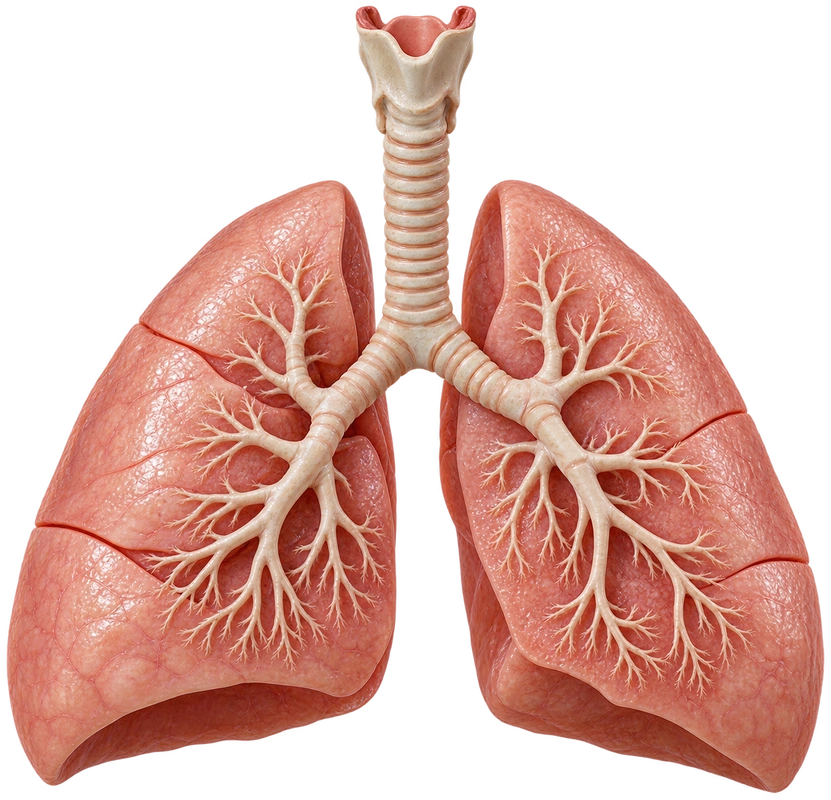
Total air moved does not measure blood oxygen or CO2 clearance.
Physiological dead space may exceed an anatomical estimate.
Illustration only · not measured gas exchange
| Breathing pattern | VE (total) | Estimated VA |
|---|---|---|
| 500 mL × 14/min | 7.0 L/min | 4.9 L/min |
| 250 mL × 28/min | 7.0 L/min | 2.8 L/min |
Teaching examples with VD fixed at 150 mL. Not a recommendation to alter breathing.
Convert mL/min to L/min by dividing by 1,000.
Total ventilation includes both gas-exchanging and dead-space ventilation. VA here is an estimate under the entered VD model. An anatomical estimate does not capture increased alveolar or apparatus dead space. A reported physiological VD may be used only when appropriate to the measurement context.
VT and RR must be positive. VD must be nonnegative and no greater than VT. An unavailable VD leaves VA and the split uncalculated. A VD equal to VT produces a modelled VA of zero; this is not a diagnosis. Measurements, clinical context and blood-gas assessment remain essential.
The resting context band is illustrative for adults, varies between sources and individuals, and is not used to grade results. This page does not assess ventilation adequacy, hypoxia or ventilator settings.
Multiply tidal volume in mL by respiratory rate in breaths/min, then divide by 1,000 for L/min. For example, 500 × 14 = 7,000 mL/min = 7.0 L/min.
No. It is a rough adult anatomical teaching assumption, not an individual measurement. Physiological dead space also includes alveolar dead space and can differ substantially with disease or equipment. Choose Not available if VD is unknown.
No. Total ventilation alone cannot establish effective CO2 clearance or oxygenation. Dead space, metabolic demand, blood gases and the clinical situation matter.
No. This educational tool does not prescribe ventilator settings or treatment. A qualified clinician must interpret measured respiratory data in the full clinical context.
References are provided for educational use. No institutional endorsement, approval or accreditation is claimed.
Total ventilation. Alveolar contribution. One clear breakdown.