Measured volumes
FEV1 and FVC from the same test
Measure the ratio. Understand the threshold. Keep the clinical context.
FEV1 and FVC from the same test
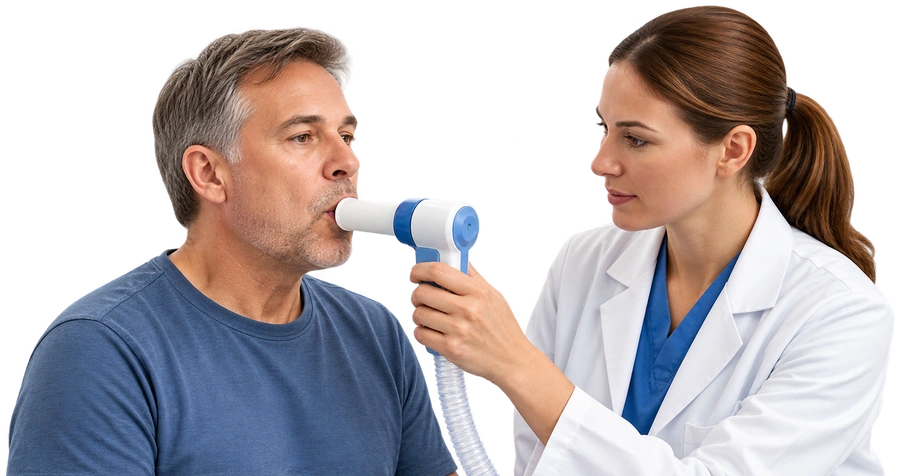
Use acceptable, repeatable results
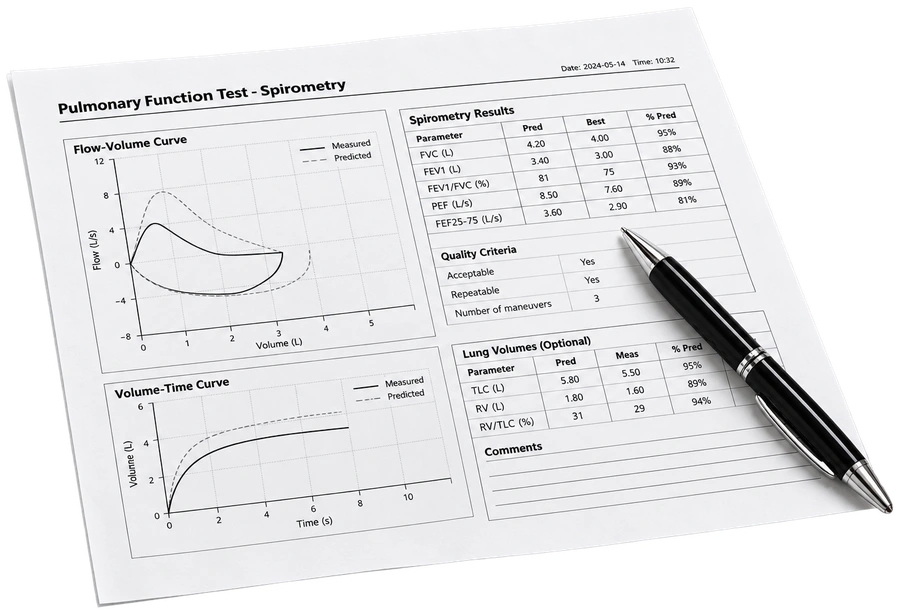
Age and reference limits matter
%
— ratio
Clinical interpretation requires the full spirometry report.
Test phase not specified
Threshold comparison, not a severity score.
Comparisons use unrounded values; extra digits preserve threshold distinctions.
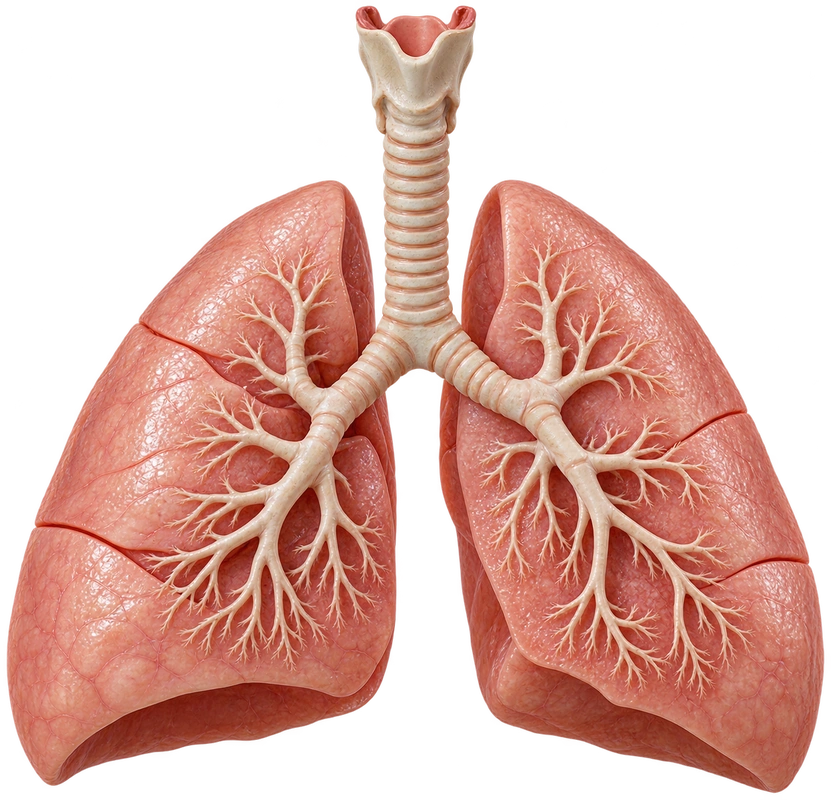
Low FVC needs further assessment. Restriction is confirmed by reduced total lung capacity (TLC).
Illustration only · not a diagnostic image.
Enter measurements to see the calculation.
Remaining volume is FVC − FEV1, not residual volume.
Uses a fixed ratio of 0.70 to define a low FEV1/FVC after bronchodilator in the appropriate COPD context.
Uses the lower limit of normal (LLN) from a validated reference population.
FEV1/FVC = measured FEV1 ÷ measured FVC. Multiply by 100 for the percentage. This page compares the unrounded ratio with 0.70 and, if supplied, the reported LLN.
A ratio exactly equal to a threshold is not below it. Test quality and acceptable, repeatable manoeuvres matter. The best FEV1 and FVC are selected according to the laboratory protocol; they need not be from the same manoeuvre.
GOLD and ATS/ERS use different interpretive approaches. A fixed threshold is not an age-adjusted LLN. This tool does not calculate GLI reference equations, predicted values, z-scores, bronchodilator responsiveness or impairment severity.
Two volume measurements cannot reconstruct a measured flow-volume or volume-time loop. The bar shows measured volume proportions only. A low FVC alone cannot confirm restriction or mixed disease.
No. A ratio of 75% is at or above the fixed 0.70 threshold, but this does not establish normal spirometry or exclude asthma or other disease. Interpretation also needs the relevant reference limits, FEV1 and FVC relative to predicted values, test quality and clinical context.
The lower limit of normal (LLN) accounts for an appropriate reference population and patient characteristics through validated equations. ATS/ERS interpretation uses reference limits; GOLD uses a fixed post-bronchodilator ratio in its COPD diagnostic framework. These approaches can disagree. Enter the reported ratio LLN, such as 0.68, not a percentage such as 68.
No. A low FVC may suggest the need for further assessment but is not enough to establish restriction. Reduced total lung capacity (TLC) is required to confirm it. This ratio tool does not measure TLC.
No. A low post-bronchodilator ratio can support airflow limitation in the appropriate COPD diagnostic context, but symptoms, exposures, repeat testing where appropriate and clinical assessment also matter. A low ratio alone does not identify its cause, and a preserved ratio does not exclude asthma. Do not change treatment based on this tool alone.

 ATS / ERSInterpretive strategies (2022)Spirometry interpretation in adults and children.GOLDGOLDPost-BD fixed-ratio guidanceDiagnosis and management of COPD.ATS / ERSSpirometry standardization (2019)Test performance and quality assurance.
References inform the content; no institutional endorsement.
Measure the ratio. Understand the threshold. Keep the clinical context.