

Muscle Mass Percentage Calculator
Understand the muscle share of your body weight
Use a known skeletal muscle mass, or explore an anthropometric estimate.
Your Body Measurements
Your Muscle Mass Percentage
Calculated from your entered mass
Display rounded to 1 decimal place. Rounding is not measurement accuracy.
Where your body weight goes
Other body mass includes non-muscle tissues, fat, organs and their water; it is not body fat alone.
Step-by-step solution
1. Divide muscle mass by body weight
30 / 70 ≈ 0.428571
2. Convert to a percentage
(30 / 70) × 100 ≈ 42.857143%
3. Round for display
Muscle mass percentage ≈ 42.9%
Know what the measurement represents

Skeletal muscle
The voluntary muscles used for movement.
Fat-free mass
Includes muscle, organs, bone and water.
Lee estimate
A research prediction, not a direct scan.
Calculation & assumptions
Muscle % = skeletal muscle mass / body weight × 100
This calculation
30 / 70 × 100 ≈ 42.9%
The direct route uses an entered mass. The Lee route estimates mass using the study terms and then calculates its percentage.
About the Lee research model
SM (kg) = 0.244W + 7.80H + 6.6s − 0.098A + r − 3.3
W in kg; H in metres; A in years. Sex term s = 1 (male) or 0 (female). Study coefficient r = 0 (White/Hispanic), −1.2 (Asian), or +1.4 (African American), using the paper's labels. These historical categories do not cover everyone.
Model 2 uses weight and height, not limb circumferences. Independent validation illustrates population and individual limitations. No universal low/normal/athletic cutoffs are assigned.
Units, precision & input scope
1 lb = 0.45359237 kg; 1 in = 2.54 cm. Internal calculations retain unrounded values. Direct weight: 0.5–1,000 kg; muscle must be positive and lower than weight. Lee inputs: 20–350 kg, 100–250 cm, age 18–90. These are software bounds, not validated reference ranges. Implausible model outputs are rejected.
Frequently asked questions
What does the Muscle Mass Percentage calculate?
It expresses whole-body skeletal muscle mass as a share of total body weight. The direct route uses an entered mass; the Lee route first estimates that mass.
Which values should I enter?
Direct route: body weight and whole-body skeletal muscle mass in the selected units. Lee route: weight, height, adult age, the published female/male model term and an explicitly selected study coefficient.
What formula does this calculator use?
Muscle percentage = skeletal muscle mass / body weight × 100. The Lee option uses model 2 from Lee et al. (2000) to estimate the numerator; direct entry does not use that model.
Why might my result differ from another source?
Definitions and measurement methods differ. Whole-body skeletal muscle, appendicular lean tissue, total device muscle mass and fat-free mass are not interchangeable. Rounding and study coefficients also affect comparisons.
Does the result update automatically?
Yes. Inputs, results, charts and solution steps update together. Invalid or missing inputs clear previous results and disable exports.
Is muscle mass the same as fat-free mass?
No. Fat-free mass includes skeletal muscle, organs, bone and water. This tool needs whole-body skeletal muscle mass, not fat-free mass or a DXA appendicular lean-tissue result.
More questions (6)
Where do I find skeletal muscle mass?
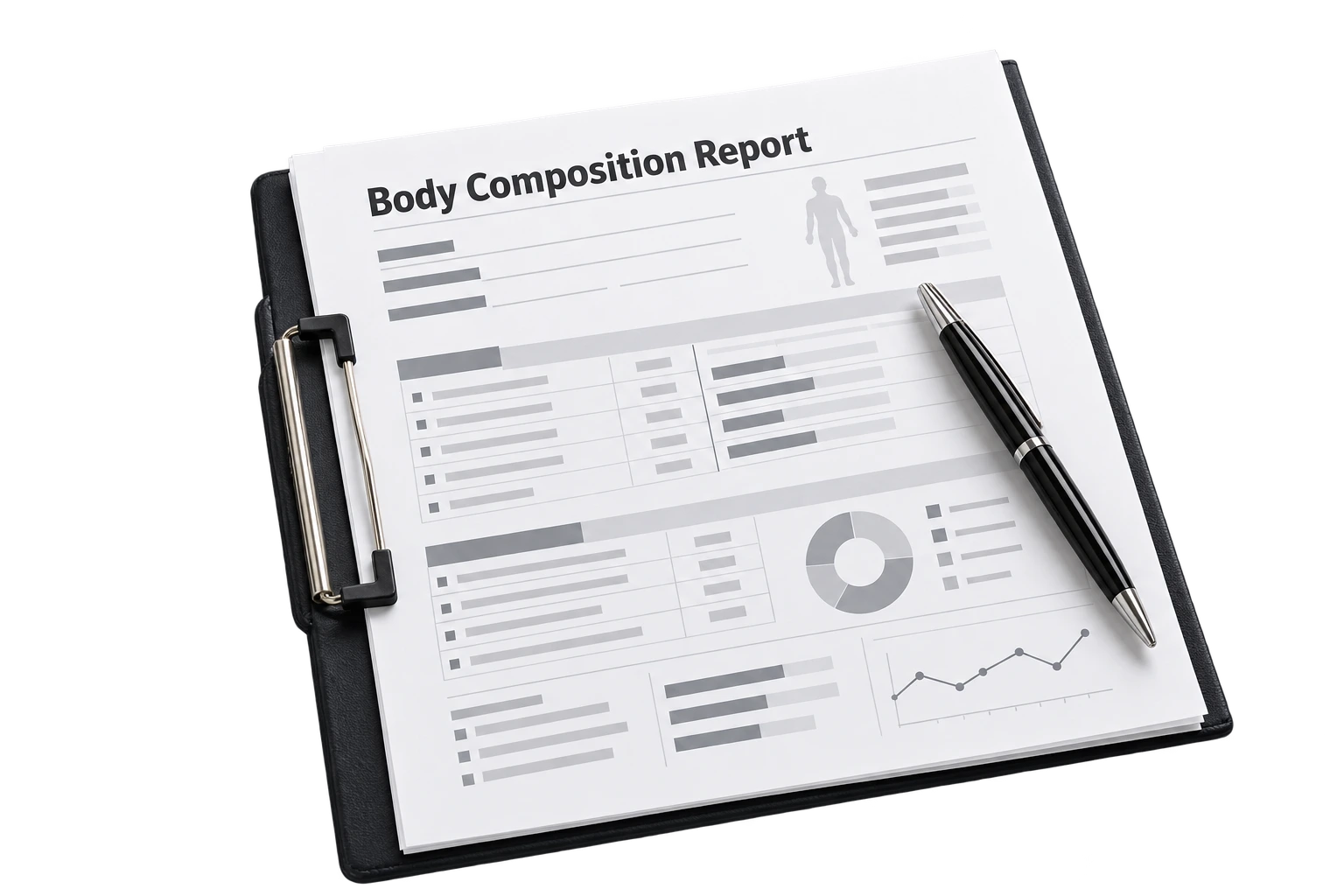
Check the exact label and definition on a compatible body-composition report. Some devices report total muscle mass with a different definition. Do not substitute such a reading without confirming that it represents whole-body skeletal muscle.
How accurate is the Lee estimate?
It is an anthropometric prediction rather than a scan. Individual agreement depends on the population and method; the percentage shown to one decimal place does not imply that level of measurement accuracy.
Why does the Lee option ask for a study coefficient?
The published model used historical US race/ethnicity categories. The selector exposes those coefficients, without inferring a category from your name, location or photo. The original categories do not represent everyone; if unsure, use a known muscle-mass reading instead.
Can I use pounds?
Yes. The calculator keeps masses in kilograms internally and converts the displayed mass fields to pounds. Height in the Lee route switches between centimetres and inches. The percentage does not change when units change.
Does this result diagnose sarcopenia?
No. Clinical assessment also considers strength, muscle quantity or quality, and physical performance. This page provides no universal low, normal or athletic percentage classification.
What are the input checks?
Direct weight accepts 0.5–1,000 kg and muscle mass must be positive and lower than total weight. Lee inputs accept 20–350 kg, 100–250 cm and ages 18–90. These broad software checks are not validated population ranges. A non-positive or weight-exceeding model estimate is not displayed.
Sources & References
Sources provide context, not endorsement. No institutional certification or expert review of this page is claimed.
Page information
Updated: October 26, 2026
Educational calculation. Distinguish entered measurements from model estimates.