

US Navy Body Fat Calculator
A clearer estimate from a few measurements
Estimate body fat from height and circumference measurements.
Your Measurements
Your Estimated Body Fat
Based on the male equation
Body Fat Reference
ACE reference: Fitness
General adult reference; not age-adjusted or a diagnosis.
Source: ACE body fat percentage categories
About these reference bands
The published table uses whole-percent labels. For continuous display, boundaries are 2, 6, 14, 18 and 25% (male), or 10, 14, 21, 25 and 32% (female). The unrounded estimate sets the category. Higher corresponds to the highest ACE table band; it is not a diagnosis or Navy standard.
Step-by-step solution
1. Find the circumference difference
85 − 38 = 47 cm
2. Estimate body density
D = 1.0324 − 0.19077 log10(47) + 0.15456 log10(175)
D ≈ 1.060098 g/cm³
3. Convert density to body fat
Body fat % = 495D − 450 ≈ 16.9%
A small change in technique can change the estimate
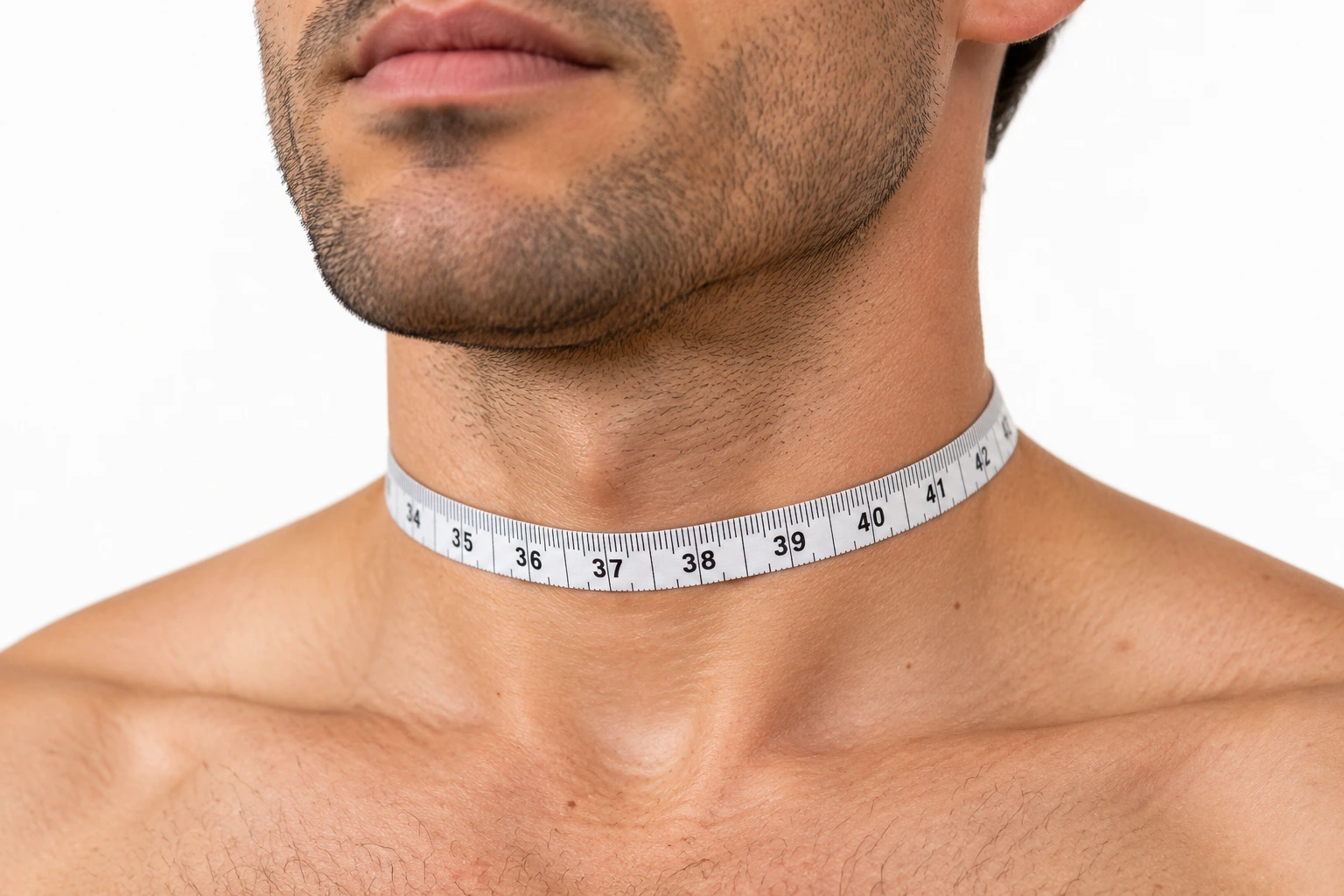
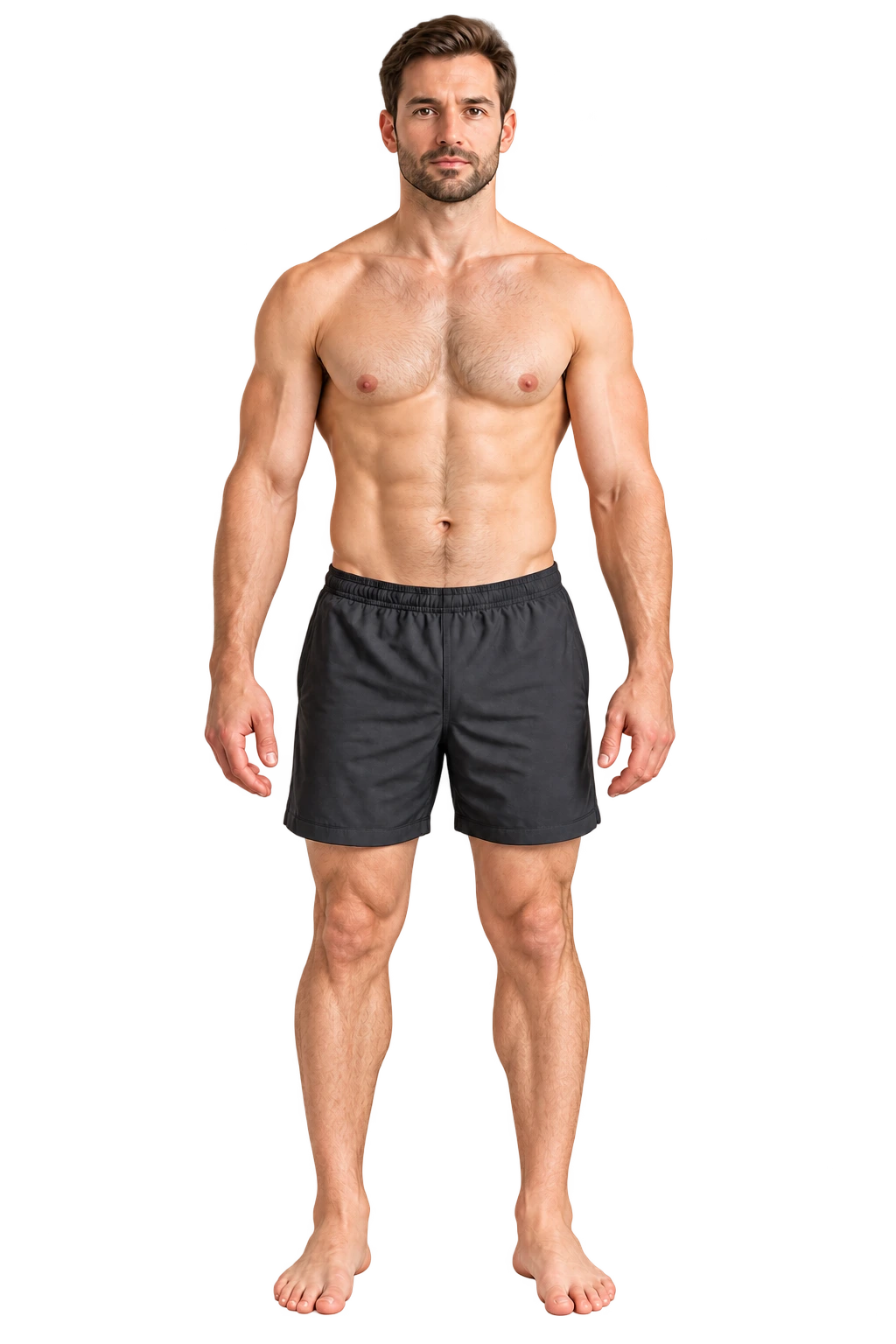
Neck
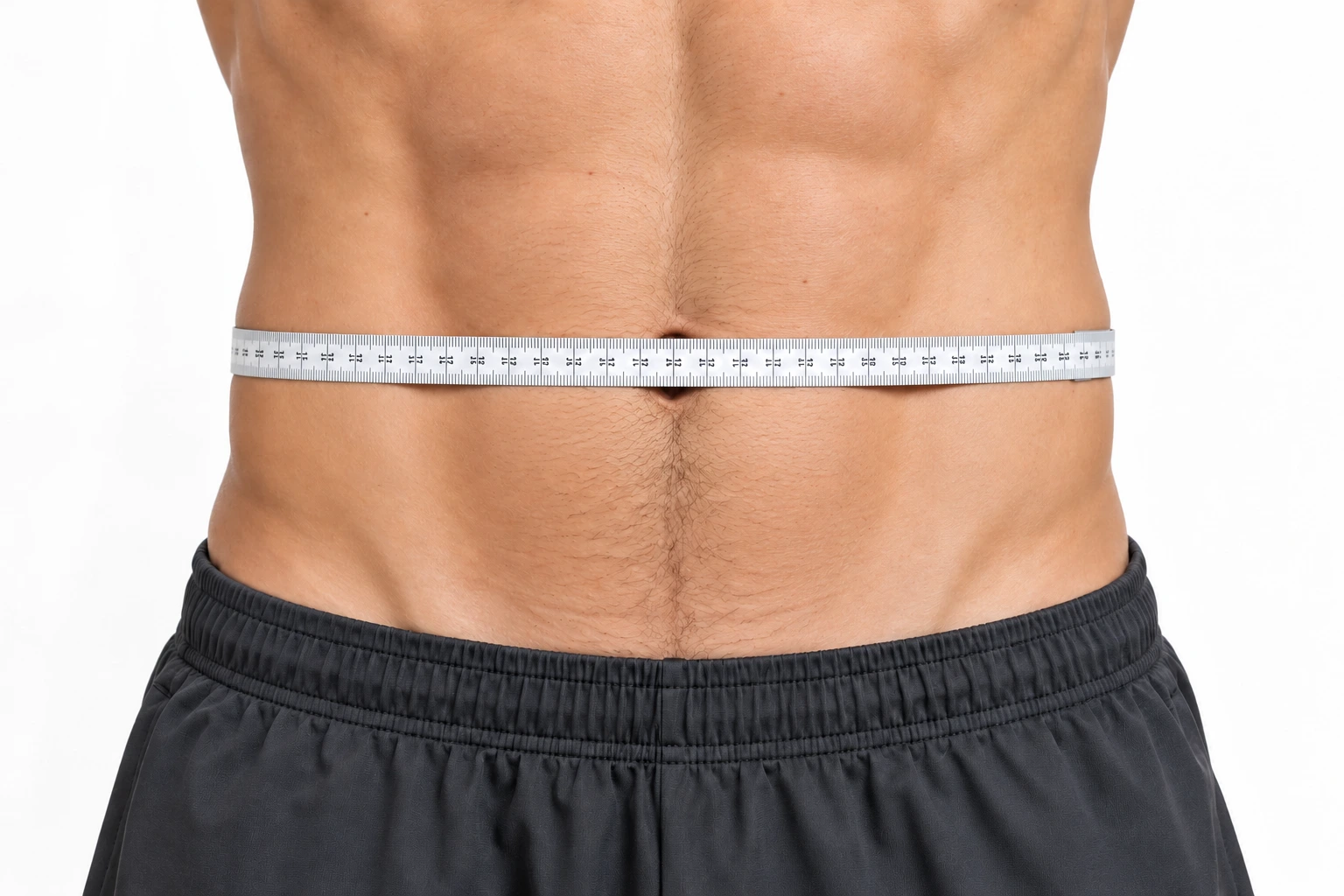
Abdomen / natural waist
Female: narrowest natural waist.
Hips · female equation
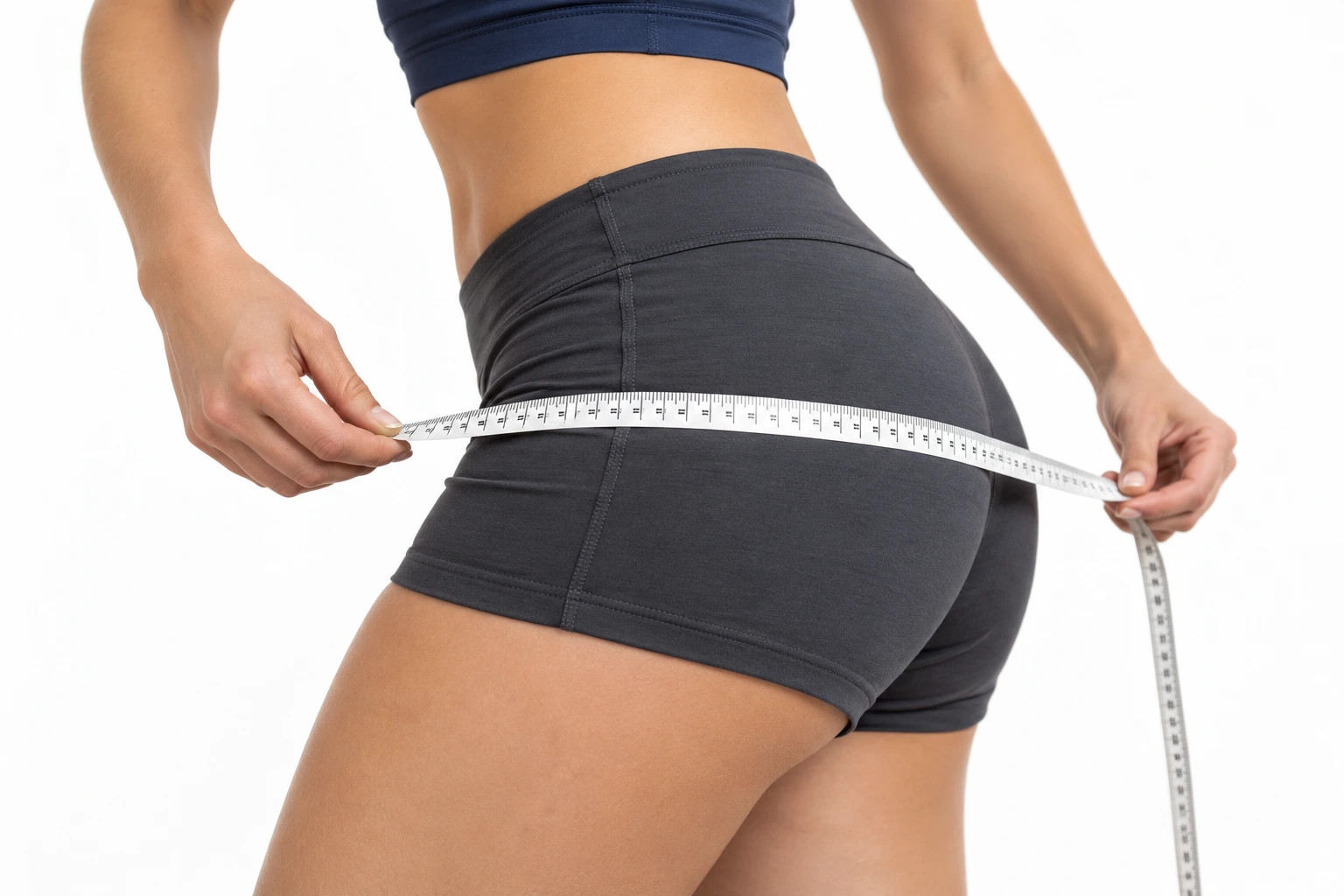
Measurement locations follow the historical Navy circumference protocol.
Calculation & assumptions
Body fat % = 495D − 450
Using the male equation (Hodgdon–Beckett).
Current example
175 cm · neck 38 cm · abdomen 85 cm → 16.9%
All dimensions are converted to centimetres before using the density equations.
Female equation & measurement sites
D = 1.29579 − 0.35004 log10(waist + hips − neck) + 0.22100 log10(height)
Use the natural waist, not the male navel-level abdomen site. All dimensions in centimetres; D in g/cm³. The female photo, hip field and guide update with the selected equation.
Units, valid inputs & limitations
1 inch = 2.54 cm. Broad software checks: height 100–250 cm; neck 15–75 cm; abdomen/waist 30–250 cm; hips 40–250 cm. These are not validated medical ranges. The logarithm argument must be positive; unusable body-fat estimates are rejected rather than clipped. The age-independent model and general adult reference cannot establish an individual health target.
Frequently asked questions
Where exactly should I measure?
Male equation: neck just below the larynx and abdomen at navel level. Female equation: neck, the narrowest natural waist, and the widest hip/buttock circumference. Keep the tape snug without compressing skin; use a normal relaxed exhalation for the torso reading.
Why do women need a hip measurement?
The female density equation uses waist + hips − neck. The male equation uses abdomen − neck; the hip field is hidden and excluded when Male is selected.
Can I use inches?
Yes. All input dimensions are converted to centimetres internally before the density equations are evaluated. Repeated cm/in switches preserve the underlying measurements.
How accurate is the Navy estimate?
It is an indirect circumference estimate. Tape position, body shape and measurement error can affect individual agreement. One decimal place is display precision, not an assurance of measurement accuracy.
Is this an official Navy assessment?
No. This educational calculator uses a historical circumference-based density model and the Siri conversion. It does not reproduce current administrative assessment procedures, official rounding, or Navy pass/fail decisions.
More questions (8)
What does the Navy Body Fat calculate?
An estimated body-fat percentage from height and sex-specific circumference measurements. The fat-free share is its complement; it is not skeletal muscle mass.
Which values should I enter?
Choose Male or Female, select cm or inches, then enter height and neck plus abdomen for Male, or natural waist and hips for Female. Measure at the locations described in the guide.
What formula does this calculator use?
With dimensions in cm: male D = 1.0324 − 0.19077 log10(abdomen − neck) + 0.15456 log10(height). Female D = 1.29579 − 0.35004 log10(waist + hips − neck) + 0.22100 log10(height). Body fat % = 495 / D − 450.
Why might my result differ from another source?
Some calculators use a different regression form, constants, units, tape locations or rounding. This page consistently uses the centimetre density equations; do not insert inches directly into those coefficients.
Does the result update automatically?
Yes. Photo annotations, result, reference marker, composition bar and worked steps update with valid edits. Invalid inputs clear previous numbers and graphs; the result cards stay visible.
What do the ACE reference categories mean?
The category labels are general adult reference descriptions, not age-adjusted targets, diagnoses or measurements of sports performance. The highest band is shown as Higher here. Published whole-percent labels are shown; the continuous display cut points are 2, 6, 14, 18 and 25% for males, and 10, 14, 21, 25 and 32% for females. Categorization uses the unrounded estimate.
What happens if the measurements are invalid?
Height accepts 100–250 cm, neck 15–75 cm, abdomen/waist 30–250 cm, and hips 40–250 cm as software bounds, not validated clinical ranges. The logarithm argument must be positive. Non-finite density or a body-fat estimate at or below 0% or at least 100% is rejected, not clamped into a believable result.
Why is no age or weight field required?
These particular density equations use height and circumference measurements, not age or weight. The reference panel is a general adult guide and does not provide age-specific or personal health targets.
Sources & References
References provide context, not endorsement. This tool does not issue Navy pass/fail decisions.
Continue exploring Body Composition
Page information
Updated: October 26, 2026