

Jackson-Pollock 3-Site Body Fat Calculator
Estimate body fat from age and three skinfold measurements.
Adult equations · Measurements in millimetres · Jackson–Pollock + Siri
Your skinfold measurements
Your estimated body fat
Estimated body-fat percentage
Step-by-step solution
Your result in context
Fitness reference band
General ACE fitness references; not a clinical diagnosis. Colors do not prescribe a personal goal.
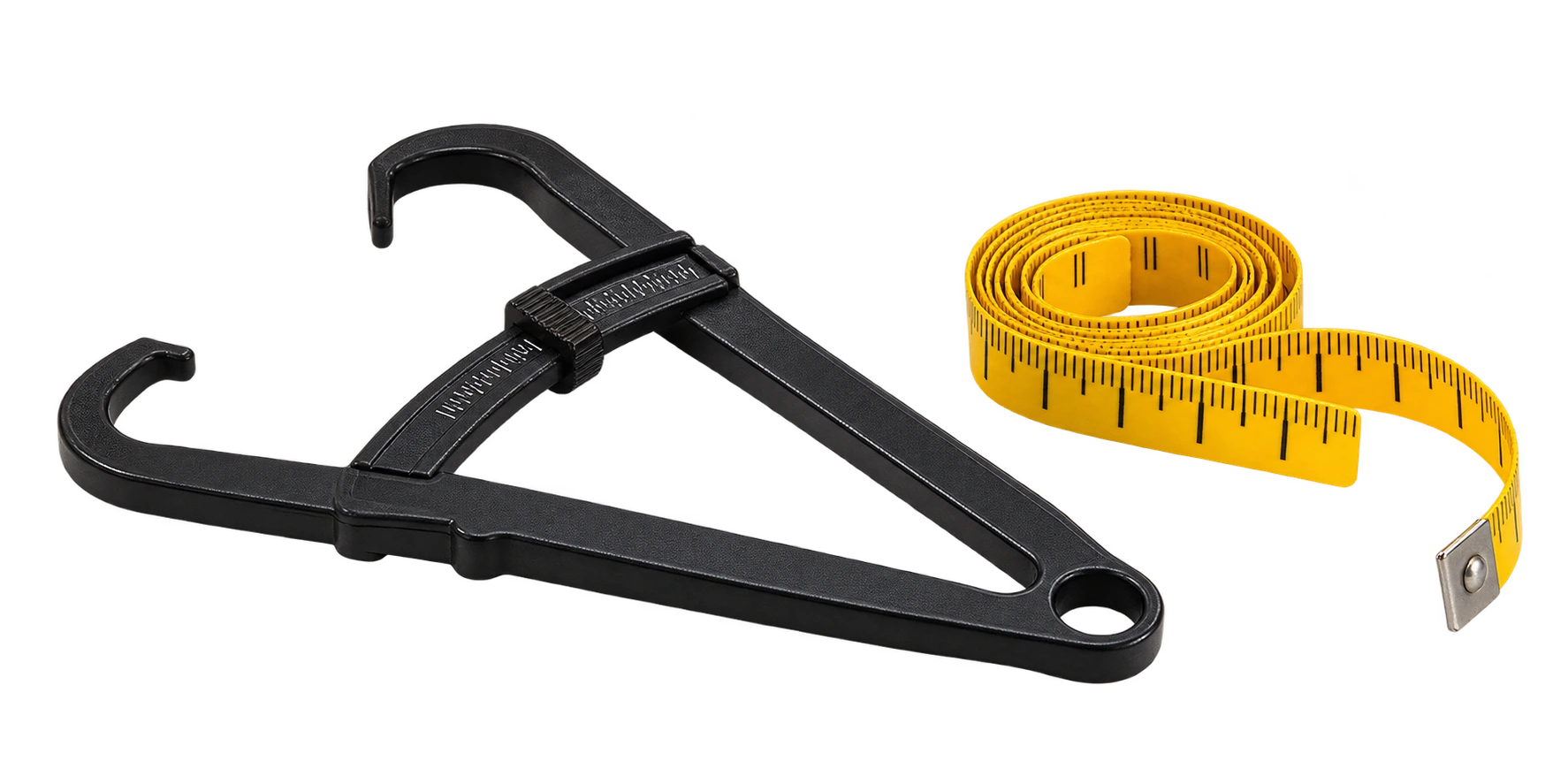
Measurement technique matters
Age, measurement sites and caliper technique must match the selected equation. Estimates are not direct measurements.
Three sites. Consistent technique.
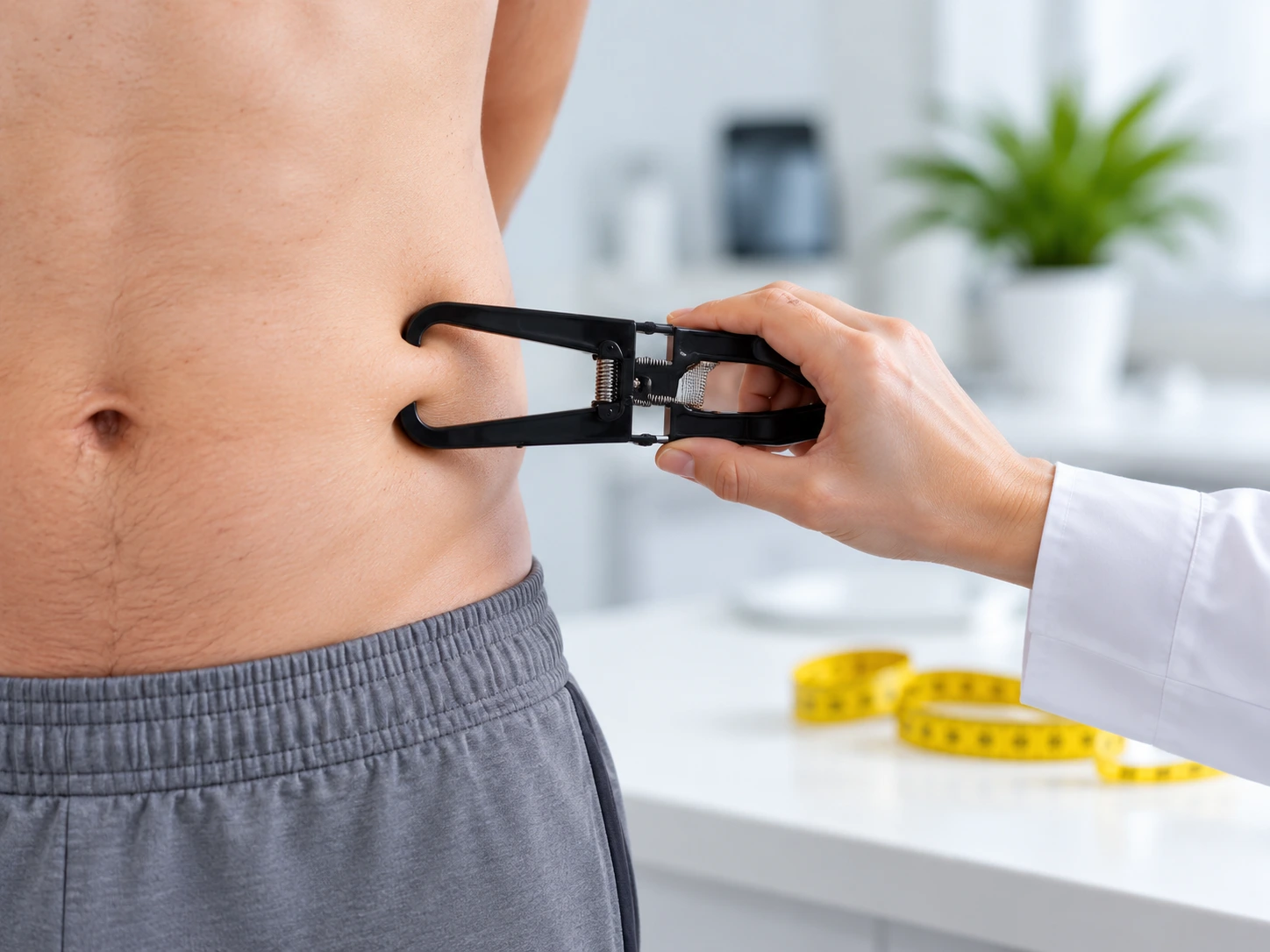

Measure a skinfold
Skin and subcutaneous tissue are measured together. Correct landmarks and a trained assessor help produce consistent readings.
Keep readings consistent
Use the same side, equipment and procedure when comparing readings. Do not use a photo to estimate thickness.
Three skinfolds → body density → estimated body-fat percentage
Calculation & assumptions
The selected equation matters
Men and women use different coefficients and measurement sites. A is age in years and S is the three-site sum in mm.
Men: BD = 1.10938 − 0.0008267S + 0.0000016S² − 0.0002574A
Women: BD = 1.0994921 − 0.0009929S + 0.0000023S² − 0.0001392A
Siri: body fat (%) = 495 / BD − 450
An adult prediction model
Original study ages: men 18–61; women 18–55. These limits describe the original samples, not universal biological cutoffs.
Check measurements before interpreting
Positive finite readings are required. Invalid ages, nonphysical percentages and sums beyond the quadratic turning point clear the estimate. The turning-point check is a mathematical guard, not proof of validity for every smaller sum.
Rounding & reference bands
The chart's whole-number ranges are applied continuously at each lower threshold. Unrounded estimates determine the marker and category. The model retains assumptions and prediction error even with valid input.
Frequently asked questions
Why did my old result become negative?
The old default age 10 and sum 3 mm were outside this adult model’s usable context. This version explains invalid inputs and clears the result instead of displaying a negative percentage.
Which three sites should I measure?
Men: chest, abdomen and thigh. Women: triceps, suprailiac and thigh. Use millimetres and the selected protocol’s right-side landmarks.
Can I enter a skinfold sum?
Yes. Choose Enter known sum and enter the total for the three sites required by the selected equation. A sum cannot confirm that the correct sites or technique were used.
Why are men’s and women’s equations different?
The published equations have different coefficients and use different site combinations. Selecting the other equation also changes the image and field labels; saved site readings are kept separately.
How accurate is this estimate?
This is a prediction rather than a direct measurement. Technician skill, site choice, equipment, population and the density-to-fat conversion affect agreement with other methods.
Can I use this for children?
This calculator restricts ages to the original adult samples: men 18–61 and women 18–55. It does not calculate estimates for children.
More questions (9)
What does the Jackson-Pollock 3-Site Body Fat calculate?
It estimates body density from age and the sum of three skinfolds, then converts density to a body-fat percentage with the Siri equation.
Which values should I enter?
Enter age in years and skinfold readings in millimetres. The default readings are an example, not your measurements.
What formula does this calculator use?
Men: BD = 1.10938 − 0.0008267S + 0.0000016S² − 0.0002574A. Women: BD = 1.0994921 − 0.0009929S + 0.0000023S² − 0.0001392A. Siri: body fat (%) = 495 / BD − 450.
Why might my result differ from another source?
Check equation version, selected sites, age, millimetres versus other units, measurement technique and the density-to-fat conversion. Small differences can also come from rounding.
Does the result update automatically?
Yes. Input changes recalculate the result, reference marker and every displayed solution step. Invalid inputs clear previous results.
Are the fitness categories a diagnosis?
No. The ACE chart is a general fitness reference. It does not determine individual health, athletic performance or a personal target. This page applies the chart to the unrounded percentage.
Why are some positive inputs rejected?
Positive numbers can still produce an uninterpretable model estimate. The calculator also stops at the turning point of the quadratic, where larger skinfold sums would otherwise reverse the expected relationship. This is a mathematical safeguard, not a validated skinfold range.
What happens between whole-number category labels?
The published chart uses integer ranges. This interface uses the start of each range for continuous values, for example 14 ≤ men’s fitness percentage < 18. The convention is displayed below the gauge.
Can I use the reference picture to locate exact sites?
The image is an approximate landmark guide. Follow the written anatomical instructions and use a trained assessor for consistent skinfold technique.
Sources & References
 Measurement & Siri conversionUniversity of New Mexico body-composition assessment.
References provide context, not endorsement. Fitness chart: ACE chart reproduced in TomTom's official manual. No institutional certification or expert review is claimed.
Page information
Updated: October 26, 2026
Educational estimate. Discuss personal body-composition results with a qualified healthcare professional.