

Skeletal Muscle Mass Calculator
Estimate muscle mass. Understand your body composition.
Skeletal Muscle Mass Research References
Lee et al. anthropometric equation · Adult body composition
Educational estimate based on published research. Not a direct muscle measurement.
View sources
Your Body Profile
Skeletal Muscle Mass
Base Lee equation · Adult estimate
Your Body Composition
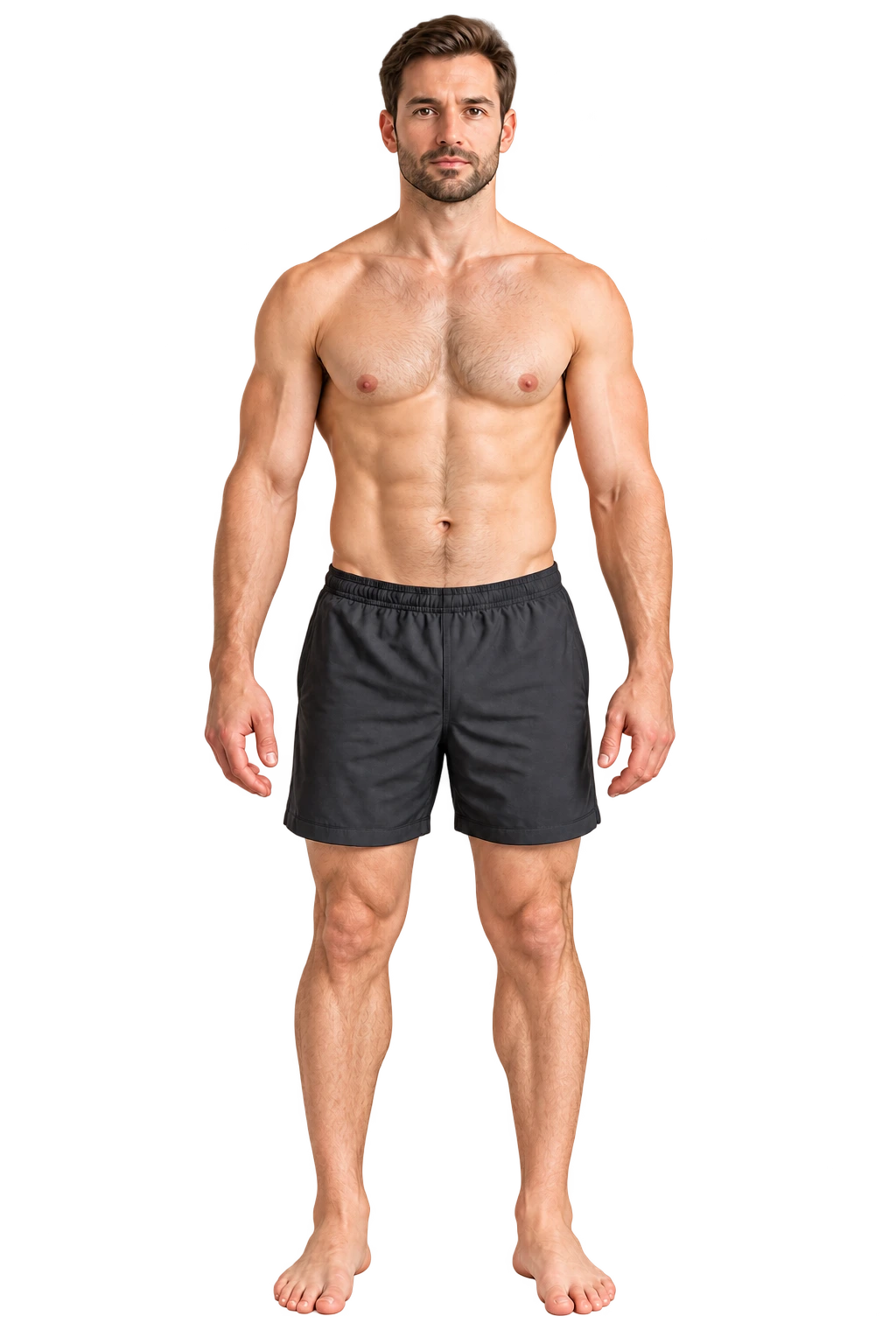
Skeletal muscle
Helps with movement and posture.
Remaining body mass
Includes fat, organs, bone and other tissues.

Step-by-step solution
1. Convert height
175 ÷ 100 = 1.75 m
2. Estimate skeletal muscle mass
SMM = 0.244W + 7.80h + 6.6s − 0.098A − 3.3
SMM = 0.244(75) + 7.80(1.75) + 6.6(1) − 0.098(30) − 3.3
SMM = 32.31 kg ≈ 32.3 kg
3. Calculate muscle share
(32.31 ÷ 75) × 100 ≈ 43.1%
Male s = 1 · Female s = 0 · Population correction omitted.
A Closer Look at Muscle Mass
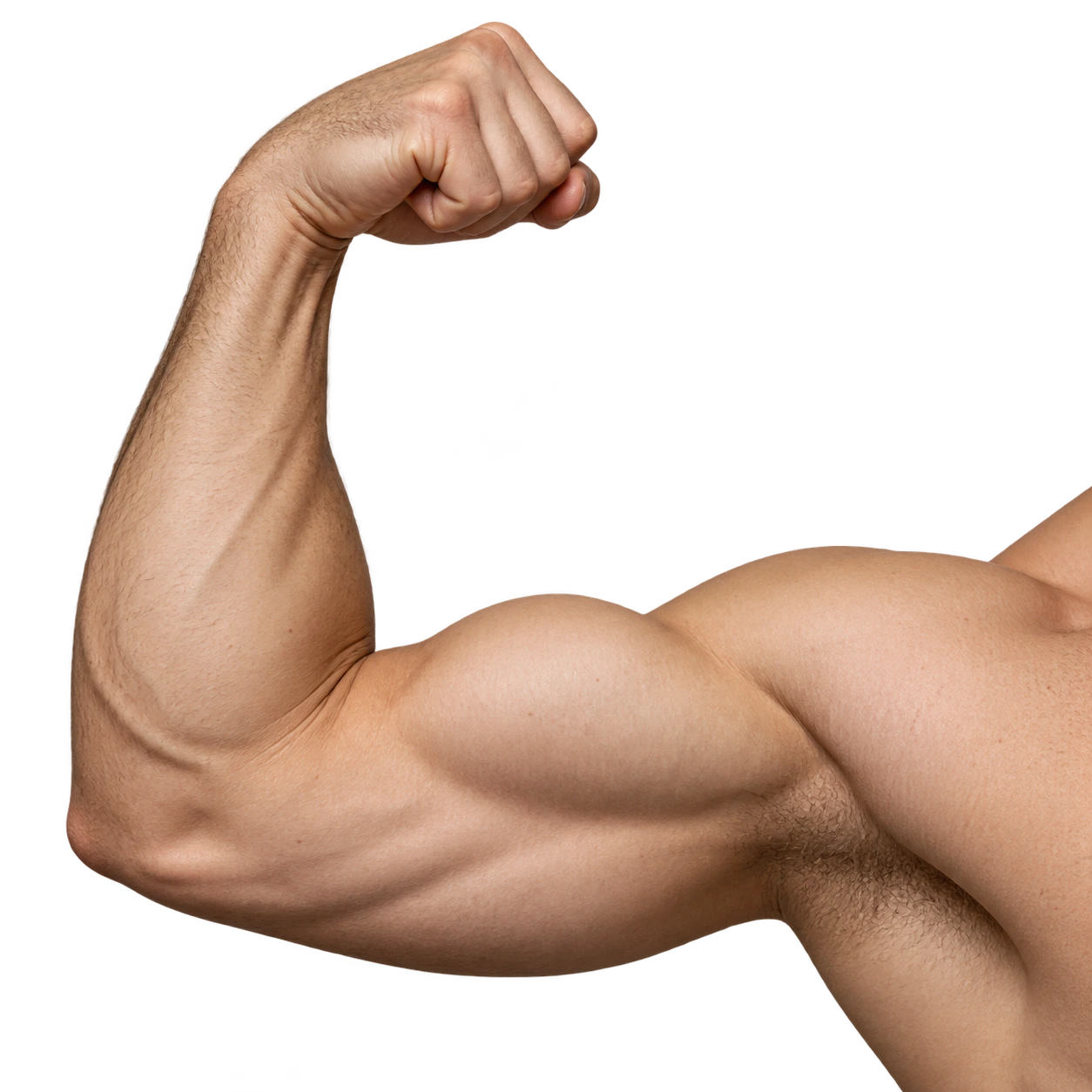
Skeletal muscle
Contractile tissue that helps with movement, posture and daily activities.
Fat-free mass
Includes more than muscle, such as organs, bone, water and other tissues.
An estimate, not a scan
Based on an anthropometric equation. Individual results may vary.
Calculation & assumptions
SMM = 0.244W + 7.80h + 6.6s − 0.098A − 3.3
W = weight (kg) · h = height (m) · s = sex term (male 1, female 0) · A = age (years)
This estimate
0.244(75) + 7.80(1.75) + 6.6(1) − 0.098(30) − 3.3
= 32.31 kg ≈ 32.3 kg
Based on Lee et al. (2000). Population correction omitted (r = 0).
Additional details & limitations
Software bounds: weight 20–350 kg, height 100–250 cm and integer age 18–120. These bounds do not establish clinical validity. 1 lb = 0.45359237 kg; 1 in = 2.54 cm. Unusable estimates are rejected rather than clipped.
The original model was developed and cross-validated in adults with BMI below 30. Its reported standard error of estimate was 2.8 kg, not an individual confidence interval or guaranteed accuracy for this simplified equation. This page uses no population correction and is not a full reproduction of the published model.
Muscle share alone does not diagnose sarcopenia or set an individual health target. The remaining-mass segment is not body fat alone.
Frequently asked questions
How is skeletal muscle mass estimated?
This page uses the base Lee weight–height equation with its population correction omitted (r = 0). Weight is in kilograms, height in metres and age in years. It predicts skeletal muscle mass; it does not measure it.
Is muscle mass the same as lean mass?
No. Skeletal muscle is only one part of fat-free mass. Fat-free mass also includes bone, organs, water and other tissues. Remaining body mass in this chart is not body fat alone.
Why might my result differ from another source?
Methods, model coefficients, population corrections, input units and rounding can differ. This page omits the original population correction. Individual prediction error can be several kilograms.
Can children use this calculator?
No. This tool is restricted to adults aged 18–120. The underlying model was developed in adults and should not be used as a child growth assessment.
What does the Skeletal Muscle Mass calculate?
It estimates total skeletal muscle mass in kilograms and its percentage of body weight using the base anthropometric equation shown on this page.
More questions (6)
Which values should I enter?
Enter current body weight, standing height and adult age, then select the male or female equation term. Choose kg or lb and cm or in beside each measurement.
What formula does this calculator use?
SMM = 0.244W + 7.80h + 6.6s − 0.098A − 3.3, where W is kg, h is metres, s is 1 for male or 0 for female, and A is years. The original Lee model also contains a population correction; this simplified version sets it to zero.
Does the result update automatically?
Yes. Inputs, sex selection and units update the result, composition chart and step-by-step substitution immediately. No Apply or Calculate action is needed.
Does this diagnose low muscle mass or sarcopenia?
No. Clinical assessment considers strength, physical performance and appropriate body-composition methods. This calculator does not assign diagnostic or athletic categories.
What are the limits of the estimate?
The original model was developed and cross-validated in non-obese adults with BMI below 30. Its reported standard error of estimate was 2.8 kg, which is not an individual confidence interval or the guaranteed accuracy of this simplified equation.
Why are some measurements rejected?
The software requires weight 20–350 kg, height 100–250 cm and an integer age 18–120. These broad software bounds are not validated medical ranges. Non-positive estimates or estimates at or above body weight are rejected, not clipped.
Sources & References
 Lee et al. (2000)Original anthropometric prediction study.
 Anthropometric modelMethods and validation in the original journal article.
 PMC · Clinical interpretationEWGSOP2: muscle strength, mass and performance.
References provide context, not endorsement. No institutional certification or review is claimed.
Page information
Updated: October 26, 2026