

Ammonia Unit Converter
Convert ammonia concentrations between µg/dL and µmol/L.
Your ammonia result
Before you convert
NH₃ and ammonia as nitrogen use different mass bases.
This converter uses NH₃; it does not convert NH₄⁺ or ammonia as nitrogen.
Converted ammonia
50 µg/dL expressed in SI units
Same concentration, different units
Unit conversion does not change the sample concentration.
How is this calculated?
Equipment guide
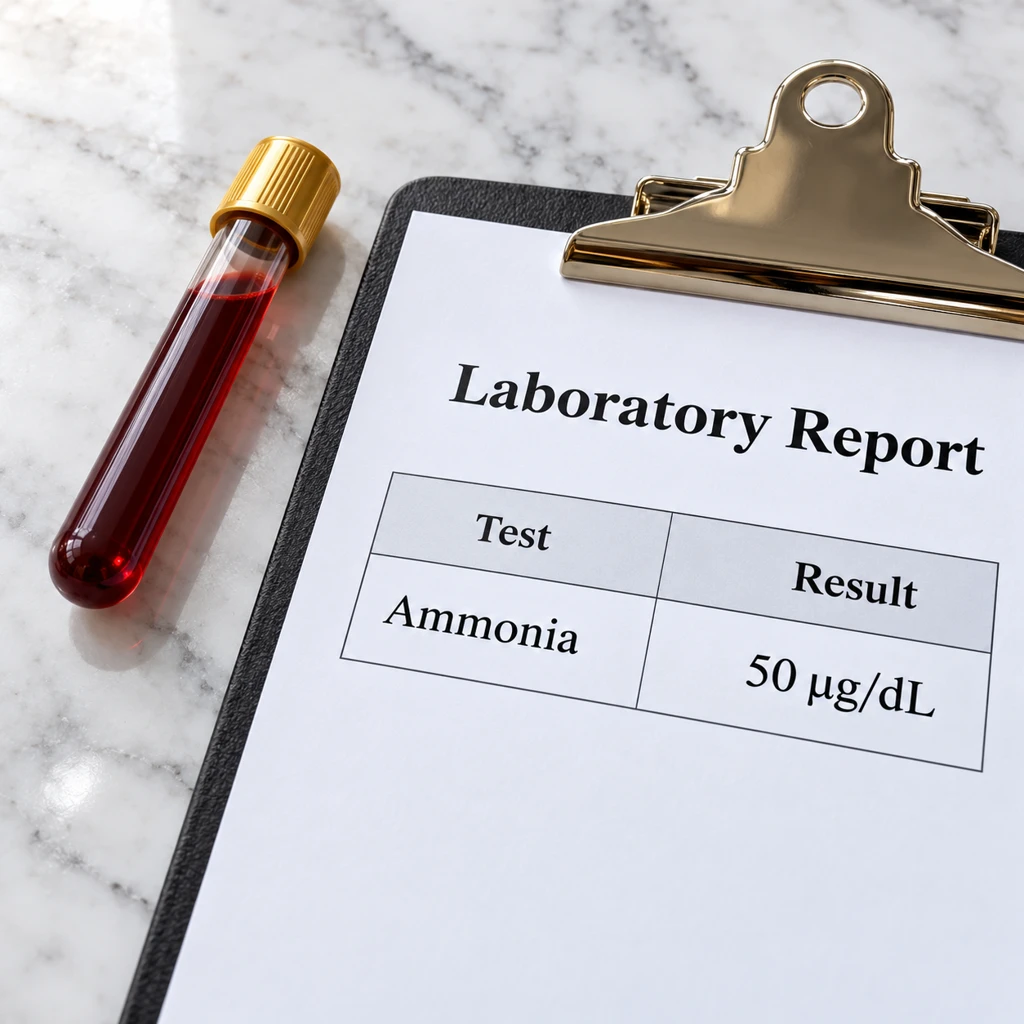
Read the value
Use the ammonia concentration from your report.
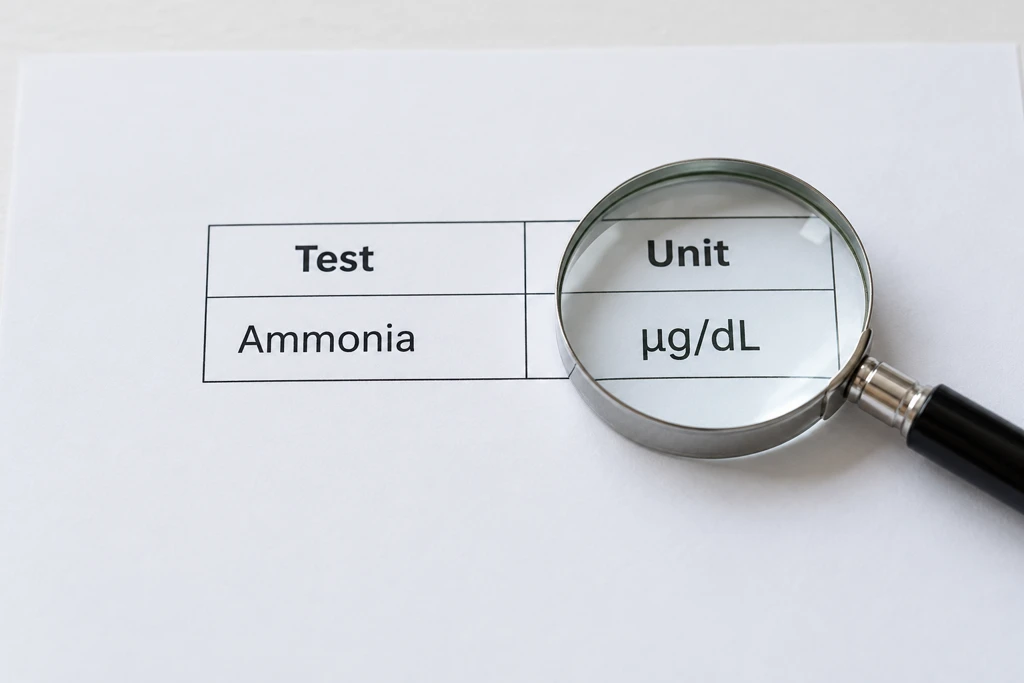
Check the unit
Select the matching conversion direction.
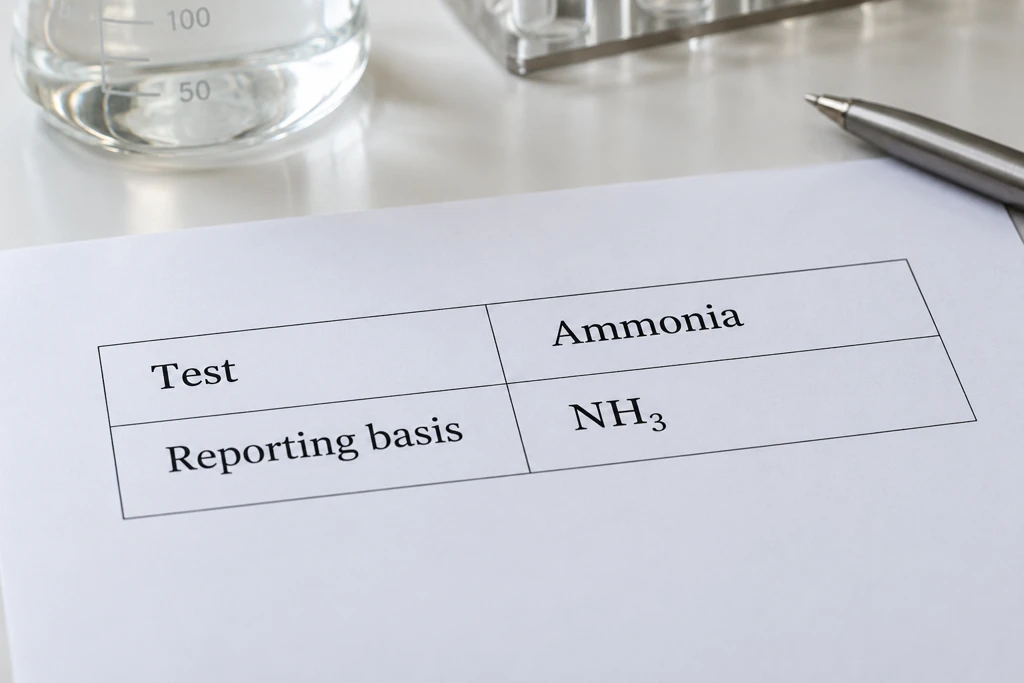
Confirm the reporting basis
This calculation uses ammonia as NH₃.
Calculation & assumptions
µmol/L = µg/dL × 10 / 17.0305
The molecular mass is from NIST. The reciprocal factor is used for reverse conversion. Values are rounded for display only.
Frequently asked questions
What does this converter calculate?
It expresses the same ammonia concentration as NH₃ in µg/dL or µmol/L. Changing units does not change the concentration in the sample.
Which values should I enter?
Enter the ammonia value from your laboratory report and select its unit. Check that mass concentration is reported as NH₃ rather than ammonia as nitrogen or NH₄⁺.
What formula does this calculator use?
µmol/L = µg/dL × 10 ÷ 17.0305. Reverse conversion uses µg/dL = µmol/L × 17.0305 ÷ 10. The molecular mass of NH₃ is from NIST.
Why might results differ slightly?
Sources may use rounded conversion factors, such as 0.587 or 0.59. This page derives the factor from 17.0305 g/mol and rounds only the displayed result.
Does the result update automatically?
Yes. Editing the value or selecting a conversion direction updates the result, equivalent concentration and calculation steps. No Apply button is needed.
More questions (5)
What does the Ammonia Unit calculate?
It converts ammonia reported as NH₃ between mass concentration and amount concentration using the stated molecular mass. It does not calculate sample length or make a diagnosis.
Why might my result differ from another source?
Check the original value, unit, reporting basis and rounding. Ammonia as nitrogen and NH₄⁺ require different mass-based factors. Laboratory methods and reference ranges also vary.
Can I enter zero?
Zero is valid for the arithmetic. This does not interpret a result below an assay detection limit or decide whether it is clinically meaningful.
Can this diagnose liver disease?
No. A unit conversion cannot diagnose a condition. Review the original ammonia result with the laboratory reference interval and a qualified clinician.
What are the software input limits?
The input must be non-negative and no greater than 1,000,000,000 in the selected unit; positive inputs must be at least 0.000000001, with at most 12 decimal places. These are software limits, not clinical ranges. Direction changes retain the underlying entered concentration until you edit it.
Sources & References
 NIST Chemistry WebBookNH₃ molecular mass: 17.0305.
 MedlinePlus · Ammonia levelsBlood test information and context.
References provide context, not endorsement.
Page information
Updated: October 27, 2026