

Cattle Per Acre Calculator
Pasture carrying capacity & grazing planner
Illustrative inputs only — grazing systems do not guarantee a higher carrying capacity.
Editable planning examples · local forage measurements matter.
Pasture & herd inputs
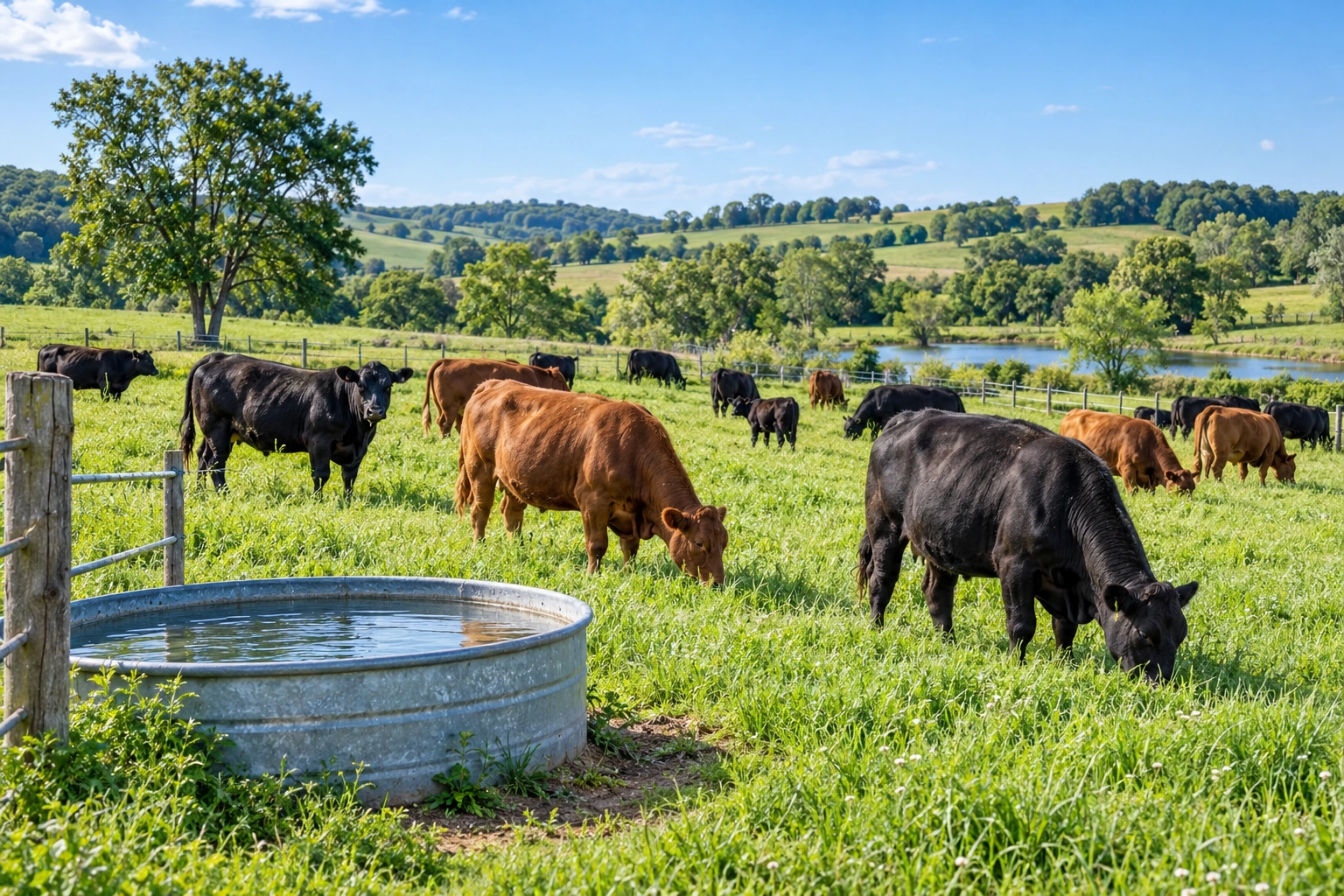

Estimated forage-budget capacity
Planning estimateFor the entered planning period
Step-by-step solution
Forage budget
- Total dry forage
- —
- Consumable supply
- —
- Planned herd demand
- —
- Forage balance
- —
Monitor pasture condition; this model cannot diagnose overgrazing.
Adjust for rainfall, forage quality, animal needs and pasture monitoring.
No modelled reserve under these inputs.
Before you use the estimate
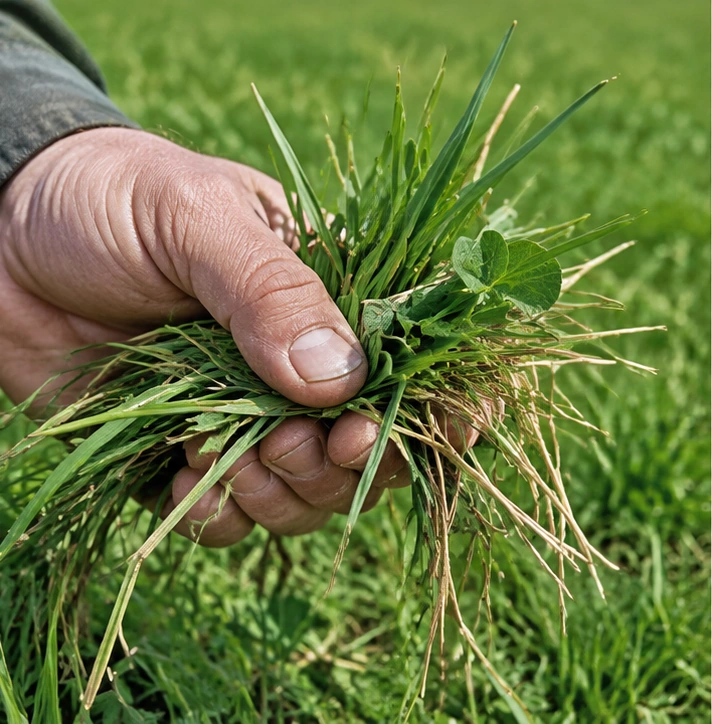
Use dry matter
Fresh forage weight includes water. Use measured dry-matter yield and exclude inaccessible ground.
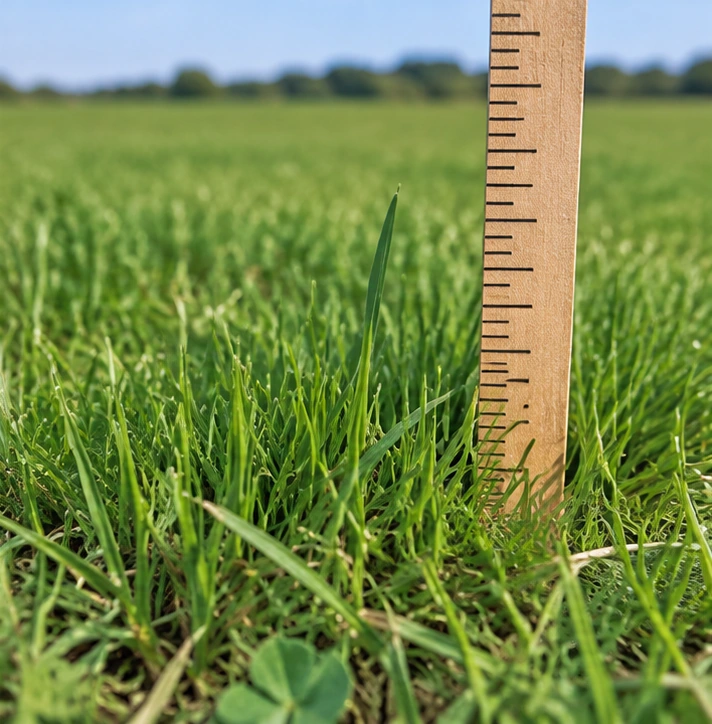
Match the same period
Yield must describe the forage available for your planning period. Duration changes do not automatically change forage production.
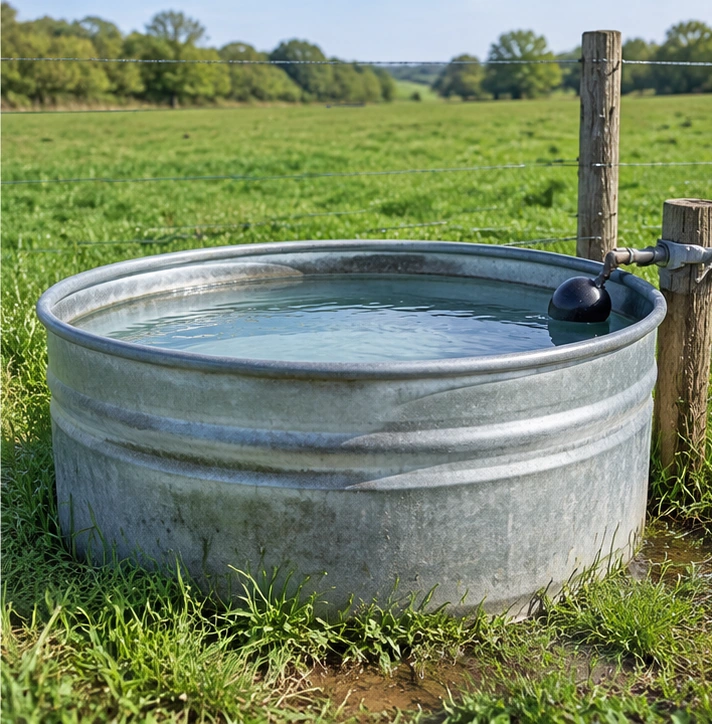
Monitor field conditions
Review pasture condition, water access and animal needs locally. A mass balance alone does not prove sustainable stocking.
Compare example scenarios
Only period yield and harvest fraction change. Current area, animal intake, duration and planned herd stay the same. These examples are not stocking recommendations.
| Example | Period yield | Harvest | Whole head | Balance |
|---|
Frequently asked questions
Stocking rate or stocking density?
Stocking rate includes animals, area and time. The displayed acre/AU is for the entered planning period, not an annual universal requirement. Instantaneous stocking density uses the area actually being grazed at one time, which may be a smaller paddock.
What does harvest fraction mean?
This is the proportion of total dry forage estimated to be consumed by cattle over the entered period, after allowances for residual plants and other losses. Take half, leave half does not mean cattle eat half of all production; trampling, wildlife and other losses also matter.
How do animal units work?
This model uses the NRCS reference forage demand of 26 lb oven-dry matter per animal-unit day. Demand-equivalent AU/head = entered daily dry-matter intake / 26 lb. It is a forage-demand comparison, not a validated breed or physiological classification.
Can rotation guarantee more cattle?
No. The rotational preset is an editable planning example with a higher assumed harvest fraction. It does not simulate pasture regrowth or guarantee improved yield. Monitor residual height, forage quality, rainfall and animal condition.
Show all questions (9 more)Show fewer questions
What does the Cattle Per Acre calculator calculate?
It divides consumable dry forage by daily intake per head and the entered grazing duration. It estimates whole-head capacity, forage-demand animal units and a budget comparison for the entered planned herd.
Which values should I enter?
Use grazeable pasture area, measured or defensible dry-matter yield for the same planning period, an appropriate harvest fraction, animal weight, daily intake percentage and duration. Exclude inaccessible area and do not enter wet forage mass as dry matter.
What formula does this calculator use?
Total forage = area × period dry-matter yield. Supply = total forage × harvest fraction. Daily intake/head = live weight × intake fraction. Capacity = floor(supply / (daily intake/head × period days)). Planned herd demand = planned head × daily intake/head × days.
Why might my result differ from another source?
Other sources may use different forage production periods, harvest efficiencies, animal-unit definitions, nutrition requirements or allowances for terrain and water access. Here, all assumptions are visible and editable; local measurements take precedence.
Does the result update automatically?
Yes. Inputs, units and presets update outputs immediately. Unit changes convert existing quantities instead of reinterpreting their numbers. Changing period length keeps forage supply fixed until you change its period yield.
What does the demand indicator mean?
It compares the entered herd dry-matter demand with modeled consumable supply. Below 100 percent is within that budget; exactly 100 percent leaves no modeled buffer; above 100 percent indicates a modeled deficit. It cannot diagnose field overgrazing or establish safe stocking.
Are month units calendar months?
No. One planning month is exactly 30 days here, consistent with the 780 lb per AUM convention. For actual calendar dates, enter the exact number of days.
How do the animal-class presets work?
Cow, yearling and bull options load illustrative body weights of 1000, 700 and 1300 lb and an editable 2.6 percent dry-matter intake. These are examples, not official universal class equivalents. Nursing calves, lactation, bulls, replacements and other herd needs require local adjustment.
What does the Cattle Per Acre calculate?
Estimate cattle carrying capacity from pasture dry forage, consumable harvest fraction, animal intake and a grazing period.
Understand the forage budget
Consumable forage = area × yield × harvest fraction
Capacity rounds down to whole head. Enter dry matter, not fresh forage mass.Animal units are a forage-demand equivalent
This model uses 26 lb DM/day per AU. Entered weight and intake determine the equivalent; animal class alone does not define it.
Acres/AU is for the entered period. It is not an annual land requirement or the density inside a single paddock.
Sources & References
 USDA NRCS — Grazing & Animal UnitsLivestock nutrition and forage demand ↗
 Oklahoma State Extension — Stocking RatePasture forage budgets and animal units ↗
Sources inform the model; no institutional endorsement.
Estimate cattle carrying capacity from pasture dry forage, consumable harvest fraction, animal intake and a grazing period.