

Oxygen Cylinder Duration
Know the contents. Allow for reserve. Plan the next supply.
Illustrative presets — cylinder names and gas contents vary by supplier. Confirm your label.
ESTIMATED USABLE DURATION
Enter cylinder details—
Enter valid inputs to calculate.
Estimate at constant continuous flow. Actual duration may differ.
At or below the selected reserve. No usable duration remains above that threshold. Follow your supply plan and local protocol.
Cylinder contents projection
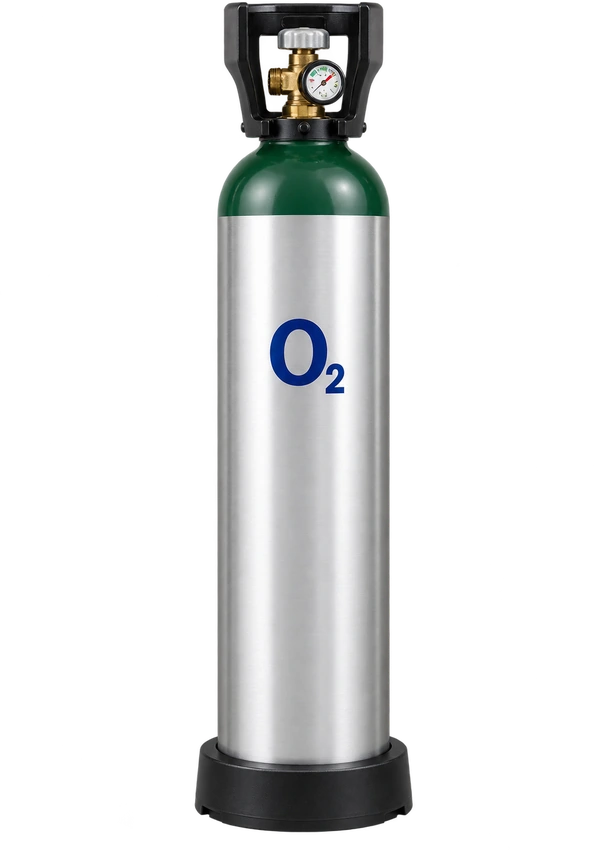

Illustrative projection — not a live monitor.
Calculation & assumptions
| Remaining gas | — |
|---|---|
| Selected reserve | — |
| Usable duration | — |
Pressure entry uses current ÷ full rated gauge pressure as an approximate contents fraction.
Continuous-flow estimate only. Pulse-dose settings are not equivalent to L/min.
No smoking or flames. Keep cylinders secured. Follow the supplier’s handling instructions.
Model limitations
Never use oil or grease near oxygen equipment. Use labelled full gas contents in litres at the supplier’s reference conditions, not the cylinder’s internal water volume. Approximate gauge pressure ratios assume comparable conditions; temperature, gas behaviour, leakage, regulator performance and actual delivery affect duration.
Remaining gas = full contents × remaining fraction. Reserve = full contents × selected reserve percentage /100. Usable gas = max(0, remaining gas − reserve). Duration in minutes = usable gas / continuous flow. A reserve is not deducted twice. If contents are below the selected reserve, usable duration is zero.
The 20% example is an adjustable planning assumption. This page does not impose a universal pressure limit, equate 200 psi with 15%, approve a journey, choose a flow rate, or model pulse-dose settings, liquid oxygen, concentrators or ventilator/device consumption. Confirm the specific device and supplier instructions.
Hours and minutes are rounded down. The projection changes only when you move the slider and is not connected to a sensor. It is not a countdown, alarm or substitute for the cylinder gauge and clinical monitoring.
Frequently asked questions
Is capacity the same as cylinder size?
No. Enter the labelled full oxygen gas contents in litres, not the cylinder water capacity. Letter names and gas contents can vary between suppliers. The four presets are examples and must be checked against the actual cylinder label.
Can I enter bar or psi?
Yes, for compressed oxygen using current and full rated cylinder gauge pressures in the same unit. This provides an approximate contents fraction. Do not enter the regulator outlet pressure. Switching between bar and psi converts both pressures; switching from percentage requires you to supply the actual pressures.
Is a 20% reserve always required?
No. It is an adjustable example, expressed as a percentage of full gas contents. Use the reserve and replacement policy specified by your supplier or local protocol. This website does not set a universal clinical reserve threshold or guarantee supply.
Does this work for pulse-dose devices?
No. A pulse-dose setting is not the same as a continuous L/min flow. Use the specific device manufacturer’s duration guidance. Do not change prescribed oxygen to extend cylinder life.
Sources & References
Reference sources only. No institutional endorsement.
Continue exploring Health
Know the contents. Allow for reserve. Plan the next supply.