

Punnett Square Calculator
Explore inheritance. See every possible outcome.
Monohybrid · Dihybrid · Complete, incomplete & codominant inheritance.
Parents & Inheritance
Result
Expected phenotypic ratio
9 : 3 : 3 : 1AaBb × AaBb · Complete dominance · Independent assortment
Phenotype probabilities (summary)
Ratios follow the phenotype order listed below. Only possible categories are listed. Probabilities apply to each offspring, not a guaranteed litter or class size.
Interactive Punnett Square
Hover, tap or use the keyboard to inspect a cell. Tab enters the selected cell; arrow keys explore the matrix.
Selected outcome
- This cell
- All AaBb outcomes
- This phenotype
Several cells can produce the same genotype or phenotype.
Genotype Probabilities
Phenotype Probabilities
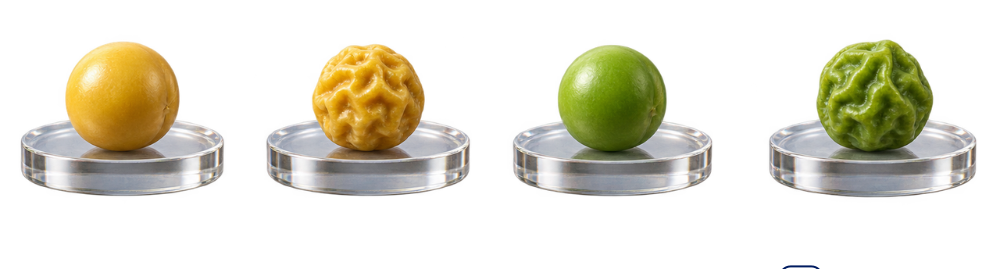
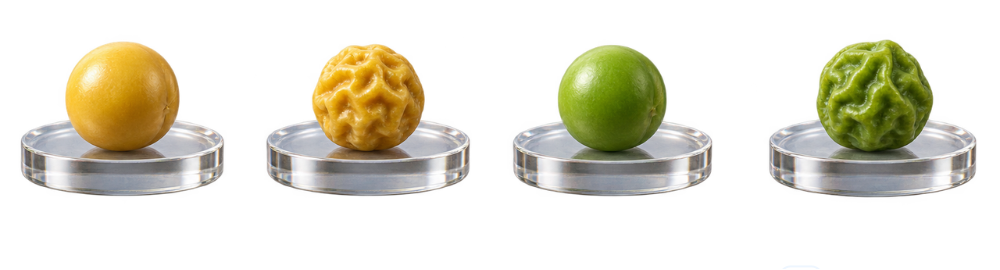
Illustrated example: A = yellow, a = green; B = round, b = wrinkled. Trait names are illustrative.
Understanding the cross
- List parental gametes. Each parent supplies one allele per trait.
- Combine one gamete from each parent. A cell’s probability is the product of the two gamete probabilities.
- Group identical outcomes and sum their probabilities to obtain genotype and phenotype distributions.
Model assumptions & limitations
Autosomal educational model with equal allele segregation, random fertilization and equal offspring viability. Two loci assort independently. Linkage, recombination fractions, epistasis, sex-linked inheritance and lethal alleles are not modeled. Labels “dominant” and “recessive” describe expression, not how common or beneficial an allele is.
The simplified ABO model assumes common Iᴬ, Iᴮ and i alleles; A and B are codominant and O is recessive. It omits rare variants, Bombay phenotype and Rh. It is not a clinical blood test or evidence of parentage.
Frequently asked questions
Does 25% mean exactly one in four?
No. It is the probability for each independent offspring under this model. Small families or experimental samples can differ from expected ratios.
How do incomplete dominance and codominance differ?
With incomplete dominance the heterozygote has an intermediate phenotype. With codominance both allele products are expressed. Both can yield three phenotypes in a heterozygote cross, but their biological expression differs.
When does a cross follow 9:3:3:1?
AaBb × AaBb produces this expected phenotype ratio with complete dominance at two independently assorting loci, equal segregation and equal viability, without epistasis.
Why does the square sometimes shrink?
Identical gametes are combined with their probability weights. A homozygous parent can produce fewer unique gametes, so the displayed square has fewer cells. Weighted cell probabilities still sum to 100%.
Why is ABO a separate model?
There are three common ABO alleles in the population, although a person carries two. Iᴬ and Iᴮ are codominant; i is recessive. A simple two-allele Aa selector cannot represent the entire system.
Sources & References
 Nature Education / ScitableGenetic dominance and genotype–phenotype relationships.
 NHGRIAlleles, dominance and codominance.
Educational genetic probabilities. References do not imply institutional review or endorsement.
Explore inheritance. See every possible outcome.