Resting Heart Rate Assessment
Enter a resting rate or convert a timed pulse count to bpm, then examine its common adult context and an explicitly illustrative beat cadence.
Calculation inputs
Rest first, then count
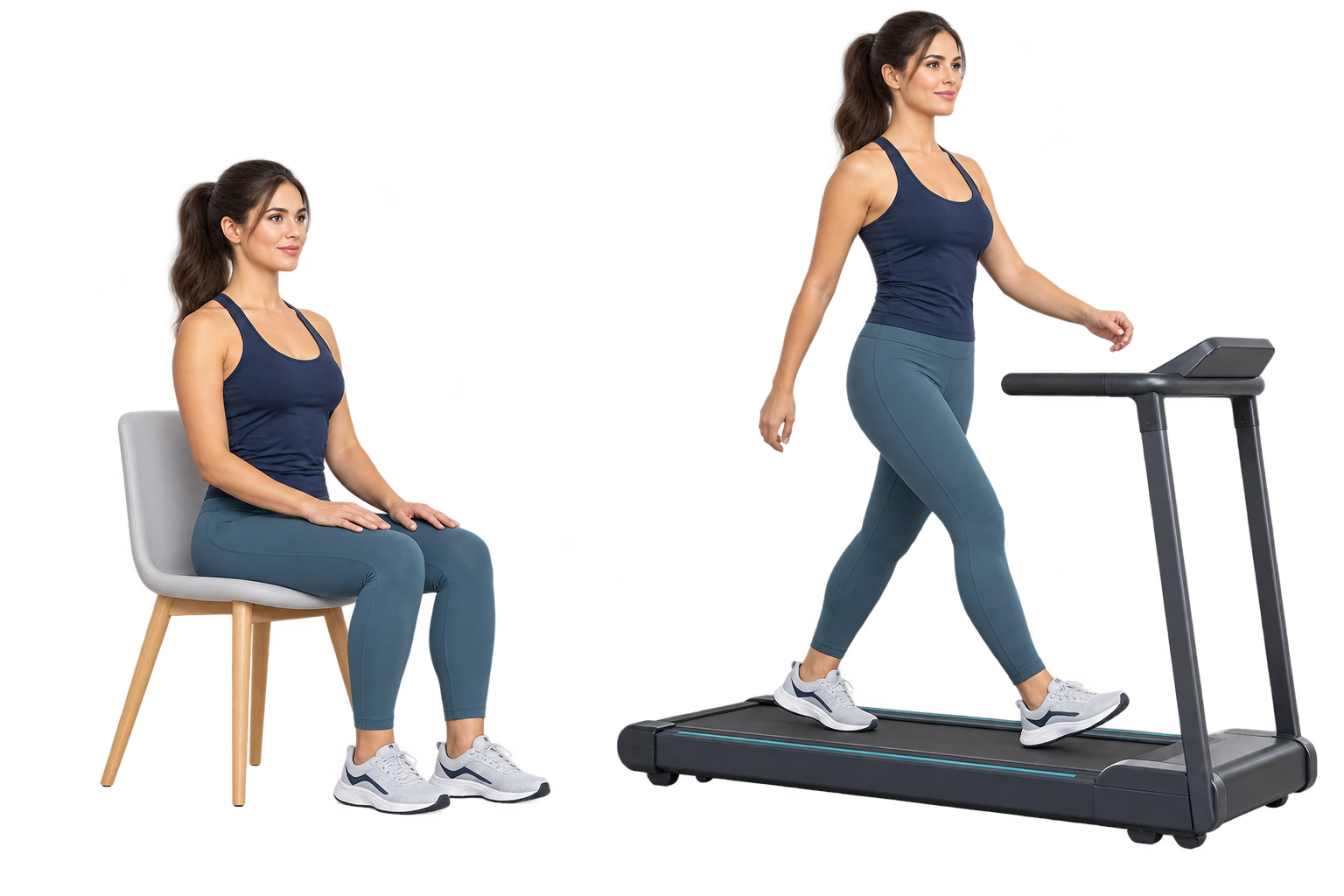
- 1Use a resting context
Sit or lie calmly rather than using an exercise or recovery reading.
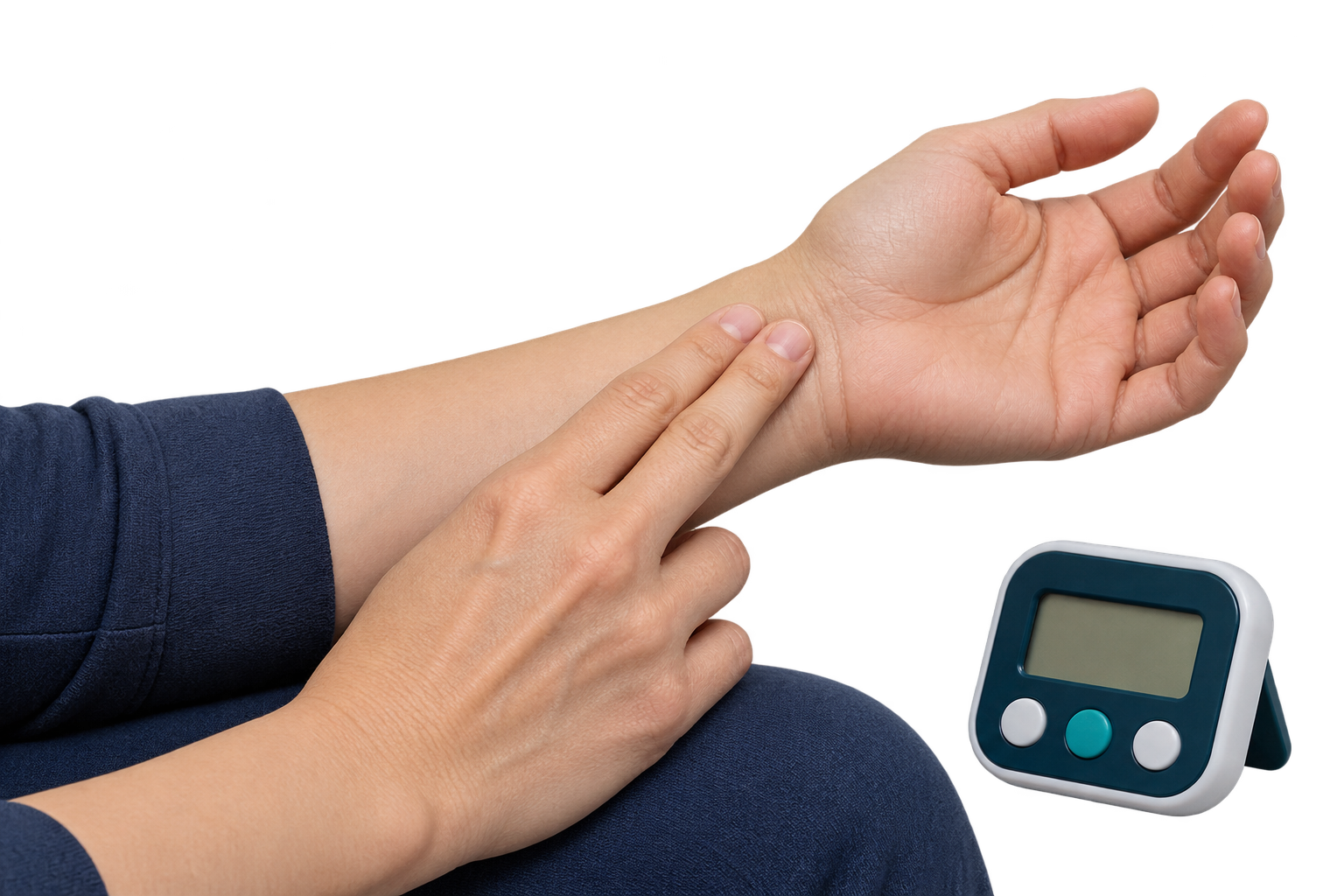
- 2Use two fingertips
Place index and middle fingers lightly on the inner-wrist artery; do not use the thumb.
- 3Time the count
Prefer a full minute. If the pulse is irregular or symptoms occur, seek clinical assessment.
Measurement and method sources are linked below. Illustrations explain the workflow; they do not supply measurement data.
From bpm to an average beat interval
From bpm to an average beat interval
One illustrative beat every 0.857 seconds
Demonstration only · no sensor connection · not an ECG or rhythm recording.

Calculation results
Step-by-step solution
Choose the formula
Substitute your measurements
Calculate in order
Write the result
A timed count becomes beats per minute.
- 1Use a resting measurement
70 bpm entered
- 2Understand the average interval
60 / 70 = 0.857 seconds per beat
- 3Do not infer a rhythm diagnosis
A mean rate does not establish whether each beat is regular.
If a sudden unusual rate occurs with chest pain, severe breathlessness, dizziness or fainting, seek urgent medical care. This page does not assess an irregular rhythm.
60–100 bpm is a common adult resting context, not a diagnosis. Lower readings can occur with fitness or medicines. Persistent or unexpected changes need clinical context.
Measurements & calculation details
| Quantity | Value |
|---|---|
| Input method | direct |
| Rate | 70 bpm |
| Mean interval | 0.857143 seconds |
| Adult context | Within the common adult resting range |
Try a worked example
Choose an example to load its measurements into the calculator. Each result uses the same calculation engine as your own inputs. Back to your calculation
Understand the calculation
Concept & meaning
A resting pulse is measured while calm and rested, rather than during exercise or recovery. The American Heart Association describes 60–100 bpm as a common adult resting range; an individual reading needs context.
Formula & special cases
Timed counting uses beats × 60 / seconds. The average interval is 60 / bpm seconds per beat. A 30-second count of 35 beats gives 70 bpm; a one-beat counting error over 15 seconds changes the estimate by 4 bpm.
Scope & limitations
Fitness, medicines, stress, temperature and illness can affect resting rate. A value below 60 is not automatically a problem, and a value inside 60–100 is not proof that everything is normal. The optional animation is a teaching cadence without sensor data, not an ECG or an arrhythmia assessment.
Result from your current inputs
Resting heart rate: 70 bpm
Count duration changes the multiplier
| Calculation | Formula | Interpretation |
|---|---|---|
| 15 seconds | Count × 4 | A one-beat error becomes 4 bpm |
| 30 seconds | Count × 2 | A one-beat error becomes 2 bpm |
| 60 seconds | Count × 1 | Full-minute counting is preferred |
Sources & References

References document the methods and their limitations; links and logos do not imply institutional endorsement or expert review.