

Stair Climbing Calorie Calculator
Every floor counts. Measure your climb. Understand your effort.
Your Climb Dashboard
75.0 kg · moderate / general ascent · up + down
No floor travel entered. Energy and moving time are zero.
Rounded estimates, not a measured calorie burn.
Your Vertical Milestone
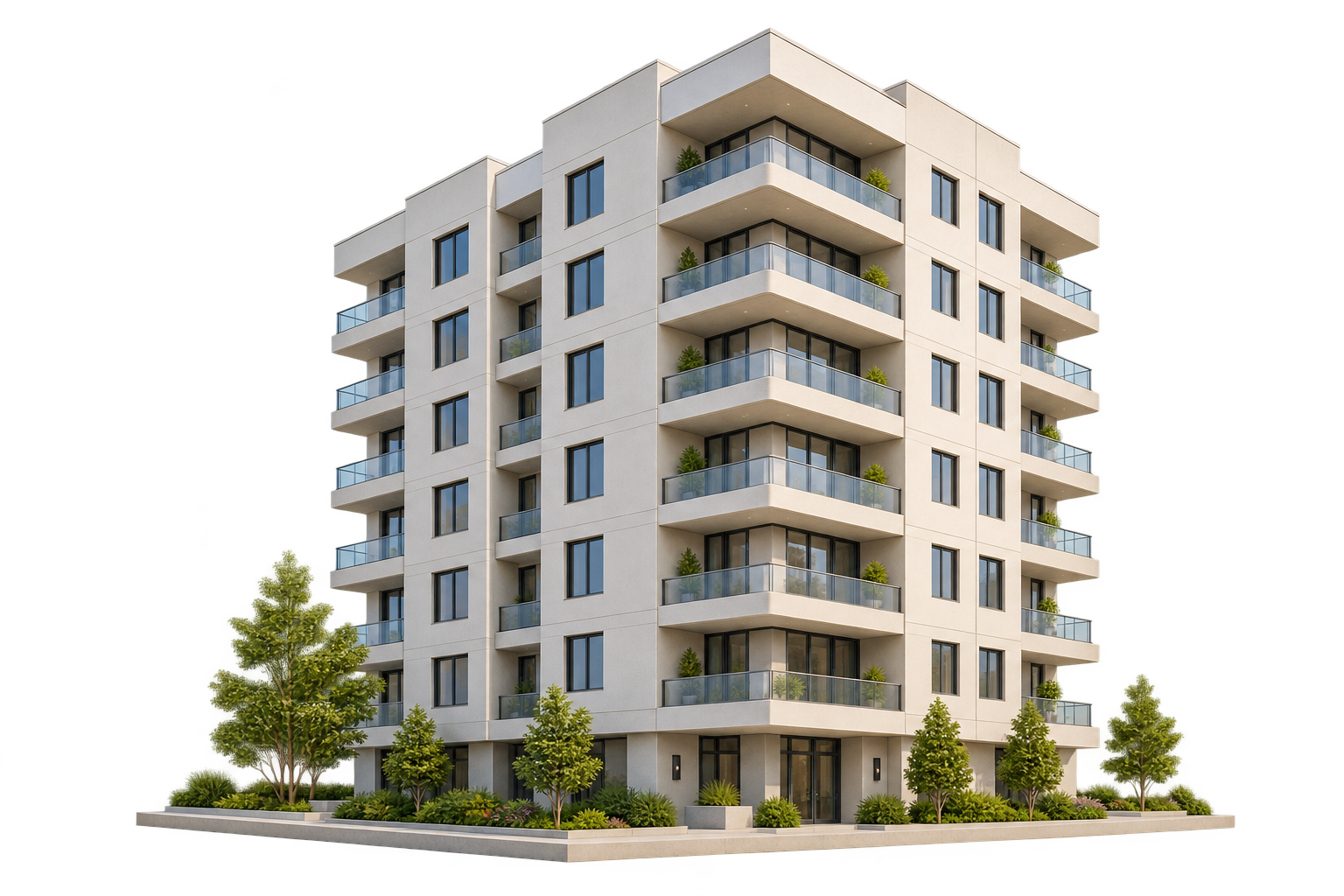
Equivalent to 10 rises of 3.0 m each.
Building illustration is schematic, not to scale.
Elevation Explorer
A floor is a rise, not a fixed distance.
Your floor height turns floor counts into vertical metres.
Calculation & Assumptions
- Vertical distance
- = floors × floor height
- Time
- = vertical distance ÷ vertical pace
- Gross kcal
- = MET × 3.5 × weight (kg) ÷ 200 × minutes
Ascent and descent are calculated separately, then added before display rounding. Every calorie, duration and distance output uses one decimal place.
See pace presets and source codes
Slow ascent: 4.5 MET (17133); general ascent: 6.8 MET (17131); fast ascent, one step at a time: 9.3 MET (17134). Descent: 3.5 MET (17070).
ST example vertical speeds, up/down in m/min: slow 6/10, general 10/15, fast 16/20. These speeds are editable assumptions, not published Compendium cadence thresholds. When measured times are used, speeds do not affect the calculation.
Understanding Your Estimate
MET values describe activity categories. Pace assumptions estimate time; they are not Compendium speed standards.
Use measured moving time when available. Rest breaks are excluded. Gross energy includes resting expenditure during the activity; it is not “active calories above rest.”
Standard adult METs are not a personal metabolic measurement. Age, fitness, movement, handrail use and actual effort can change energy use. This tool is not exercise clearance or an individualized training prescription.
Frequently Asked Questions
How high is one floor?
A floor is not a fixed distance. This calculator starts at 3 metres, which is about 9.84 feet, and lets you enter the actual vertical height between floors. Ten rises of 3 metres give 30 metres of height gained. Do not enter individual stair-step counts as floors.
Why does going down burn fewer calories?
For the categories used here, the Compendium lists stair descent at 3.5 MET, while ascent is 4.5, 6.8 or 9.3 MET according to the selected activity category. Total energy also depends on the moving time in each direction.
Are these active or total calories?
These are estimated gross calories during the entered or modeled moving time. Gross calories include resting expenditure during activity, so they are not the same as active calories above rest.
How are the example 36.0 kcal calculated?
At 75 kg, 10 floors up and down, and 3 m per floor, each direction covers 30 m vertically. ST example paces of 10 m/min up and 15 m/min down give 3 and 2 minutes. General ascent at 6.8 MET gives 26.775 kcal, and descent at 3.5 MET gives 9.1875 kcal. The unrounded total 35.9625 is displayed as 36.0 kcal.
Can I enter my actual times?
Yes. Open Pace & time assumptions and choose Use measured moving times, or use the measured-times shortcut. Enter moving minutes separately for ascent and descent, excluding rest breaks. Only enabled directions with nonzero floors contribute. The selected ascent activity category still determines its MET value.
Sources & References
and Health ScienceHerrmann et al. (2024)2024 Adult Compendium update.
13(1): 6–12.
Compendium unit conversions supports the MET-to-kcal/min equation. Source references inform the content; ST vertical pace presets are illustrative assumptions. No institutional endorsement or individual clinical review is claimed. Sources checked 20 October 2026.
Every floor counts. Measure your climb. Understand your effort.