Weight Loss Percentage Calculator
Compare starting and current weight, calculate a target weight, or track progress toward your own weight-loss goal.
Calculation inputs
Measure changes consistently
- 1Choose a comparable baseline
Use measured weights from the same scale and similar conditions.
- 2Record the reference point
The starting weight is the denominator, even when you have a separate goal.
- 3Interpret what the scale can show
Fluid and other tissues contribute to weight. Discuss unexplained loss with a clinician.
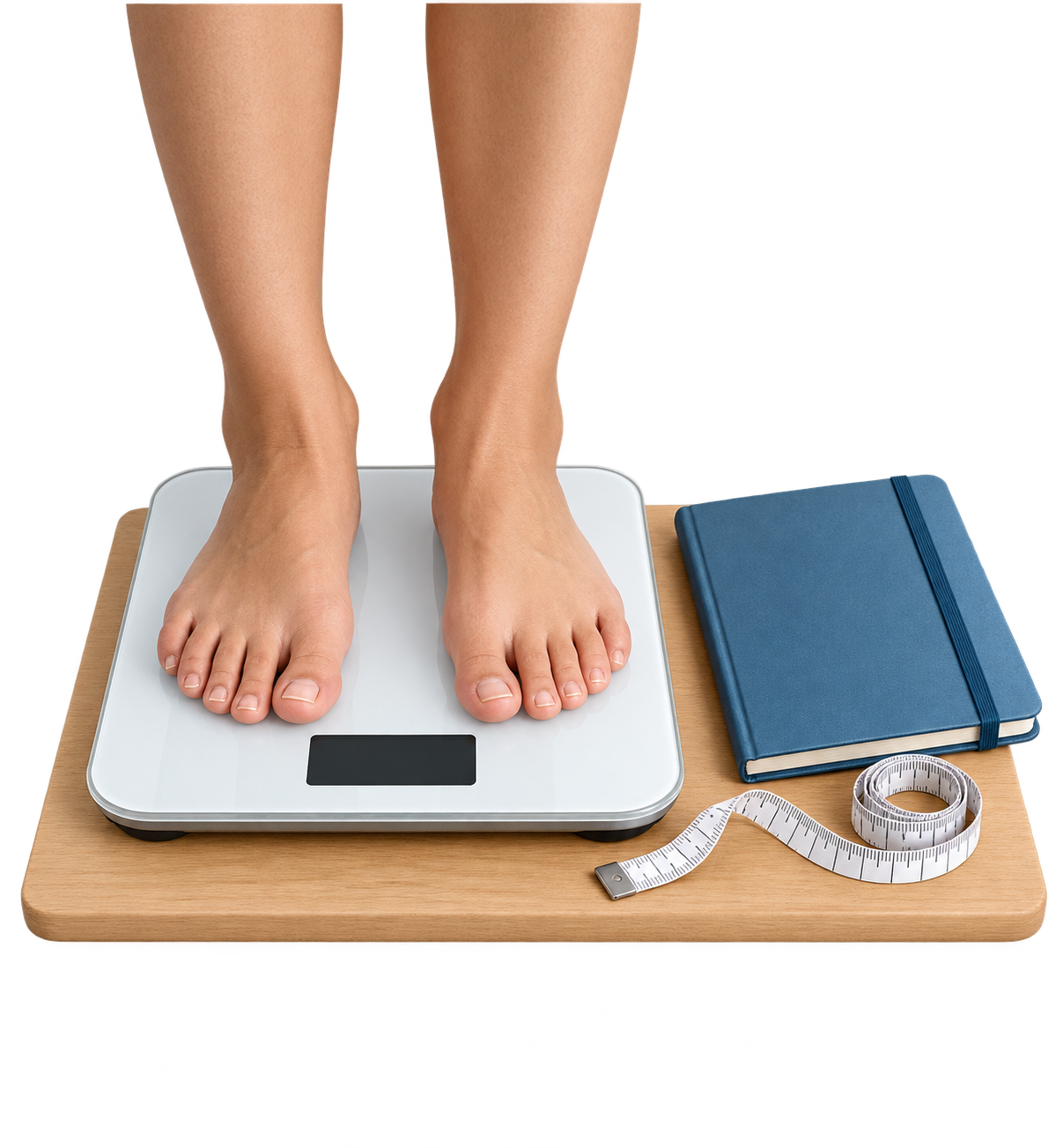
Measurement and method sources are linked below. Illustrations explain the workflow; they do not supply measurement data.
Explore the calculation model
Weight comparison · kilograms

Calculation results
Step-by-step solution
Choose the formula
Substitute your measurements
Calculate in order
Write the result
Make the starting weight your reference point.
- 1Compare the two measurements
90 − 80 = 10 kg
- 2Use starting weight as denominator
10 ÷ 90 × 100 = 11.11%
- 3Read the sign correctly
Positive loss = weight decreased
A scale difference includes water and other tissues. These two readings do not tell you how much body fat changed.
If weight is falling without changes to diet or activity, arrange a medical assessment. This tool cannot identify the cause.
Only the two measured weights are compared. This does not establish fat loss, an appropriate pace, or a safe goal.
Measurements & calculation details
| Quantity | Value |
|---|---|
| Starting weight (kg) | 90 |
| Current weight (kg) | 80 |
| Weight reduction (kg) | 10 |
| Percentage reduction | 11.111111% |
Try a worked example
Choose an example to load its measurements into the calculator. Each result uses the same calculation engine as your own inputs. Back to your calculation
Understand the calculation
Concept & meaning
Weight loss percentage expresses the change relative to the starting weight. A positive value means a decrease, zero means no change, and a negative value means a gain. It cannot tell which tissue or fluid compartment changed.
Formula & special cases
Target weight uses start × (1 − p/100). Goal progress is (start − current)/(start − goal) × 100. The latter is intentionally not capped: a result above 100% means the entered weight is below the entered goal; a negative result means weight increased.
Scope & limitations
For adults only. NIDDK discusses 5–10% as a possible initial reduction over six months for some adults with overweight or obesity, with professional guidance; it is not a goal for every person. This calculator gives no time prediction.
Result from your current inputs
Weight loss percentage: 11.11%
Reading the three calculation modes
| Calculation | Formula | Interpretation |
|---|---|---|
| Compare weights | (start − current) / start × 100 | Baseline is the denominator. |
| Target weight | start × (1 − p/100) | A chosen target, not a health recommendation. |
| Goal progress | (start − current)/(start − goal) × 100 | Goal must be below starting weight. |
Sources & References
 NIDDK · adult weight managementIndividualized goals and adult health contextRead the reference
 NHS · unintentional weight lossWhen unexplained weight change needs assessmentRead the reference
References document the methods and their limitations; links and logos do not imply institutional endorsement or expert review.