

Animal Mortality Rate Calculator
Summarize cohort losses. Review herd and flock records.
Species and age identify the cohort • thresholds are entered by you, not universal standards.
Herd & monitoring inputs
Cohort recording checklist
- Same starting group (cohort)
- Same monitoring period
- Deaths recorded once (no double counting)
For changing populations, animal-time methods require a different denominator.
Mortality & cohort review
Closed cohortStep-by-step solution
Cohort outcome
Your herd context
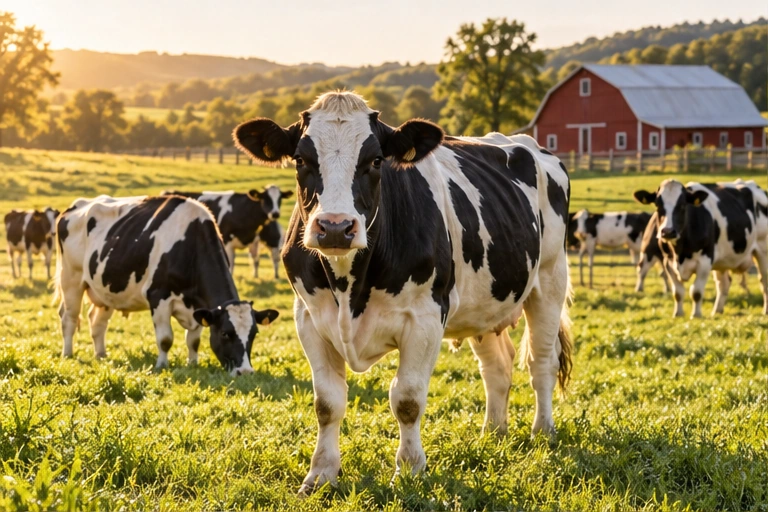

Illustrative cattle herd · the chart above shows your actual counts.
View cohort proportions
Teal: remaining in cohort • coral: recorded deaths
Text summary · PDF in member tools.
How the calculation is built
Observed mortality proportion
Survival proportion
Stock-value loss = deaths × value per animal.
Mortality depends on species, age, disease context and observation period. Published study averages are descriptive, not universal acceptable-loss limits. Closed-cohort survival calculations do not handle births, arrivals, transfers or sales.
Frequently asked questions
Which animals belong in the denominator?
Use all animals alive and at risk at the start of the defined observation period in a closed cohort. Deaths must come from that same cohort and period. Do not substitute the ending live population or include sales and transfers as deaths. Dynamic herds with arrivals, births or removals require another denominator or animal-time approach.
Do species presets set industry thresholds?
No. Species and age buttons label the record; they do not establish acceptable mortality. The initial 2% review target and 5% high-review alert are editable examples only. Changing species, age, period or single/group scope turns comparison off until you verify applicable thresholds and re-enable it.
Can monthly mortality be compared with annual mortality?
Not directly as if they represented the same exposure period. Period selection labels the observed cohort; it does not multiply, divide or annualize percentages. Compare matching periods, populations and recording definitions.
Does a high percentage confirm an outbreak?
No. The calculator measures recorded death proportion and compares it with your limits. Sudden, unusual or unexplained deaths warrant prompt veterinary review even below a threshold. The ratio does not identify a disease, cause, clinical risk or outbreak.
Show all questions (9 more)Show fewer questions
What does the Animal Mortality Rate Calculator calculate?
It calculates the closed-cohort death and survival proportions, remaining animal count, user-defined review priority and optional direct stock-value loss. No clinical diagnosis or future-loss projection is made.
Which values should I enter?
Enter a positive whole starting population and nonnegative whole deaths no greater than that population, for the same group and period. Optional age rows must be non-overlapping and obey the same constraints. Zero-population age rows are allowed only with zero deaths and have no defined percentage.
What formula does this calculator use?
Mortality (%) = D/N × 100. Survival (%) = (N−D)/N × 100. Remaining animals = N−D, assuming a closed cohort. Direct stock-value loss = D × entered value per animal. Births, purchases, sales and transfers are outside this model.
Why might my result differ from another source?
Other sources may report annual loss, preweaning cohort loss, case fatality among sick animals, or deaths per animal-time. Denominators, euthanasia recording and observation periods may differ. The source reports here provide context, not universal alert percentages.
Does the result update automatically?
Yes. Numeric inputs and comparison settings update results, the native cohort chart and the four-stage solution. Species/age/period changes update record labels and disable comparison to prevent applying mismatched limits. The photograph follows the species context and remains illustrative; its visible animal count is not your recorded cohort.
How does age-group breakdown work?
Enable calculation from age groups, enter starting population and deaths for Young/Growing/Adult, and the combined totals are derived. On first activation current totals are assigned to the selected age row as an editable starting point. The combined mortality is total deaths divided by total population, not the average of group percentages.
What do the review priorities mean?
Within target means at or below your review target, Watch means above that target but below your high-review alert, and High means at or above the high-review alert. Limits are not industry standards. With comparison off, priority is Not compared; none of these labels guarantees safety.
What is included in the economic estimate?
The estimate multiplies recorded deaths by an entered average stock value. It excludes lost production, treatment, disposal, replacement timing, insurance and other secondary costs. Blank value means Not entered; an explicit zero means zero stock-value loss. Currency selection only changes the label and does not perform currency conversion.
What does the Animal Mortality Rate calculate?
Animal Mortality Rate Calculator — free online calculator.
Sources & References
 USDA APHIS — NAHMS Animal Health StudiesPopulation-specific mortality reports ↗
 FAO — Animal Health SurveillanceSurveillance and risk assessment ↗
Logos identify sources; no institutional endorsement. Neither source supplies universal thresholds for this calculator.
Related calculators
Animal Mortality Rate Calculator — free online calculator.