

Anion Gap Calculator
Calculate the standard gap or adjust it for serum albumin.
Your laboratory values
Before you calculate
Check the albumin unit.
3.0 g/dL equals 30 g/L. The adjustment uses a 4.0 g/dL baseline.
Albumin-adjusted anion gap
Uncorrected gap + albumin adjustment
Where does the gap come from?
Uncorrected arithmetic · potassium excluded
Blood remains electrically neutral; the gap reflects unmeasured ions.
How is this calculated?
Equipment guide
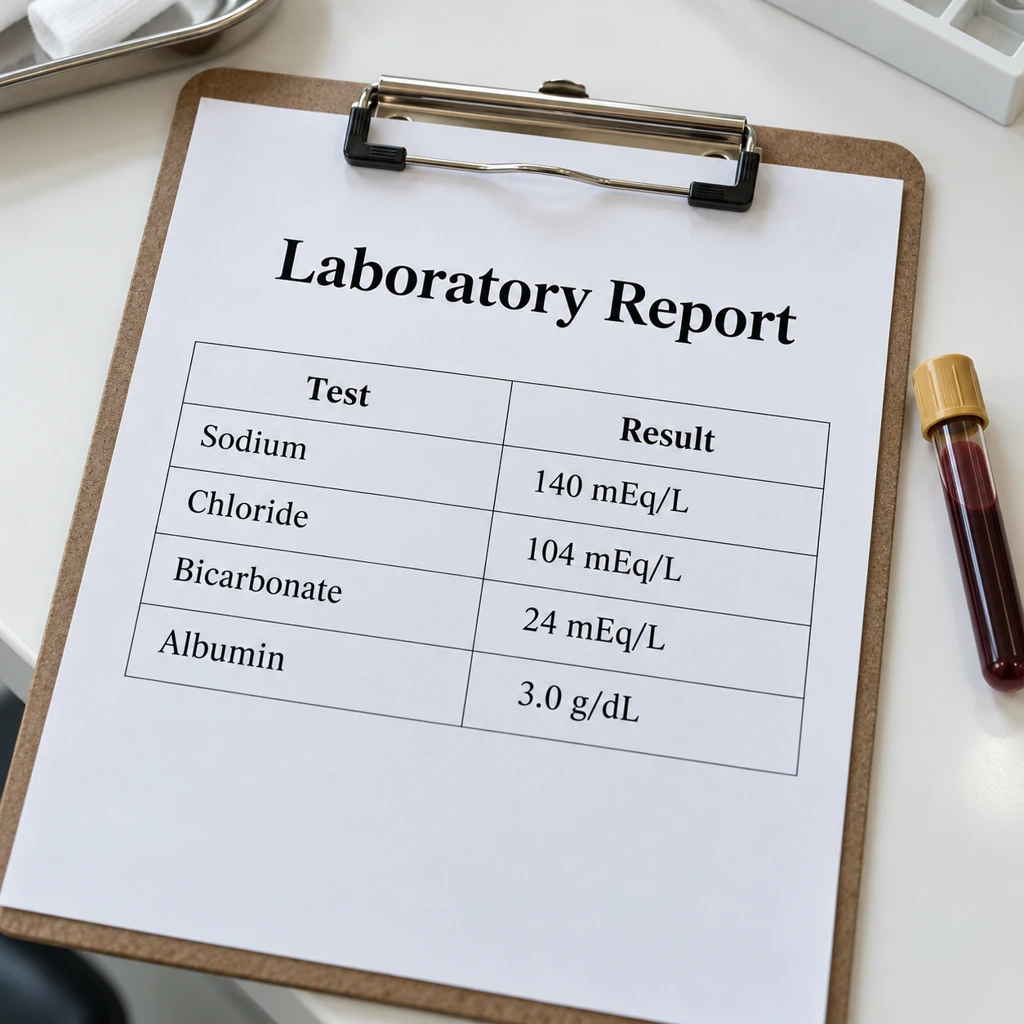
Read the electrolyte panel
Use sodium, chloride and bicarbonate.
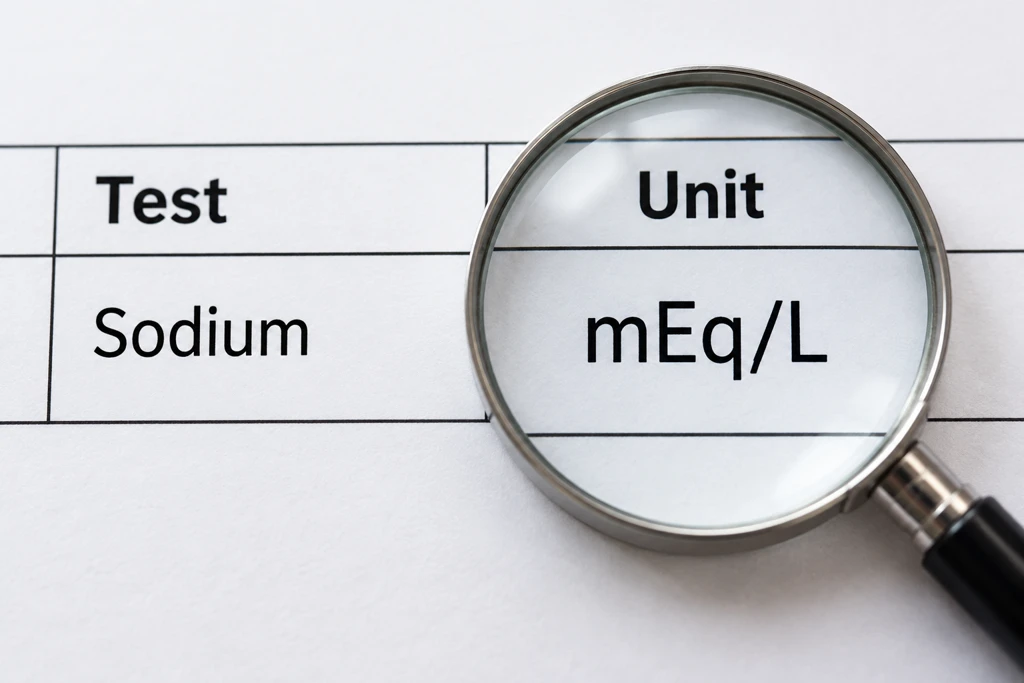
Match the units
Keep electrolyte units consistent.
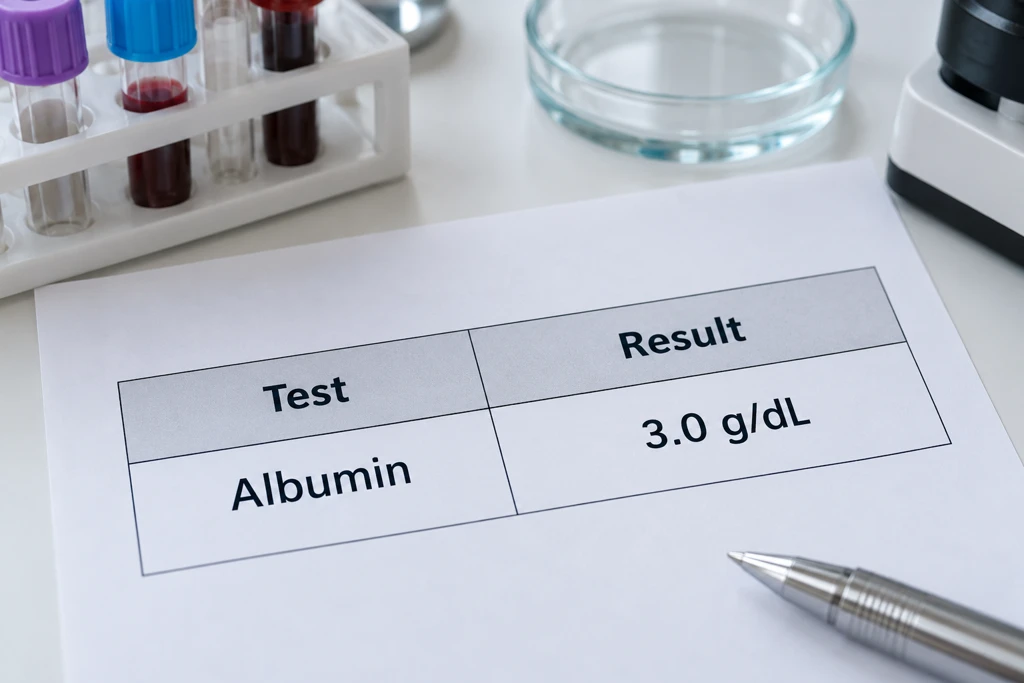
Check serum albumin
Use g/dL or convert from g/L.
Calculation & assumptions
AG = Na − (Cl + HCO₃)
Adjusted AG = AG + 2.5 × (4 − albumin)
Albumin is expressed in g/dL. The correction is an estimate for low albumin; it does not replace a full acid-base assessment.
Frequently asked questions
What does the anion gap calculate?
It subtracts chloride plus bicarbonate from sodium,using results from the same sample. This page excludes potassium. The calculated gap reflects unmeasured ions and is not a direct pH measurement.
When is albumin adjustment used?
Low serum albumin can lower the measured anion gap. One published correction adds2.5mEq/L for each1g/dL albumin decrease below a4.0g/dL baseline. This is an estimate for low albumin and requires clinical interpretation.
Is potassium included?
No. This page uses AG = sodium − (chloride + bicarbonate). Do not compare the result with a reference interval intended for a formula that includes potassium.
Why can the calculated gap be negative?
The arithmetic is negative if chloride plus bicarbonate exceeds sodium. The calculator preserves the signed result. A negative result is not automatically a data-entry error;check the original report and discuss it with your clinician.
Does the result update automatically?
Yes. Editing an active input or changing the mode updates the result,raw-gap chart and worked steps immediately. Invalid active inputs clear numerical outputs and disable exports.
More questions (5)
What does the Anion Gap calculate?
The standard gap is sodium minus chloride plus bicarbonate combined. Albumin-adjusted mode adds2.5 × (4 − albumin in g/dL). It does not calculate blood pH,diagnose a disorder or determine treatment.
Which values should I enter?
Use sodium,chloride and bicarbonate in mEq/L from the same sample. For these monovalent ions,mEq/L and mmol/L have the same numerical value. Albumin-adjusted mode also requires serum albumin with its selected g/dL or g/L unit.
What formula does this calculator use?
AG = Na − (Cl + HCO3). Albumin-adjusted AG = AG +2.5 × (4.0 − albumin in g/dL). Albumin in g/L is divided by10 before applying the correction. The chart always illustrates the uncorrected arithmetic.
Why might my result differ from another source?
Check potassium inclusion,albumin units,correction baseline,sample date and display rounding. Laboratory reference intervals and assays vary. A correction for low albumin does not replace full acid-base assessment.
What are the software limits?
Electrolytes are0–1000mEq/L with up to6decimal places. Albumin is0–20g/dL or0–200g/L;canonical albumin precision is up to9decimals in g/dL or8 in g/L. These are software bounds,not reference ranges. Standard mode ignores hidden albumin. Above4g/dL,the signed formula is shown with an applicability reminder rather than a clinical endorsement.
Sources & References
 Cleveland Clinic Journal of MedicineAlbumin correction:2.5 × (4 − albumin).
 MedlinePlus · Anion gap testLaboratory testing and interpretation context.
References provide context, not endorsement.
Page information
Updated: October 27, 2026