

Electric Bike Range Calculator
e-Bike Battery & Range Studio
Range & battery dashboard
Compare assist modes
Planning estimate · conditions change real-world range.
Watch your battery along the route
Illustrative trip preview · based on your selected consumption

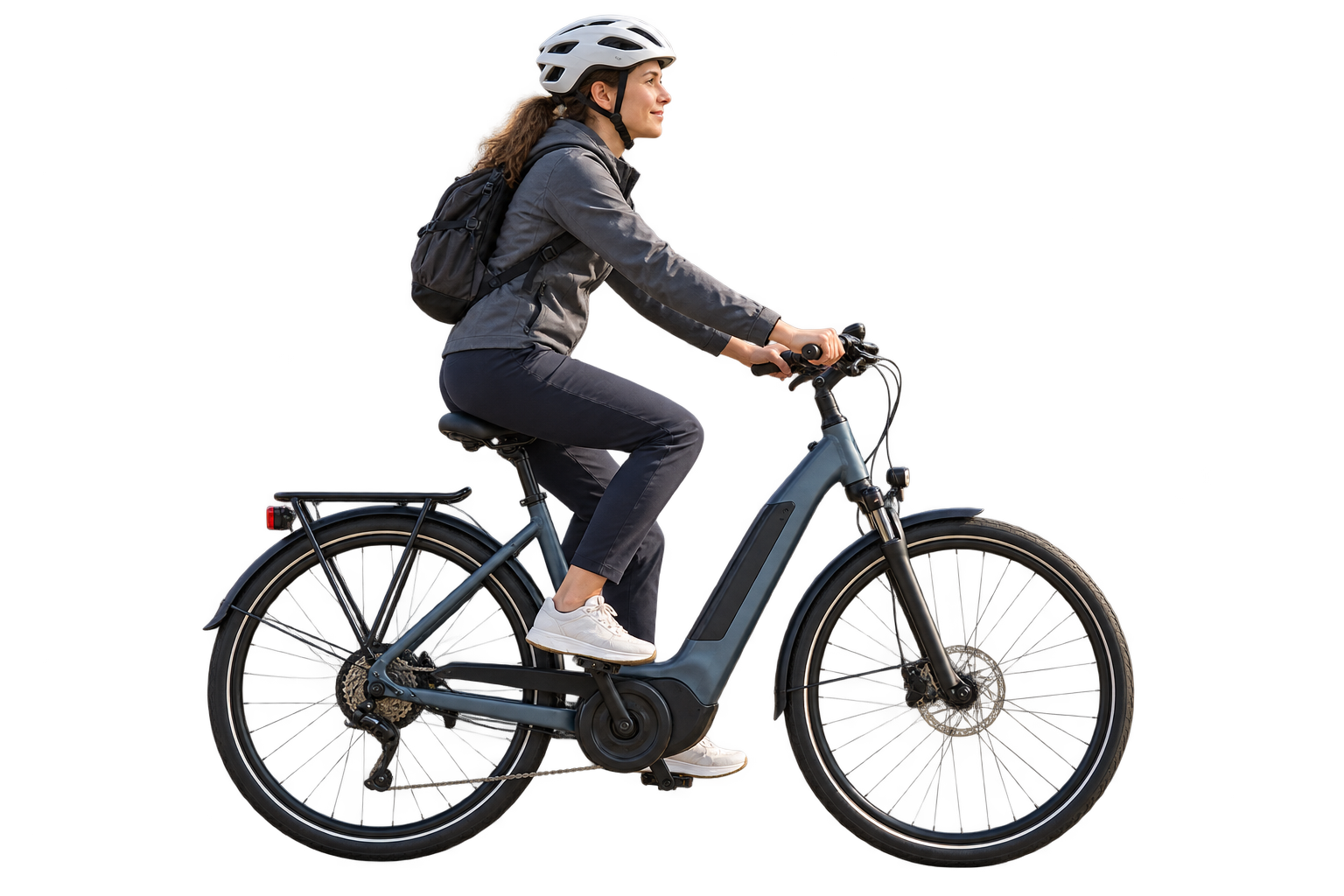

Trip preview
Battery at this position
position
Reserve threshold: 10% · Route has enough modeled energy.
Speed sets elapsed time only. The photo and route trace are illustrative, not a map or elevation model.
Choose your batteryEnter usable-capacity assumptions.
Set your rideSelect assist mode, weight and terrain.
Preview the journeySee energy use and battery along the route.
Formula & worked example
Usable energy = 500 × (100% − 10%) = 450 Wh
Range = 450 ÷ 7.5 = 60.0 km
Full charge ≈ 0.56 kWh from the wall at 90% charging efficiency.
Consumption assumptions
Profile consumption is a simple heuristic, not a physical motor model or a manufacturer-tested range. In measured mode, Normal-mode Wh/km overrides profile, terrain and weight; other assist modes are scaled by their multiplier relative to Normal. No downhill regeneration or energy recovery is assumed.
Frequently asked questions
Why is this an estimate?
Wind, temperature, rider effort, speed, stops, tyre pressure, battery age and drivetrain differences affect real range. The chosen profile, terrain and weight factors are adjustable planning assumptions, not Bosch or Shimano ratings. A reserve helps planning but does not guarantee arrival.
Can I use my measured Wh/km?
Yes. Open Advanced and select Measured Normal-mode Wh/km. Enter battery energy used divided by distance during a representative Normal-mode ride. It replaces profile, terrain and weight factors. Eco and Turbo comparisons then use the relative assist multipliers you set.
Does motor wattage equal consumption?
No. Watts measure power; Wh measure energy. Wh/km is energy per distance. A motor rated at 250 W does not use exactly 250 Wh on every journey, and 200 W must not be entered as 200 Wh/km.
How is charging cost calculated?
Full 0–100% wall energy equals battery Wh divided by charging efficiency and by 1000. Multiply wall kWh by your electricity price per kWh. Top-up cost uses the difference between start charge and 100%. The default 90% efficiency is adjustable and is not a manufacturer specification.
What do reserve and start charge mean?
Start charge is your initial state of charge. Reserve is the battery percentage you intend to leave unused. Planned range uses their difference. The trip preview can show travel beyond the reserve, but warns you and stops its energy calculation when the battery is empty.
Does preview speed change the range?
In this simplified model speed changes estimated trip time only. It does not recalculate aerodynamic or motor losses. Use a measured Wh/km from similar speeds and conditions when available.
Sources & References
 Bosch eBike SystemsRange factors & battery guidance
 Shimano e-Bike SystemsAssist modes & riding distanceBosch Battery GuideRange and battery context
Educational references · independent estimate, no manufacturer endorsement. Presets and efficiency are assumptions. Sources checked 19 October 2026.
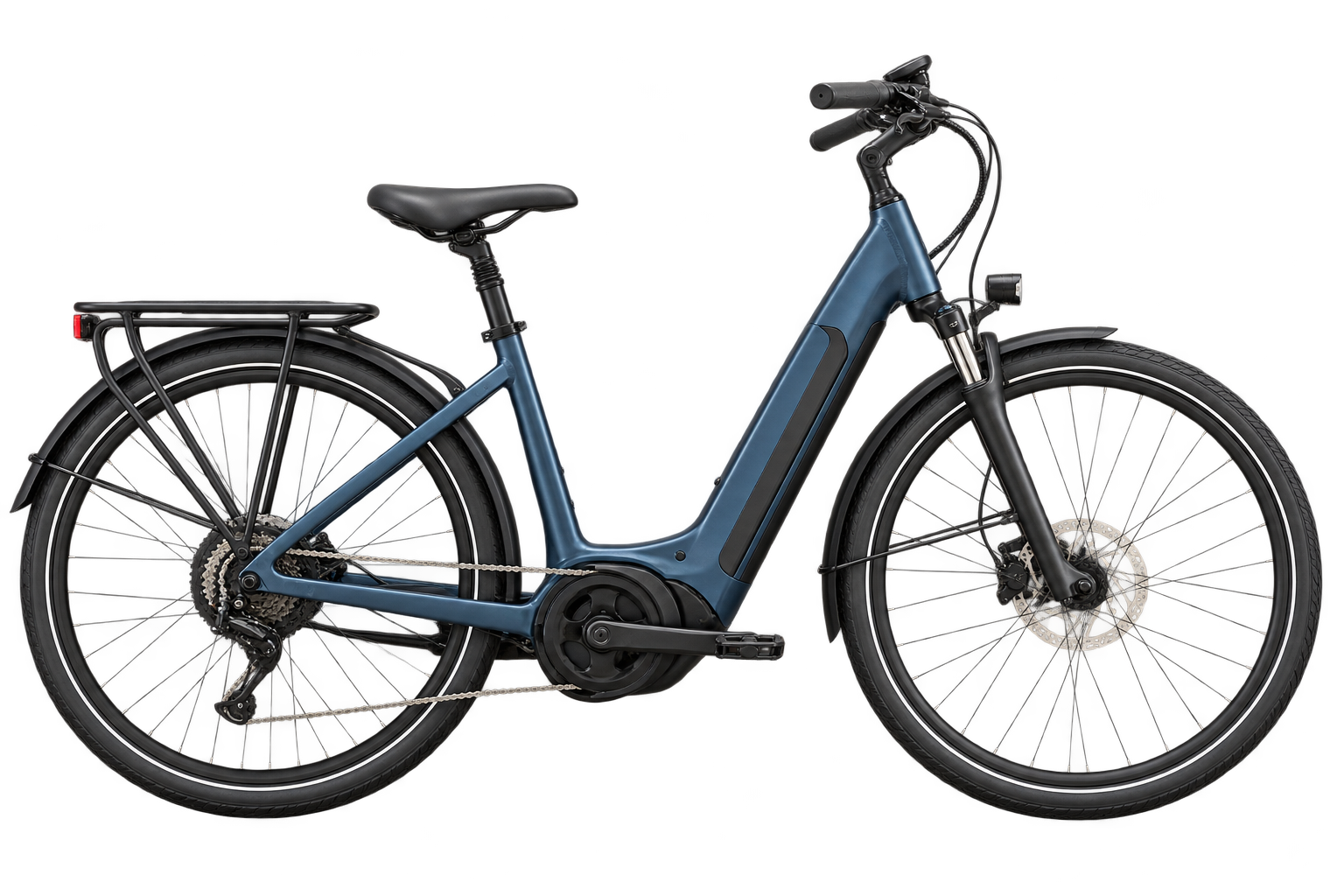
Plan e-bike range from battery energy, assist level and a reserve; preview battery use along your trip.