Your personal best
Use the value agreed with your clinician.
Know your zones. Track your reading. Follow your written asthma plan.
Use the value agreed with your clinician.
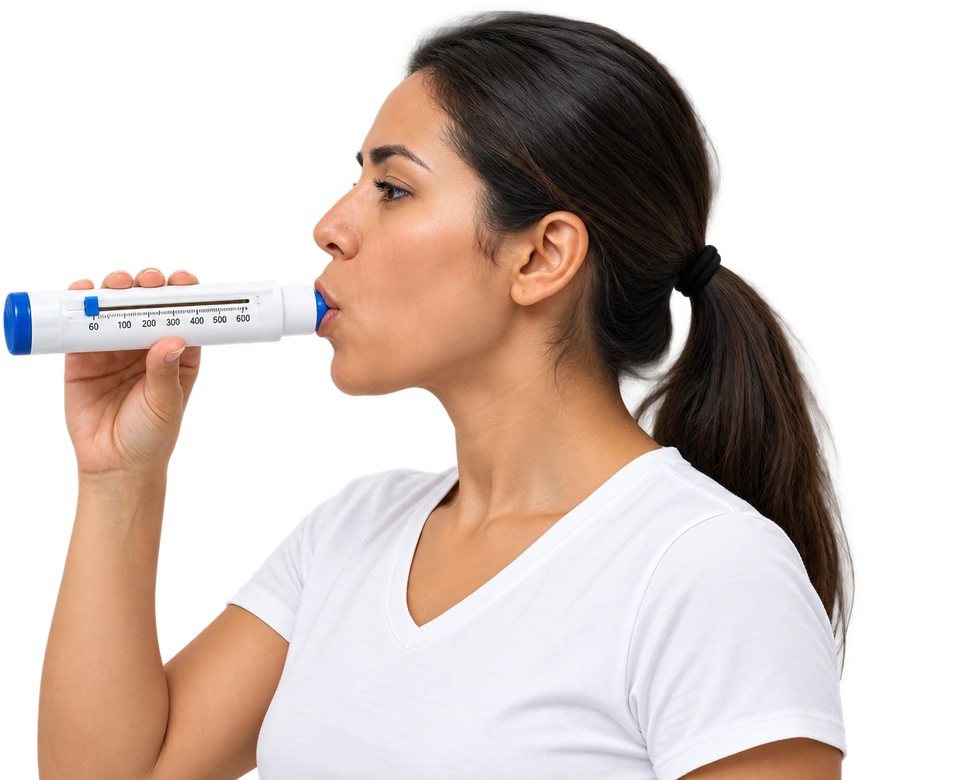
Record the highest of three correct blows.
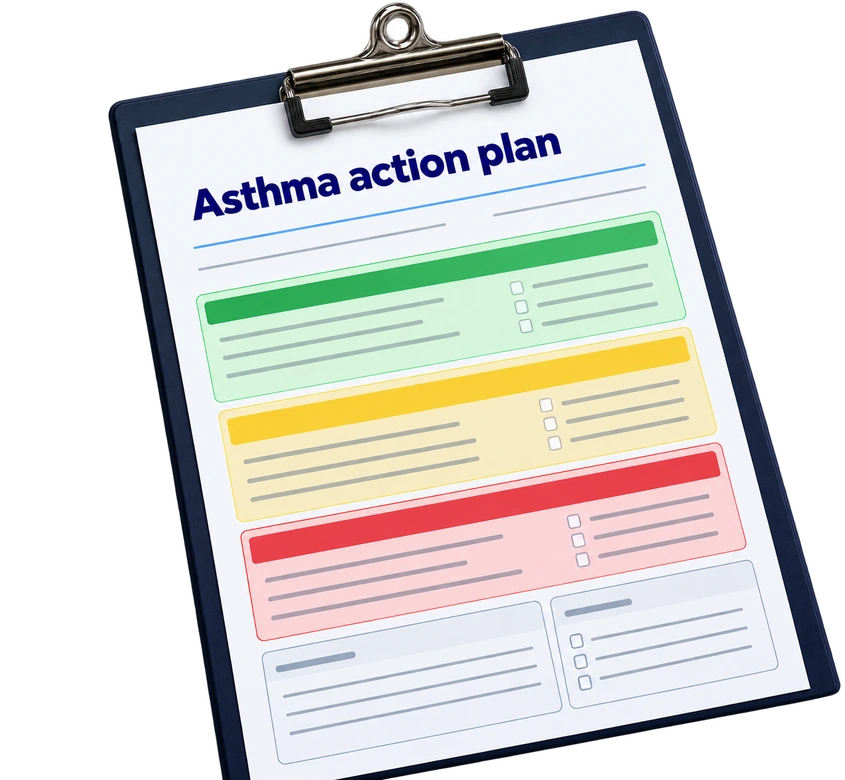
Symptoms and readings guide your next step.
%
Enter measurements to calculate.
No resultFollow your written asthma plan. Symptoms still matter.
Zone thresholds use the unrounded percentage.
Worsening symptoms can need action even in the green zone.
≥80% of personal best
Follow your agreed daily plan.
50% to <80% of personal best
Follow your worsening-symptoms plan.
<50% of personal best
Medical alert: seek urgent medical help.
(Current ÷ Personal best) × 100
Thresholds: personal best × 0.80 and × 0.50.
This tool does not create a medication plan. Use the plan agreed with your clinician.
A value above 100% is shown without capping the numeric result; only the gauge stops at 100%. Check technique and discuss your reference value with your clinician. Do not automatically replace your agreed personal best with a single reading.
Personal best is normally established over a period of good control, rather than from a predicted population value. Use the same meter and the method taught by your healthcare team. Record the highest of three correctly performed blows.
These conventional NHLBI peak-flow zones use ≥80%, ≥50% to <80%, and <50%, with no gaps. Exact threshold values are retained even when fractional L/min values occur; compare with your device scale and clinician-agreed plan. The percentage may be rounded, but zone comparisons use unrounded inputs.
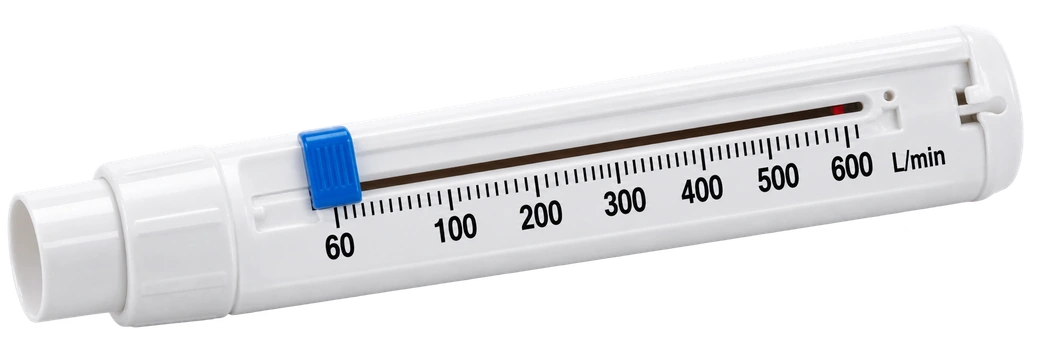
A current value is optional; without one, no current zone is assigned. Zero is displayed as a red-zone value, not treated as a normal reading. Input limits (personal best 0.001–10,000 L/min, current 0–10,000 L/min) are numerical safeguards, not clinical reference ranges. The illustrative meter picture is not a measuring instrument.
A green peak-flow range alone does not establish good asthma control. Symptoms and your written plan may require a different response. GINA supports individualized written action plans; this page does not prescribe reliever type, doses or changes to treatment.
No. The result describes the peak-flow range only. Symptoms can still be concerning even with a green reading. Follow your clinician-agreed written plan and seek emergency help for severe breathlessness, difficulty speaking or blue lips, regardless of the reading.
Work with your clinician to establish the reference while your asthma is well controlled, commonly using readings collected over two to three weeks. Do not substitute a predicted population value or automatically reset it from one unusually high reading.
NHLBI peak-flow measurement instructions use three properly performed blows and record the highest, not the average. Follow the instructions for your device and the technique taught by your healthcare team.
A reading below 50% of personal best is a medical-alert range. Follow your written emergency plan and seek urgent medical help. Severe symptoms, trouble speaking or blue lips require emergency help even when the meter reading seems reassuring. Do not delay care to repeat measurements.
References only. No institutional endorsement.
Know your zones. Track your reading. Follow your written asthma plan.